He’s right in having predicted that the Tuareg dimension of the conflict would inevitably re-erupt but he’s wrong in claiming that Algeria has nothing to do with it.
By Andrew Korybko
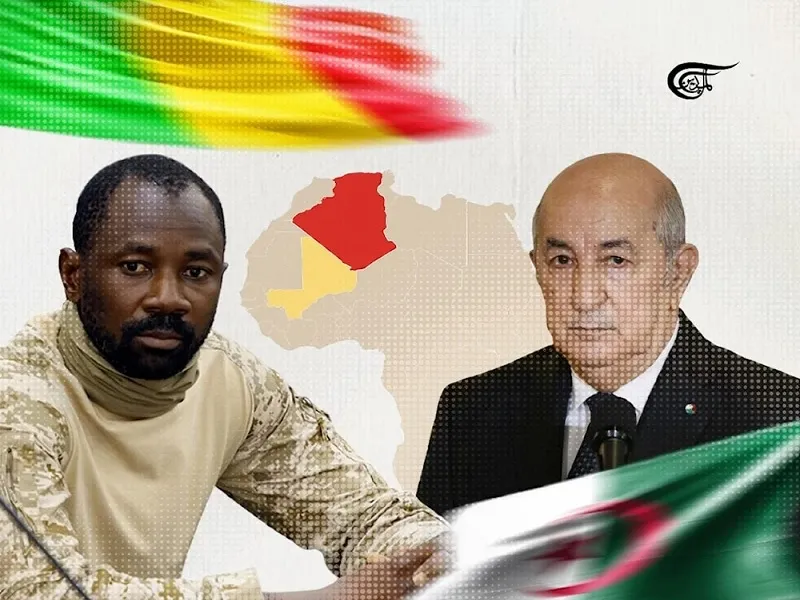
Algerian President Abdelmadjid Tebboune shared his assessment of the Malian Crisis in a recent TV interview. He predictably called for dialogue, mentioned how Algeria foresaw what’s unfolding, and condemned those who blame it for what’s happening. Tebboune then claimed that “Every time there is a change of leadership in Mali, there is an attempt to resolve the issue by force. Force does not solve problems” in an allusion to the Tuareg Question regarding their hope for independence or autonomy.
He’s half-right and half-wrong. On the one hand, “The Russian-Tuareg War Was Inevitable From The Moment That Wagner Arrived In Mali” due to Bamako manipulating Moscow against this group as explained in the preceding hyperlinked analysis, but Algeria is providing logistical support to them and their radical Islamist allies for the reasons touched upon here despite Tebboune’s denial. About him, he’s considered to be a puppet of the powerful military and intelligence services, which really run Algeria.
They have even more power now than during the two-decade-long rule of his predecessor Abdulaziz Bouteflika, who resigned in 2019 after large-scale protests, but they were still very powerful back then too. As regards Mali, they’re the ones who (mis)perceived Wagner’s late-2021 arrival and especially the 2023 formation of the Russian-inspired Alliance of Sahel States (AES) as threats to Algeria, thus contextualizing its policy pivot of supporting the same two forces that it previously fought against.
The powerful military and intelligence services’ goal is to exploit the crisis that they helped spark in collusion with France, the US, and Ukraine to restore Algeria’s influence over Mali. Tebboune claimed that “The Algiers Accords are a Malian matter, not an Algerian one. Some are trying to present it as interference by Algeria in Mali’s internal affairs. No. The Accords came in the aftermath of what happened before”, but the reality is that Article 52 made Algeria the accords’ “political guarantor”.
This empowers it to “advise the Parties” and “play the role of last resort both politically and morally where serious problems arise which might compromise the objectives and goals of the present Agreement.” Mali withdrew from the accords in January 2024 citing “hostile incidents and instances of interference in the internal affairs of Mali by the authorities of the People’s Democratic Republic of Algeria” and then replaced them with a “National Charter for Peace and Reconciliation” last year.
The purpose was to eliminate the legal grounds for Algeria’s interference in Mali’s internal affairs, which is what the Algiers Accords allow for, but that radicalized Tuareg separatists after they perceived the new charter as forever ending any chance of even obtaining autonomy. Algeria, France, the US, and Ukraine were then more easily able to exploit them as proxies against AES leader Mali, with Algeria tacitly justifying this through the Algiers Accords, whose annulment by Mali they consider to be illegitimate.
Algeria’s role in the latest Malian Crisis confirmed Bamako’s antebellum fears that Algiers was weaponizing the Tuareg as proxies for carving out a sphere of influence. This assessment further reduces the chances of a political solution, but it’s difficult to imagine anything but since Mali is too weak to win a war against Algeria, Russia won’t fight its decades-old but increasingly wayward partner, and Algeria isn’t expected to stop backing the Tuareg. Its sphere of influence might therefore be a fait accompli.