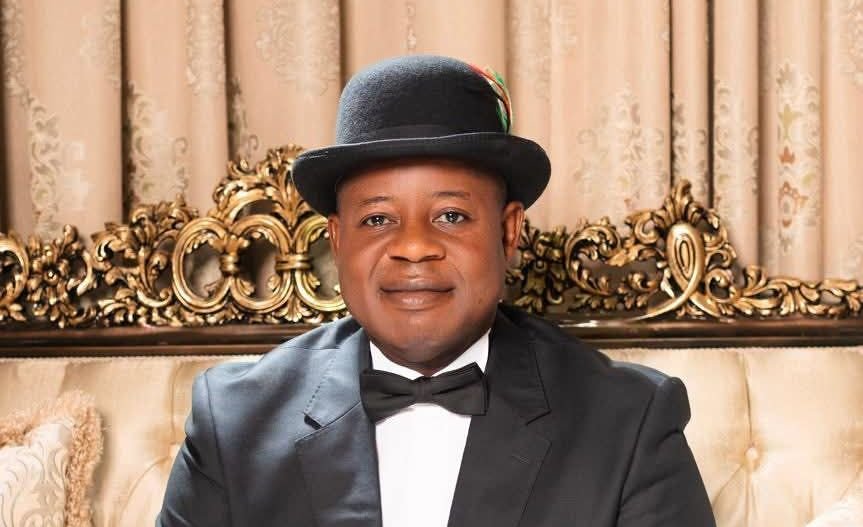
A former Chief Financial Officer (CFO) of the Nigerian National Petroleum Company Limited (NNPCL) Umar Ajiya, has revealed that N2.9 billion, and not N5.8 billion was spent to register the company.
He spoke during his appearance before the Senate Public Accounts Committee (SPAC) on Wednesday while seekiing to dismiss widespread allegations that NNPCL could not account for N210 trillion.
According to him, the N2.9 billion was paid to the Corporate Affairs Commission (CAC) and the then Federal Inland Revenue Service (FIRS) now renamed Nigeria Revenue Service (NRS).
Ajiya told lawmakers there was no missing money and argued that public perception had distorted the issues contained in the audit report.
On allegations that N5.8 billion was spent to register NNPCL, Aliya stated: “That is not true. The amount used to register that company is N2.9 billion. It was paid to two government agencies — CAC and FIRS.
“No third party was paid kobo to register that company”.
He also said “There is no money missing,” he said.
“If money was actually missing in NNPC during our superintending period, we would not have had the courage to publish the audited accounts.
“In the past 44 years, the accounts were either not prepared or were kept hidden from the public and even sometimes from the Auditor-General.
“We made it a duty not only to give them to the Auditor-General but also to put them on our website for Nigerians to scrutinise.”
On the controversial N210 trillion figure, Ajiya argued that the claim was mathematically impossible.
“The whole revenue earned in the period under review for the whole NNPC, assuming no kobo was spent to produce oil, was N54.5 trillion.
“So how can N210 trillion be missing? I advised before that a forensic audit should be carried out. Whoever has stolen money, go and look after him and jail the person.
We don’t steal,” he said.
Ajiya further warned that unverified allegations against NNPCL were damaging Nigeria’s international reputation and ability to attract financing.
“The danger of this is that we are not only damaging the characters of individuals and the company and the workers there, but also Nigeria itself.
“Whatever we dish out to the public is what the rating agencies use to rate Nigeria. And by extension, our credit rating goes down,” he said.
Citing the Ajaokuta-Kaduna-Kano (AKK) gas pipeline project, he said: “A similar thing happened in the past when we were looking for money to fund the AKK project — about $2.5 billion from the Chinese.
“A Nigerian, an unpatriotic person, wrote a petition to the Chinese government and that loan was stopped after a sovereign guarantee had been issued.
“That is why that project has still not been finished.”
(Ripples)