• Demands ‘early warning mechanism ratification’ • Enikanolaiye receives S’African delegation
From Aidoghie Paulinus, Abuja
President Bola Tinubu has declined to receive a special envoy dispatched by South African President Cyril Ramaphosa.
The refusal is coming amidst growing concerns over persistent xenophobic attacks against Nigerians in South Africa.
A Daily Sun source disclosed that the South African delegation, led by the Minister of International Relations and Cooperation, Ronald Lamola, had arrived Abuja on Friday, July 24, with what was described as a “very important message” for the Nigerian leader.
The development comes less than 24 hours after the reported killing of a Nigerian national, Chika Ibe, who was allegedly picked up from his residence at Parksig Villas Complex in Bellville, Cape Town, and tortured to death by personnel of the South African Police Service (SAPS).
Recall that Nigeria has maintained a firm stance against xenophobic attacks in South Africa.
At the 69th Ordinary Session of the Authority of Heads of State and Government of ECOWAS which took place recently in Lungi, Sierra Leone, Vice President Kashim Shettima, who represented President Tinubu, condemned the attacks and pledged that Nigeria would push for stronger measures against xenophobia at the African Union.
Speaking on the recurring Afrophobic attacks targeting African nationals in South Africa, Shettima called for a united continental response to protect the rights and dignity of Africans living across the continent.
He disclosed that the Federal Government had evacuated 1,490 Nigerians affected by previous xenophobic violence and reaffirmed Nigeria’s commitment to working with regional and continental institutions to address the crisis.
Diplomatic sources disclosed that Nigeria’s Minister of Foreign Affairs, Bianca Odumegwu-Ojukwu, advised that it was not an appropriate time for President Tinubu to receive the South African envoy, citing the continued attacks on Nigerians, their businesses and properties in South Africa.
According to the sources, the Foreign Affairs Minister stressed that the South African delegation could not secure an audience with the President without a prior appointment and concrete commitments from Pretoria.
She was also said to have insisted that South Africa must present a signed copy of the Memorandum of Understanding on the Early Warning Mechanism (EWM), which both countries signed in Abuja on October 22, 2025, before further diplomatic engagement can proceed.
South Africa has reportedly failed to ratify the agreement, citing what Nigerian officials described as inadequate reasons. The Early Warning Mechanism was designed to strengthen cooperation between both countries in monitoring threats of violence, protecting citizens, and addressing consular matters.
It also provides for rapid communication channels to de-escalate security risks involving foreign nationals and to prevent criminal acts, reprisals and xenophobic attacks against citizens of either country.
Officials at the Ministry of Foreign Affairs noted that the framework could have facilitated compensation claims for Nigerians whose businesses and properties were destroyed during xenophobic attacks in South Africa. However, South African authorities have so far declined to compensate victims of the attacks.
As at the time of filing this report, Presidency sources disclosed that President Tinubu had yet to agree to meet the South African envoy.
The outcome of a telephone conversation reportedly initiated by President Ramaphosa over the weekend also remained unclear.
“Observers believe South Africa’s diplomatic outreach may be driven by concerns over the potential impact of deteriorating relations on South African investments and businesses operating in Nigeria, as well as Nigeria’s growing campaign for tougher continental measures against xenophobia and Afrophobic attacks,” the source said.
Meanwhile, there were indications earlier yesterday that the President changed his mind and decided to meet with the South African delegation.
Daily Sun however gathered that the President made a U-turn on the matter.
“The President woke up and said why does he need to meet with them when their people are killing Nigerians. The president stood his ground and did not grant them audience,” the source said.
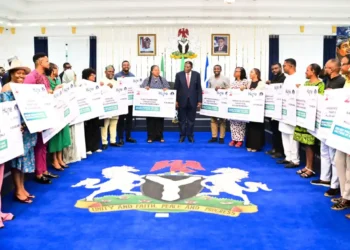
Following President Tinubu’s refusal to meet with Ramaphosa’s special envoy, the Minister of State, Foreign Affairs, Ambassador Sola Enikanolaiye, received the delegation at the Tafawa Balewa House in Abuja.
Delivering Ramaphosa’s message, the South African Minister of International Relations and Cooperation, Ronald Lamola, said the need to reaffirm the historic friendship and solidarity between Nigeria and the Republic of South Africa prompted the meeting.
Lamola who dwelt on the violence against foreign nationals living in South Africa, affirmed the role played by Nigeria during the fight against apartheid in South Africa, which he said, was a sacrifice that will remain evergreen in the hearts of the people of South Africa.
“We remain deeply indebted to the people of Nigeria for their sacrifice.” Lamola further said President Ramaphosa and his government remained firmly opposed to xenophobia, racism, discrimination, homophobia and all forms of intolerance.
While also saying that South Africa had a sovereign duty to enforce its immigration laws and combat irregular migration and criminal activities, Lamola stated that migration had become a continental challenge that required African countries to work together within the framework of the African Union’s protocols on orderly and regular migration.
“We believe that Nigeria and South Africa have a shared responsibility to respond to these challenges within the African continent,” Lamola also said.
Enikanolaiye said President Tinubu permitted the meeting to address the perennial attacks on Nigerians living in South Africa in an honest and sincere approach.
The former Permanent Secretary, Ministry of Foreign Affairs called on the South African government to devise urgent and concrete steps to end the everyday Afrophobic attacks against Nigerians and other African nationals.
He stated that the violence against Nigerians living in South Africa was a threat against the decades of strategic partnership between Africa’s two largest economies.
While citing the way and manner Nigeria supported the emancipation of South Africa during the apartheid regime in South Africa, Enikanolaiye also pointed out the harmonious relationship between both countries in transforming the Organisation of African Unity into the African Union, including the advancement of the New Partnership for Africa’s Development (NEPAD).
He noted that the xenophobic attacks that were first witnessed in 1995, had been repeated subsequently in 1998, 2006, 2015, 2016, 2019, 2021, 2024 and 2026.
Enikanolaiye made reference to available records which showed that 98 Nigerians had been killed in mob and hate-related attacks in South Africa since 2022.
He, however, warned that Nigeria does not condone criminality, even as he stated that anyone accused of crimes should be arrested, prosecuted and punished through the judicial process rather than subjected to mob justice.
“Nigeria will not support drug traffickers or any criminal activity, but those accused of crimes must be treated in accordance with the rule of law, South Africa’s Constitution and international human rights standards,” Enikanolaiye said.
(The Sun)