The controversy surrounding the so-called Presidential Foreign Investment Promotion Council (PFIPC) has become one of the most embarrassing episodes for the administration of President Bola Tinubu. Beyond the sensational headlines, it represents a serious assault on public trust and exposes disturbing weaknesses in the machinery of government. That an organisation allegedly without legal existence could operate openly under the banner of the Presidency should concern every Nigerian.
The issue goes beyond the alleged fraud itself. It raises troubling questions about how the Presidency’s name and authority could be appropriated so easily, apparently without attracting timely scrutiny from the very institutions charged with protecting the integrity of government. While the courts and relevant agencies are investigating the matter, Nigerians deserve clear and honest answers.
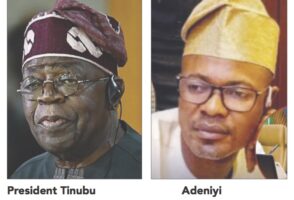
What exactly happened? Was this a carefully orchestrated deception? Was it enabled by administrative negligence, institutional failure or outright complicity? How did an organisation with no legal standing allegedly secure office accommodation within a government complex, interact with senior public officials and present itself as an official presidential body for months before the alarm was raised?
Perhaps the most astonishing revelation came from the Deputy Speaker of the House of Representatives, Hon. Benjamin Kalu, who publicly acknowledged that his office received a request for a meeting from the PFIPC and eventually met with its promoters. According to him, he instructed his aides to verify the organisation. They reportedly confirmed that it operated from the address it claimed, leading his office to assume that it was legitimate. Yet, during the meeting, instead of discussing the issues contained in their correspondence, the officials were reportedly more interested in taking photographs.
That explanation may describe how the meeting came about, but it also exposes serious weaknesses in the government’s verification process. If the office of the Deputy Speaker could be persuaded by the mere existence of a physical office, what does that say about institutional due diligence? Even more disturbing are reports that the group also held meetings with heads of government agencies and members of the diplomatic community without anyone questioning its legitimacy. That should alarm every Nigerian.
Nigeria is competing aggressively for foreign investment. Investors place enormous value on certainty, institutional integrity and regulatory credibility. When individuals can allegedly impersonate a presidential institution and transact official business unchecked, confidence inevitably suffers. Every serious investor will ask a simple question: if government institutions themselves can be so easily impersonated, how secure are investments made under their supervision?
The damage extends far beyond reputational embarrassment. It strikes at the credibility of the Nigerian state.
Equally troubling is the apparent delay in exposing the operation. Why did it take so long? Were warning signs ignored? Did public officials unknowingly or otherwis lend credibility to the organisation? Were investors approached or deceived using the authority of the Presidency? These are questions that deserve thorough answers, not hurried denials or premature attempts to exonerate individuals before investigations are concluded. Silence is wose as it only fuels suspicion. Suspicion breeds distrust. Distrust weakens public confidence. A government that loses public confidence steadily loses its moral authority.
The episode has also exposed glaring weaknesses in inter-agency coordination. No organisation claiming presidential authority should operate without immediate verification. Government already has established structures responsible for supervising agencies operating under the Presidency.
The Secretary to the Government of the Federation supervises numerous statutory agencies and commissions. The Head of the Civil Service oversees the administrative machinery of government, while the Chief of Staff to the President coordinates activities within the State House and supervises presidential policy implementation. With such layers of oversight, Nigerians are entitled to ask a straightforward question: how did a fake presidential council allegedly flourish without detection?
Even more astonishing are reports that the purported Director-General allegedly approached the Budget Office in an attempt to have the organisation included in the national budget. If true, that development raises even more disturbing questions about the effectiveness of internal government safeguards.
Those responsible for creating and operating the fake PFIPC must face the full weight of the law. Impersonating the Presidency is not merely an act of fraud; it is a direct attack on the authority and integrity of the Nigerian state. Allowing such conduct to go unpunished would encourage others to exploit official institutions for personal gain.
However, accountability must not stop with those who allegedly established the organisation. Government must also determine whether negligence, incompetence or complicity within public institutions enabled the deception to flourish. Those who looked the other way or failed to perform basic due diligence must equally be held accountable.
The investigation should not be reduced to political theatre. Legislative inquiries have their place, but this matter requires the expertise of professional investigative and law enforcement agencies with the capacity to unravel sophisticated fraud. Nigerians deserve facts, not another public spectacle dominated by political grandstanding.
Fraudsters have long exploited the names of presidents, governors and senior officials to deceive unsuspecting citizens. Self-appointed “friends of the President” and similar impostors have become familiar characters in Nigeria’s fraud landscape. But allowing an organisation to allegedly masquerade as a presidential institution represents an entirely different level of institutional failure. It demands a comprehensive investigation that follows every lead without fear or favour.
Nigeria has spent years trying to improve its image as a credible destination for investment. That effort should not be undermined by avoidable scandals that portray government institutions as vulnerable to manipulation and impersonation. National credibility is built through transparency, vigilance and accountability, not through official silence or attempts to minimise legitimate public concern.
It is encouraging that the principal suspect behind the fake PFIPC is now standing trial and has indicated a willingness to tell his side of the story. The proceedings should be conducted transparently in an open court so that Nigerians can see justice being done and judge the evidence for themselves. Ultimately, the PFIPC saga should become a turning point.
Government must tighten verification procedures, strengthen institutional oversight and establish effective safeguards against the misuse of presidential authority. Both Nigerians and the international business community need reassurance that no individual or group can again hijack the name of the Presidency and operate with apparent legitimacy.
The authority of the Presidency is one of the most important symbols of the Nigerian state. It cannot be allowed to become a costume for impostors. This scandal should serve as a wake-up call. The cost of institutional complacency is simply too high.
(The Sun)