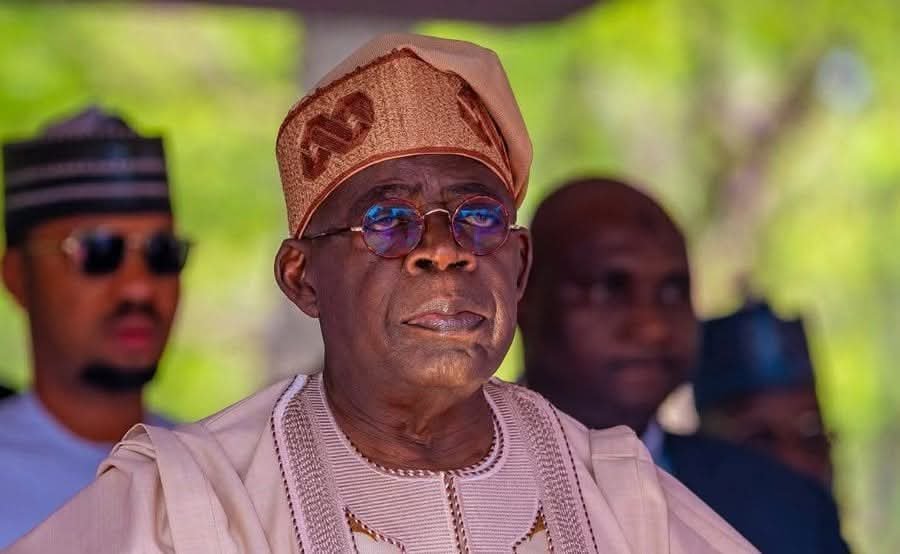
President Bola Tinubu has assures that refineries in the country would be restored to full, sustainable and profitable operation to deliver values for Nigerians.
The president who gave the assurance on Thursday when he received the newly elected leadership of Nigeria Union of Petroleum and Natural Gas Workers (NUPENG), led by its Executive President Salimon Oladiti, said he was undertaking a structural and economic reset to ensure the facilities do not merely operate but deliver value.
President Tinubu, who was conferred with the Grand Patron of NUPENG title by the union, said his administration had accepted responsibility for fixing the country’s refineries and would not blame previous governments for their current condition.
He told his guests: “The refineries that you mentioned are going to come back to work. We’re just building a very firm reset and structural reworking of the economy of it. Ordinary flame and smoke of refinery doesn’t mean that it’s working until it’s profitable and yield the value for which it is built.
“I’ve accepted the asset and liability of my predecessors, no matter what has happened in the years past, it’s my responsibility now as the president to fix, make it work for the largest common value of our population. I take responsibility for that, and I’m going to do it.”
Tinubu’s assurance comes against the backdrop of decades of decay of the nation’s four refineries; two in Port Harcourt and one each in Warri and Kaduna.
For many years the refineries have not worked, except for a brief period when they worked for a short while.
Recently, the Nigeria National Petroleum Cooperation Limited (NNPCL) signed an agreement with a Chinese firm to fix the refineries and operate them on its behalf.
Former President Umaru Yar’ Adua cancelled the sale of the refineries. Former Presidents Goodluck Jonathan and Muhammadu Buhari spent billions of naira on turnaround maintenance of the refineries, but they remain unproductive.
President Tinubu described NUPENG as a critical stakeholder in the nation’s economy and commended the union for its partnership with successive governments as well as its cooperation with his administration’s economic reforms.
Recalling his engagement with the union ahead of the 2023 presidential election, the President said he had been forthright about his determination to remove the petrol subsidy despite the possibility of resistance and industrial action.
Tinubu said: “And you’ve been a very good partner of government in progress. You occupy a very critical nerve of the economy of this country, and I’m glad you recalled the Akodo Resort.
“Akodo is now one of the greatest economic values to this country, and all the things that we contemplated and did together, that is why it was important, when I was running for this office, to serve you as a very important notice of what I would do and it was very very friendly and frank discussion.
“We had threat of possible strike and something, and I served notice; you may strike all you want, but fuel subsidy will be gone. And today, to the benefit of our great country.”
He said the government would soon make public details of the utilisation of resources accruing from the removal of the subsidy, arguing that the policy had strengthened the capacity of the three tiers of government to meet obligations and undertake development projects.
Tinubu challenged arguments that the reform had not benefited ordinary Nigerians, pointing to the regular payment of salaries to workers at the federal, state and local government levels and the wider impact of government spending on economic activities.
The president said: “I will soon publish the utilization of what it is. But I listen to people… they say common man and all of that. Who are the people receiving the salaries in the local government administration? Are they not common men and women receiving salary regularly at the state level, are they not common man and woman?”
(Ripples)