By Our Correspondent
As the Bakor Nation of Cross River State, Southeastern Nigeria, celebrates its 2026 New Yam Festival, our correspondent spoke in a telephone call on September 15, 2026, with Bassey Nton Nton, a writer, IT/ICT and electrical/electronics consultant, and passionate advocate for the Bakor people, about the community’s history, culture, political aspirations, and untapped potential for investors.
Q: Thank you for joining us. Can you start by telling us what the Bakor Nation is?
A: Thank you for having me, and let me first salute the entire Bakor Nation on this year’s New Yam Festival, it’s a symbol of unity, love, and harmony as we reflect on our yesterday, today, and tomorrow. The Bakor Nation is a distinct cultural and linguistic group speaking the Bakor language, closely linked to the Ejagham ethnic group. We’re located within the rainforests of Ikom and Ogoja Local Government Areas in Cross River State, Southeastern Nigeria.
Q: How is the Bakor Nation structured?
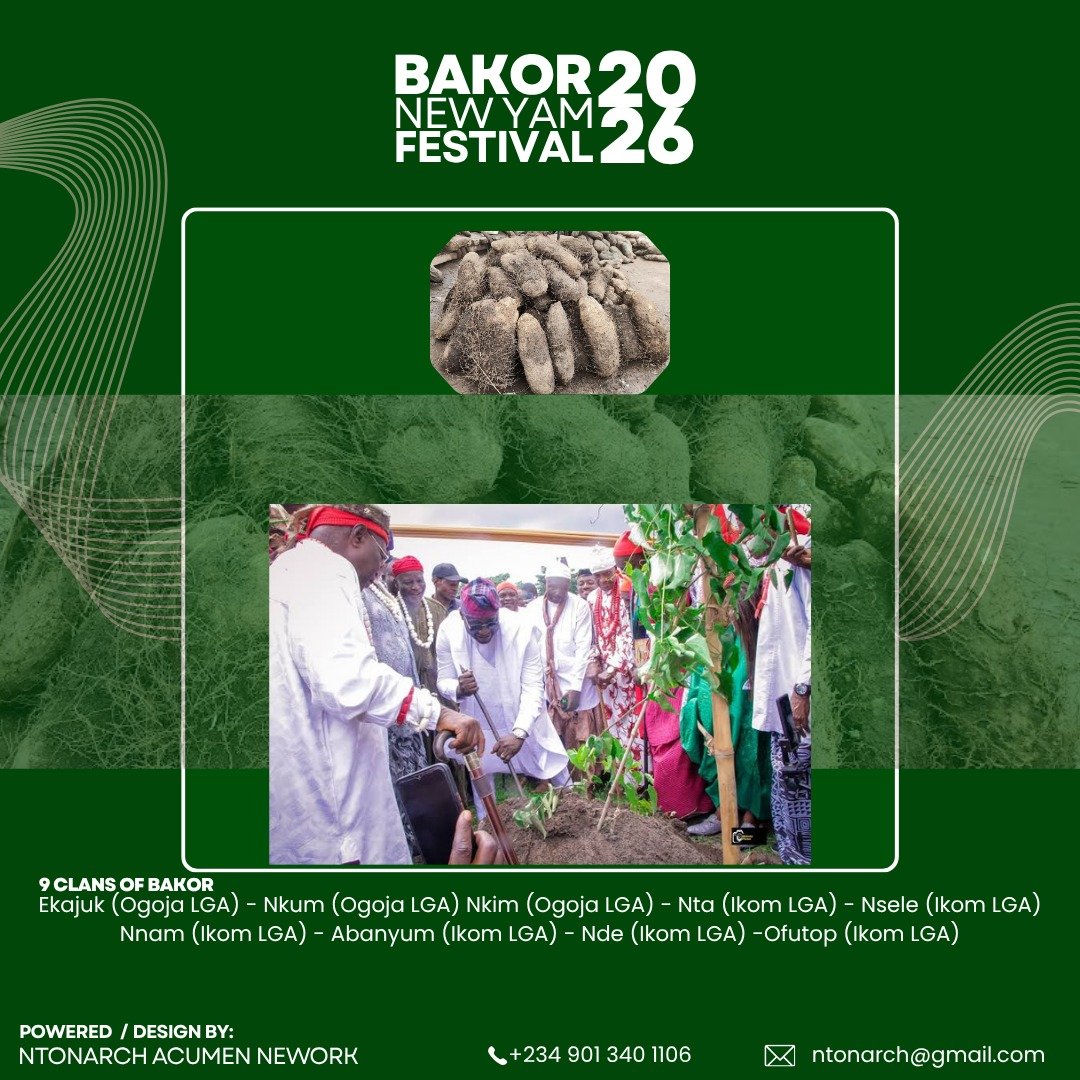
A: We’re made up of nine autonomous clans. In Ogoja LGA, you have the Ekajuk, Nkum, and Nkim. In Ikom LGA, we have the Nta, Nsele, Nnam, Abanyom, Nde, and Ofutop. Each clan is autonomous, but together we share a common identity as Bakor people.
Q: What about your heritage and historical significance?
A: We’re home to some remarkable ancient sites, including the world-famous Ikom Monoliths, also known as the Alok Ikom stones, hundreds of carved stone figures found across Bakor land. They stand as silent witnesses to our history, spirituality, and artistic genius, and they are currently on UNESCO’s World Heritage Tentative List, which is a recognition process toward full World Heritage status. Beyond that, our homeland, the Cross River basin and the Nigeria-Cameroon borderlands, is widely regarded by historians as the cradle of the Bantu expansion. Around 3,000 to 4,000 years ago, early Bantu-speaking populations began migrating from this very region into Central, Eastern, and Southern Africa. The Ejagham, of which Bakor is a part, remained near this point of origin, so we’re considered an ancestral foundational group, as a Bakor cultural commentator, making a point this year’s festival, monoliths is standing alongside the New Yam celebration shows how central heritage is to Bakor’s sense of self and its cohesion as a people.
Q: Beyond the monoliths, is there anything else that sets Bakor Nation apart in terms of natural heritage?
A: Absolutely. Across our nine clans, we have identified quite a number of natural sites and phenomena that many people are yet to hear about, monoliths in different locations beyond the well-known ones, streams that never dry up regardless of the season, and even a stream that produces salt water, which is quite unusual for our environment. There are other natural occurrences across Bakor land that honestly are difficult to explain scientifically. Taken together, these things make Bakor Nation truly special, and they add to the case for why our heritage deserves greater attention, documentation, and protection.
Q: Tell us about the New Yam Festival itself. What does it mean to your people?
A: The New Yam Festival is our major annual celebration of thanksgiving for a bountiful harvest, community unity, and ancestral connection. Yam is revered as the king of crops among us, and our traditions emphasize communal sharing, hospitality to strangers, and inclusivity during meals. During the celebrations, elders and prominent farmers are honored and given titles for their contributions to society.
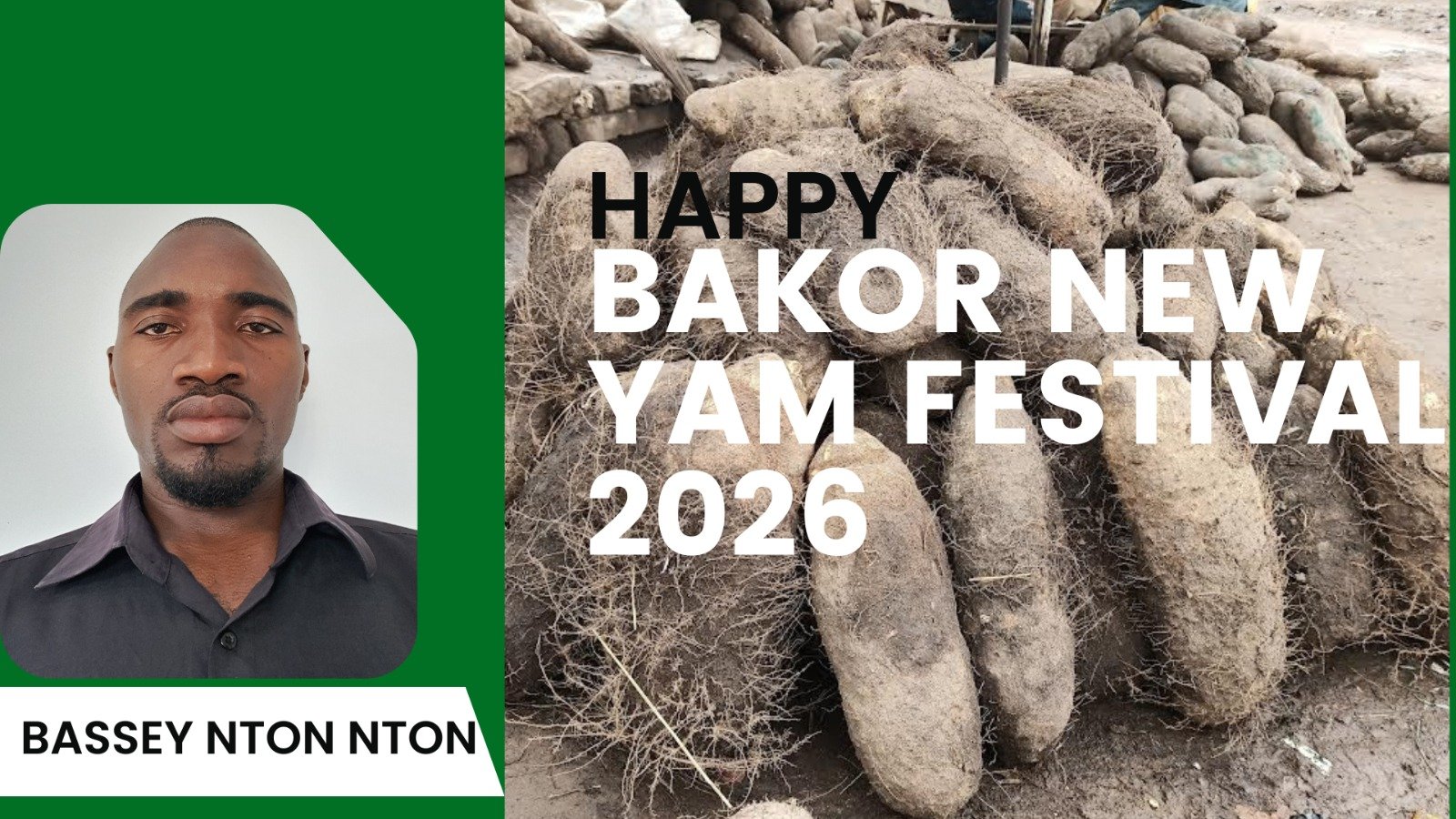
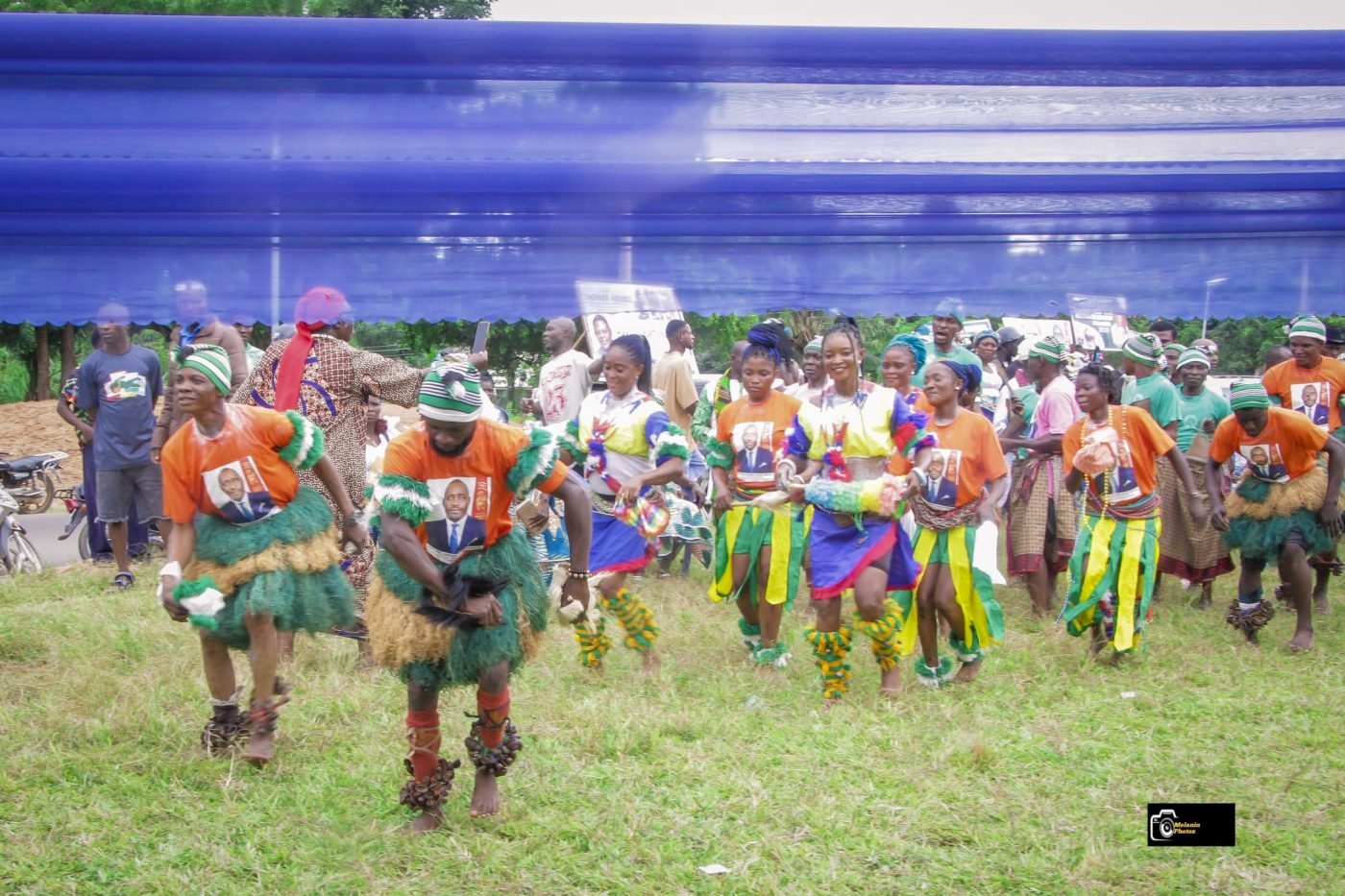
Every 15th of September, the whole of Bakor Nation comes alive. It’s marked by colourful cultural displays, masquerades, traditional dances, and music. What makes it especially moving is that it draws our sons and daughters home, those in the diaspora make the journey back to celebrate with us, and visitors come from far and near to witness it. For us, yam isn’t just food; it represents life, prosperity, and gratitude to God and our ancestors.
Q: Is there a particular moment in the festival that captures the unity of all nine clans at once?
A: Yes, and it’s actually one of the most unique aspects of our celebration. On the day of the festival, it isn’t just one traditional leader performing the yam ritual on his own, the traditional leaders and clan heads from all nine clans of Bakor Nation come together and take part jointly. They go to the farm, harvest the new yam, roast it, and eat it together as one body. This joint act is deeply symbolic. It represents the nine clans, as one Bakor Nation, granting permission to every citizen across the land to go to their own farms, harvest their yams, and begin eating the new harvest. So in a real sense, our unity as nine clans is what authorizes the celebration for everybody else, no household eats the new yam until their leaders have done this together.
Q: Can you walk us through how the festival actually unfolds?
A: Before the main celebrations begin at a chosen central location where the entire Bakor Nation assembles, each traditional leader is expected to harvest a tuber of yam in the early hours of 15 September and roast it over firewood coal. Once the roasted yam is ready, the traditional leader peels it, cuts it into pieces on a cocoyam leaf, and pairs it with freshly ground pepper in a locally made wooden plate — no oil is added. The leader eats a piece of the roasted yam with the pepper, and this act symbolizes that other households can now begin consuming their own new yam. From there, communities mark the feast with traditional dances, football tournaments, family sharing, and thanksgiving.
Q: Beyond the cultural significance, what role does the festival play economically?
A: It’s a real boost for us. The festivities support local farmers, small businesses, and cultural tourism, not just within Bakor Nation, but across Cross River State and Nigeria more broadly.
Q: You’ve spoken publicly about the future of the Bakor Nation, including the idea of a Bakor Local Government Area. Can you explain that?
A: Yes. When you consider Bakor Nation’s land mass, our population, our voting strength, and our economic contributions, from farming, both food crops and cash crops, to the revenue we generate for Cross River State and the federal government, I believe, in the spirit of democracy, that Bakor Nation is ripe for greater political recognition, even statehood-level consideration. We also have economic potential we haven’t fully tapped, tourism, for instance, and mineral resources across Bakor Nation that investors haven’t yet explored.
Q: What does the Bakor Nation need most right now?
A: Development. We need good roads, schools, including tertiary institutions, to uplift our people educationally. We need infrastructure that matches our contribution to the state and the country revenue.
Q: Looking ahead, how do you see the Bakor Nation preserving its identity for future generations?
A: It comes down to passing on our oral traditions, our music, and our native dialects to younger generations, that’s how Bakor customs survive. Our community leaders are also advocating for us to leverage our collective strength for modern educational, infrastructural, and socio-economic development. Fostering this kind of unity helps transform our historical ties into a real framework for regional progress.
Q: You mentioned untapped tourism and mineral potential earlier. Let’s stay on that, what exactly is Bakor Nation offering investors, and why should they look this way?
A: Bakor Nation sits on a combined landmass of roughly 2,800 to 3,000 square kilometers across Ogoja and Ikom Local Government Areas, with a population running into several hundred thousand people across our nine clans. We have fertile land already proven for food and cash crops, mineral deposits that have never been properly explored or exploited, and a cultural heritage, including the Nkarasi Monoliths and our deep Bantu-origin history, that is practically untouched from a tourism standpoint. What we’re missing is not potential, it’s investment and infrastructure.
Q: What would you say directly to international investors and development partners considering Cross River State or Nigeria more broadly?
A: I would say: come and see Bakor Nation for yourselves. We are open for business. Whether it’s agriculture, food crops and cash crops at scale, mineral exploration, or eco-tourism built around our monoliths, our festivals, and our rainforest landscape, the opportunities here are real and largely untapped. We offer land, labor, and a community that is organized, welcoming, and ready to partner. What we ask in return is genuine partnership, investment that brings roads, schools, tertiary institutions, and shared prosperity back into our communities, not just extraction. Bakor Nation wants to be a stakeholder in its own development, and we invite investors, development agencies, and government partners alike to work with us to make that happen.
Q: Any final words for the Bakor people celebrating this New Yam Festival?
A: Just my continued salute to the entire Bakor Nation. This festival is about unity, love, and harmony, appreciating the Creator for the new food given to Bakor Nation and, by extension, everyone who benefits from our yams, directly or indirectly. As we eat, dance, and celebrate today, I’d also urge every son and daughter of Bakor to think about preserving what makes us who we are, our language, our festivals, and our monoliths, for the generations coming after us. That heritage is the soul of Bakor. Happy New Yam Festival to all of us.