By Michael Akpang
For decades, Cross River State has been a fertile ground for raw football talents. But raw talent, without structure, withers into the oblivion once abandoned. Stories abound of brilliant secondary school stars who never made it beyond their dusty school football fields.
This narrative is fast changing, thanks to the vision of the MOJODA Pro Academy and its flagship grassroots project – the Secondary School Super XVI Tournament.
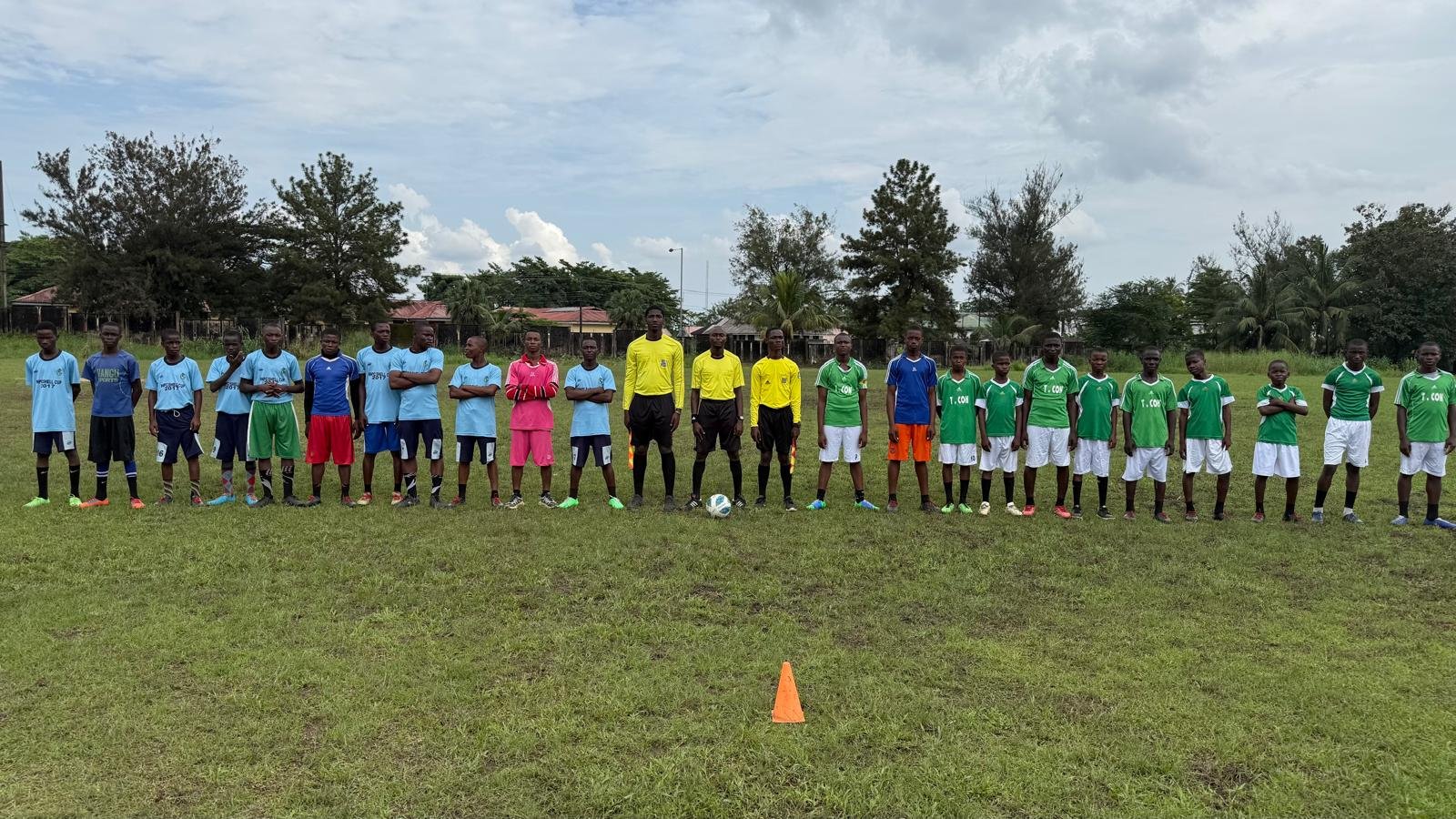
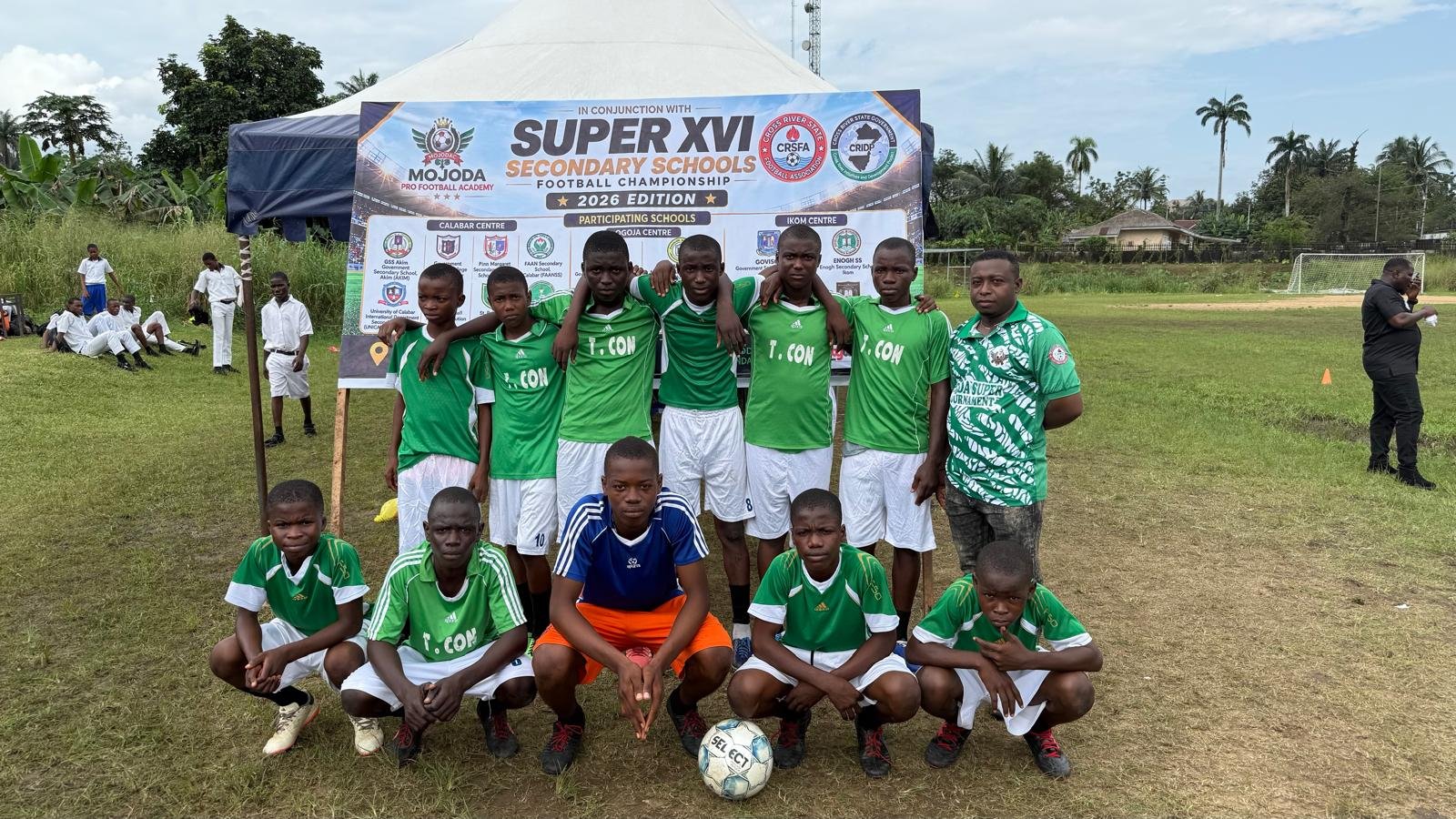
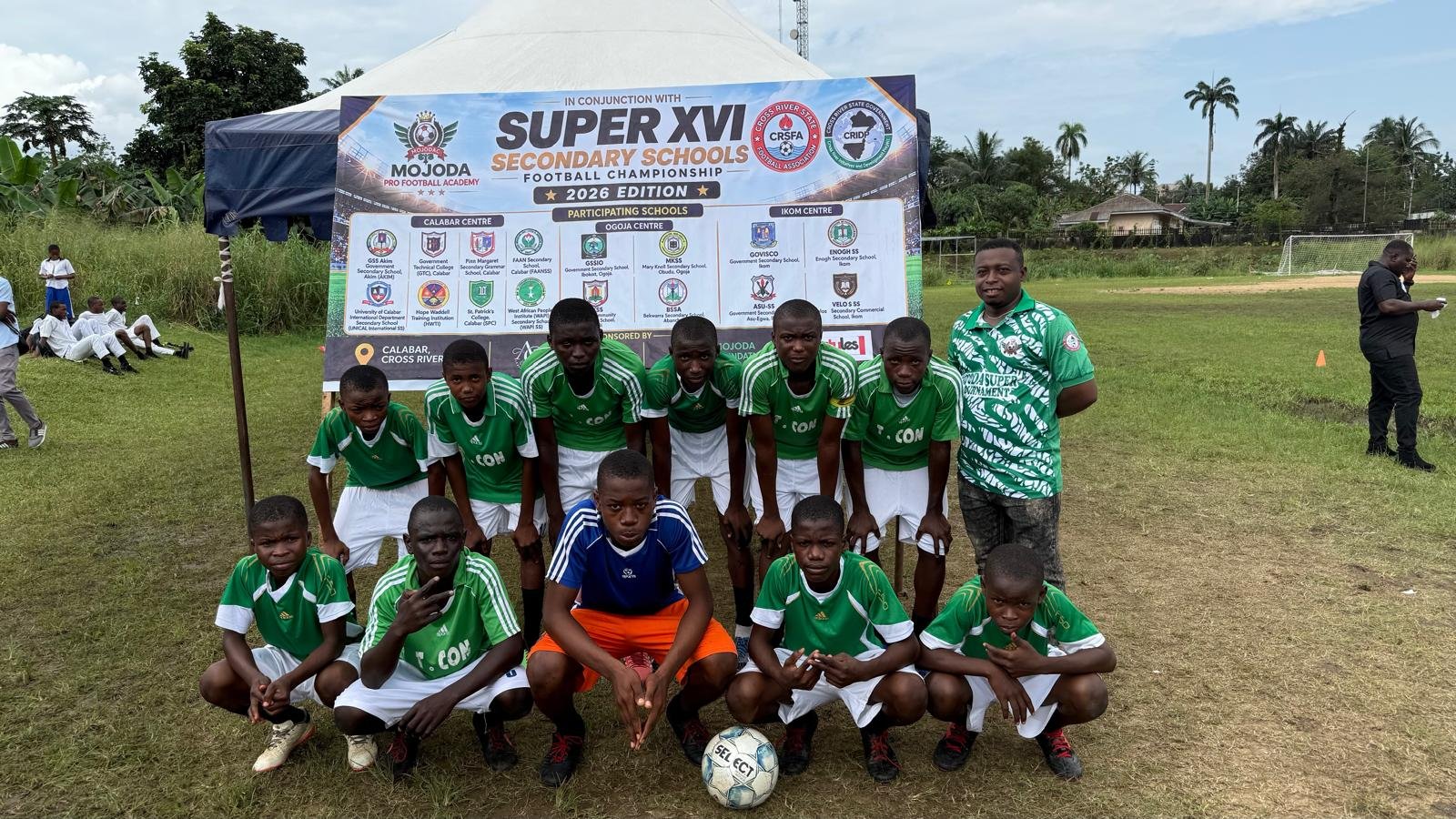
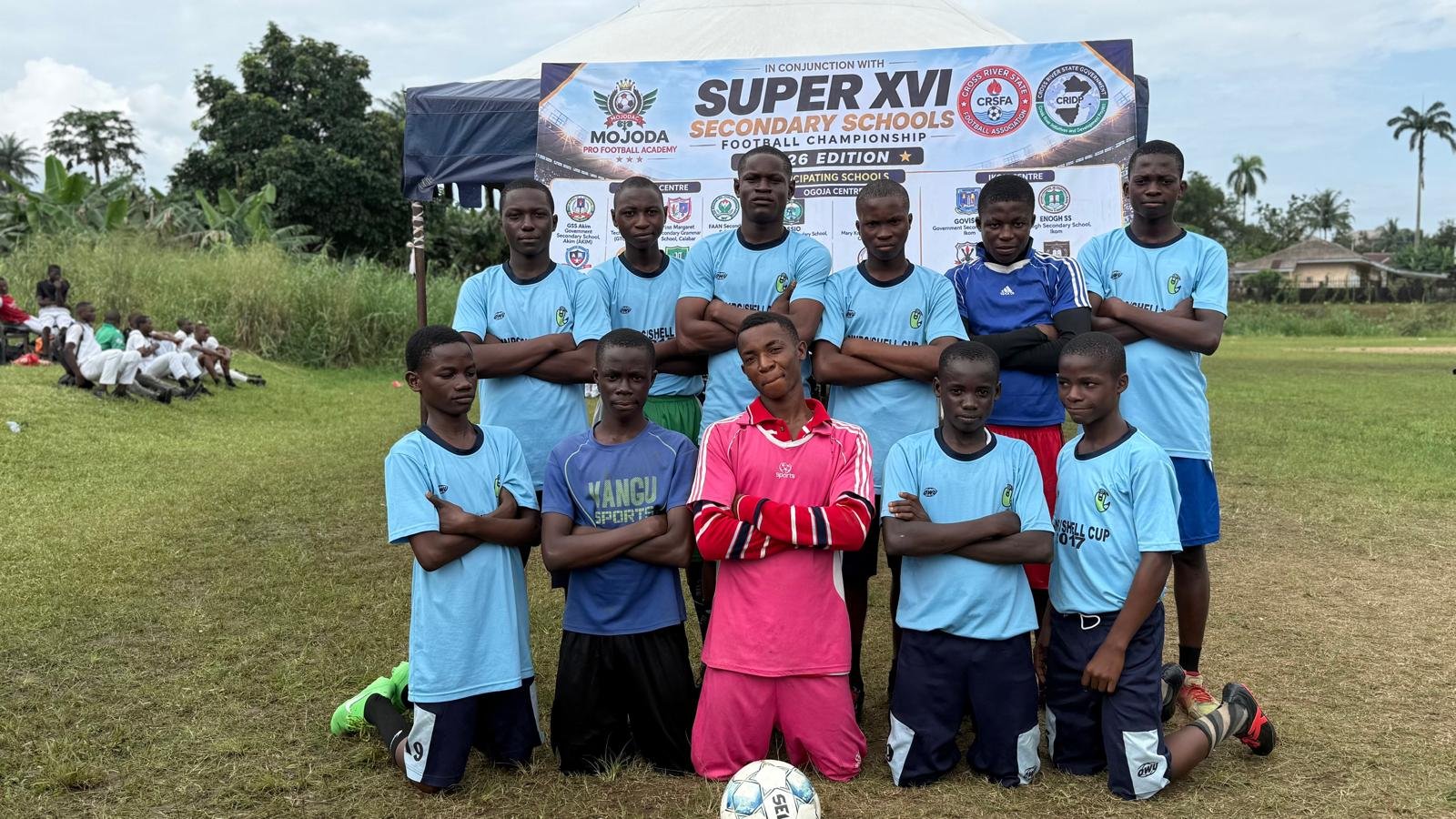
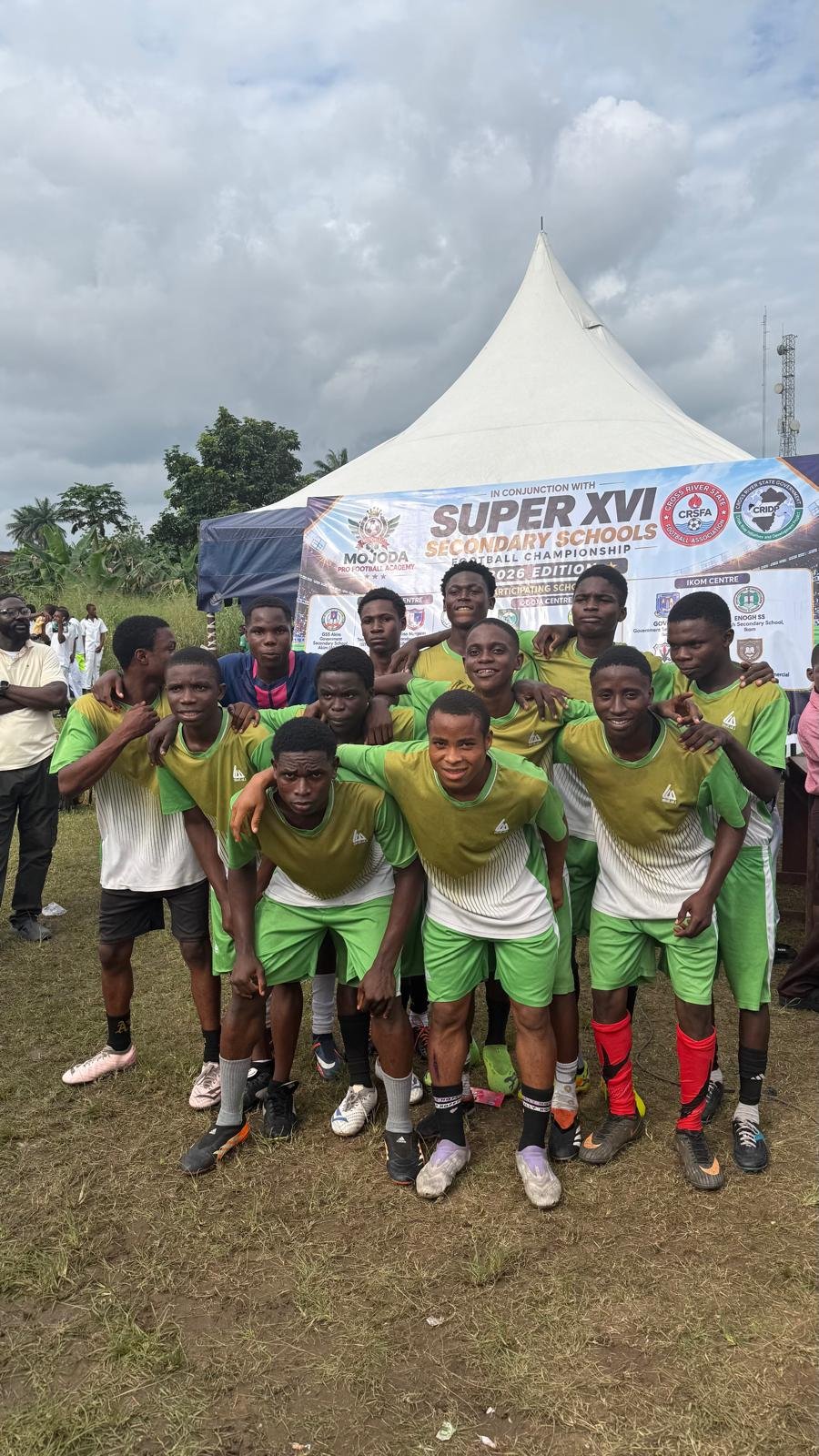
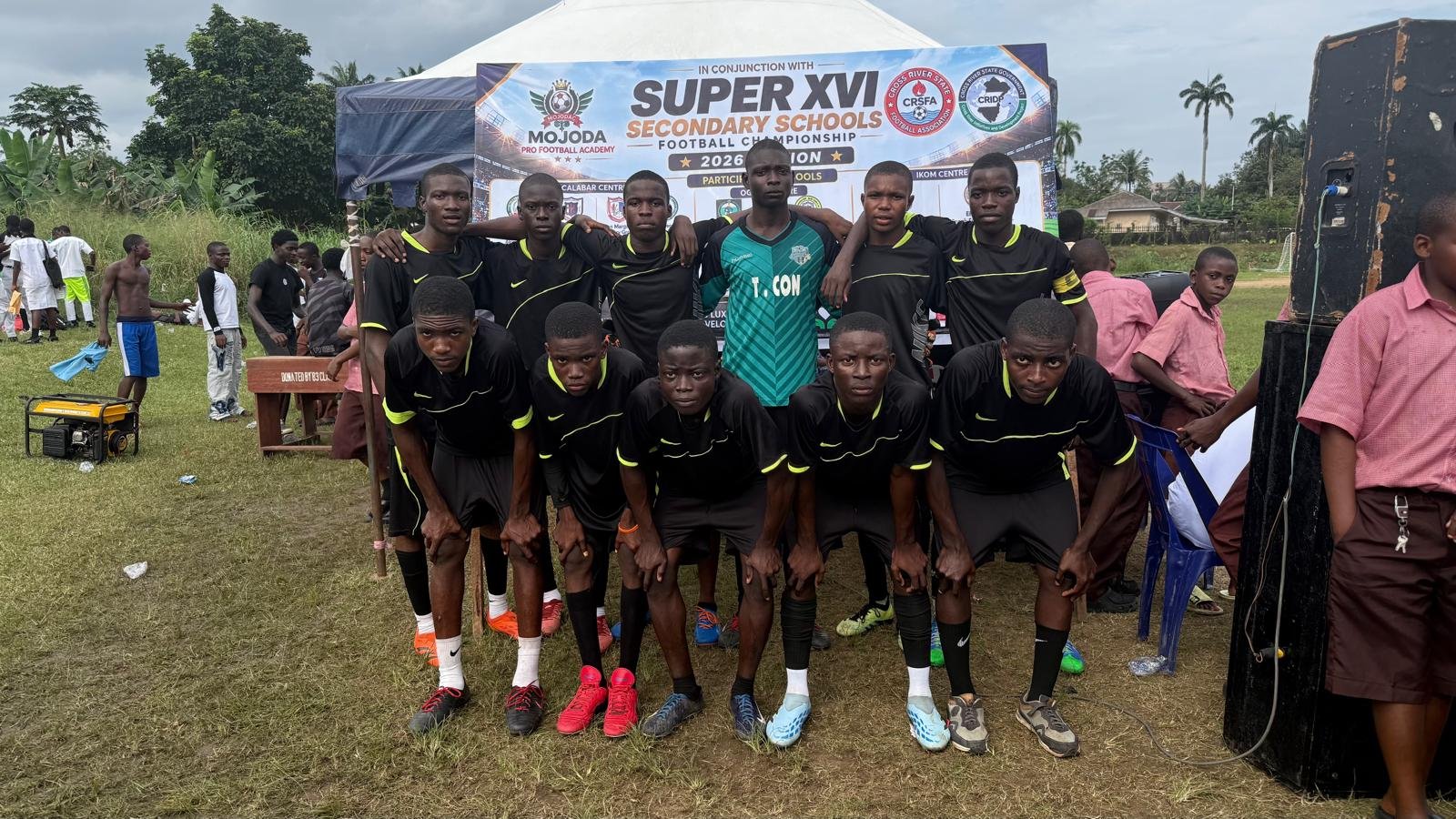
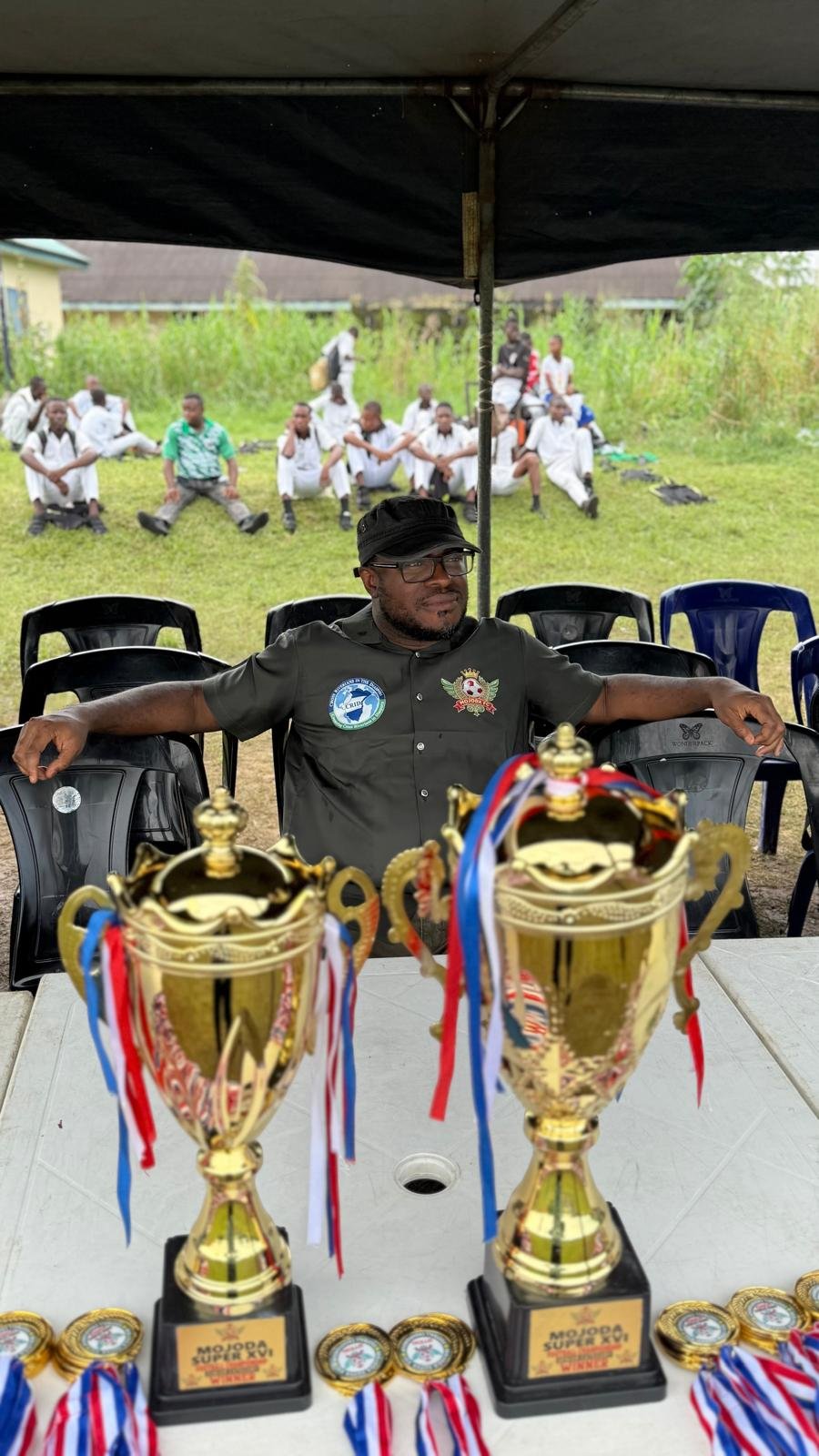
The 2026 edition of the SS Super XVI has just concluded, and it was more than a competition. It was a statement of intent, a well-crafted blueprint for discovering, harnessing and creating a clear pathway to a successful football career for the Cross River child.
Beyond a Trophy: A Talent Pipeline
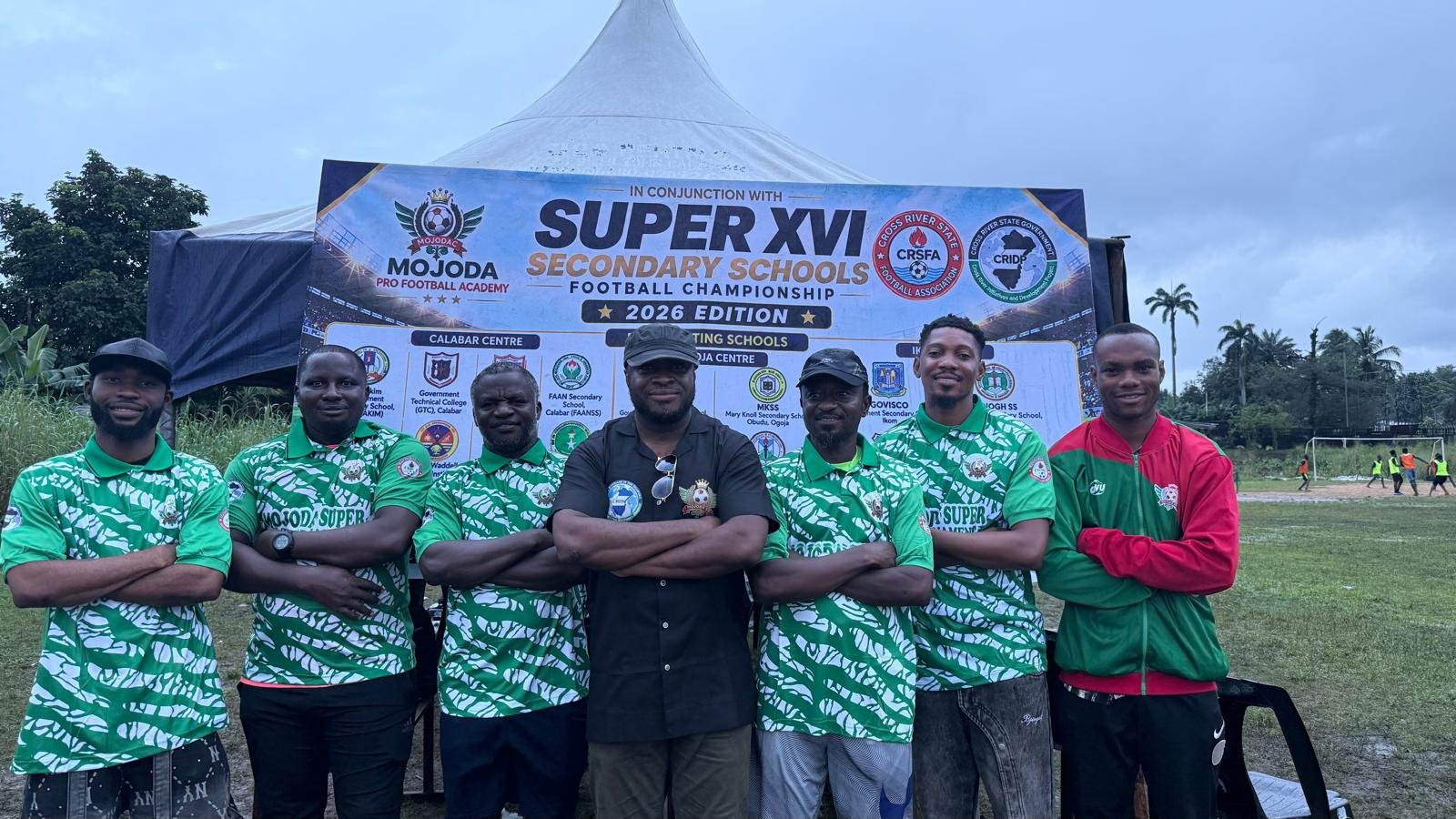
Organised by MOJODA Pro Academy in collaboration with the Cross Riverians in Diaspora Organisation and the Cross River State Football Association, the tournament was deliberately targeted at Government Secondary Schools across the three senatorial districts of the state.
Its aim was simple yet profound: to expose, nurture and promote football talents where they are most abundant – in our public schools.
And the organizers were strategic. Why 16 teams? As the Academy explains, the number is not arbitrary. It allows for optimal deployment of available resources and makes for a clean, highly competitive knock-out format that tests mental strength as much as football skill. In this model every match is a final.
The MOJODA Uniqueness: More Than a Football Academy
What makes the SS Super XVI different is what happens After the final whistle. In the 2026 edition, the talents discovered have not been left to return to obscurity. They have been largely integrated into the professional structure of the MOJODA Pro Academy, which trains at the historic Hope Waddell Training Institution in Calabar.
This is where the uniqueness of the MOJODA model shines.
First, it fuses education with elite football development. Exceptional talents discovered in far-flung centres like Ogoja and Ikom have not been abandoned. They have been offered scholarships to school in the prestigious Hope Waddell Training Institution, while training and developing with the academy after school hours. The message is clear: you do not have to drop out of school to become a professional footballer.
Second, the choice of Hope Waddell is symbolic and strategic. History records that football started in Nigeria in Hope Waddell in 1904. By bringing elite football development back to this hallowed ground, MOJODA is sparking a revolution in returning football to its cradle, and restoring the dignity of structured youth development.
Third, the net is wide. For talents from schools that were not part of the Super XVI, the door is not closed. MOJODA has opened a portal where young players can register their interest. They will be invited for taster sessions, and if they meet the cut, they will be admitted into the elite cadre of the academy for further development.
Pathways To A Professional Career Abroad
MOJODA Pro Academy offers more than football. It secures the future of its players through three career pathways:
1. Professional Football Abroad: Elite talents are prepared and connected via MOJODA’s international scouting network to trials and contracts with clubs in Europe, Asia and Africa.
2. US College Scholarship: Academically strong players are prepared for SAT and TOEFL, given professional soccer profiles, and placed on full or partial soccer scholarships in American universities to earn a degree while playing competitive football.
3. Entrepreneurial Skills: For those who may not turn pro, MOJODA provides vocational training in areas like sports management, coaching, media, fashion, catering and ICT to make them self-reliant.
In MOJODA, every child has a future, as a professional abroad, a scholar-athlete in America, or an entrepreneur at home.
The Diaspora Factor and Stakeholder Synergy
The success of the 2026 edition underscores a powerful truth: development is a collective responsibility. The contribution of Cross Riverians in the Diaspora Organisation has been pivotal. They have shown that love for home goes beyond rhetoric; they are investing in human capital, providing resources, mentorship and global exposure for these youngsters. They are true partners in progress.
The State Football Association has also provided the necessary technical and regulatory backbone, ensuring the tournament meets professional standards.
The Power of Secondary School Football
There is a growing agitation across Nigeria to take football development back to where it belongs – the secondary school.
Quite undoubtedly there is a consensus among stakeholders that the country’s dwindling fortunes at youth international football competitions and the persistent problem of age-cheating are direct results of abandoning school football tournaments.
For a long period, the Principals Cup was Nigeria’s greatest talent factory. It produced Segun Odegbami, Henry Nwosu, Stephen Keshi, Kanu Nwankwo and many others– all discovered as actual schoolboys with verifiable ages. The collapse of this structure had created a vacuum now filled by unregulated open tournaments where age is easily falsified.
The MOJODA model, therefore presents a ready-made framework that stakeholders can adopt and scale to turn around the prospect of football in Cross River State and Nigeria.
Secondary school tournaments like the MOJODA Super XVI have proven the most reliable way to discover true football talents because players’ ages can be verified through school records.
It focuses on the critical twelve to seventeen years window for basic technique and passion identifiable within the ages of twelve and fourteen, and for tactical and physical prowess, usually spotted within the ages of fifteen and seventeen. This early discovery window produced notable stars from Cross extraction like Gabriel Orok Ebitham, Edidiong Peter and goalkeeper trailblazer, Ndubuisi Egbo from Ogoja.
By combining education with professional training, the model ensures players are genuinely young, trainable, and capable of building long-term careers, free from age-cheating concerns.
What Next?
The vision does not end. The organizers have announced that 2027 will be bigger and better, with a Super XVI for Private Secondary Schools and another edition for Primary Schools. This will create a complete developmental pyramid, catching talents at the earliest possible age.
The SS Super XVI is not just a tournament. It is an ecosystem. It is proof that with vision, collaboration between local expertise and the diaspora, and a commitment to education, Cross River can once again become the nursery of Nigerian football.
The ball is now in the court of all stakeholders. Government, the corporate sector, parents and local communities must seize this revolution to unlock the immense untapped potential of Cross River’s football economy and Nigeria at large.