By Inyali Peter, PhD
For decades, Cross River State has suffered from a development culture where every administration arrives with its own ideas, abandons existing projects and starts fresh monuments to political identity. The result has been waste, abandoned assets and a state constantly restarting its journey instead of building steadily towards a clear destination.
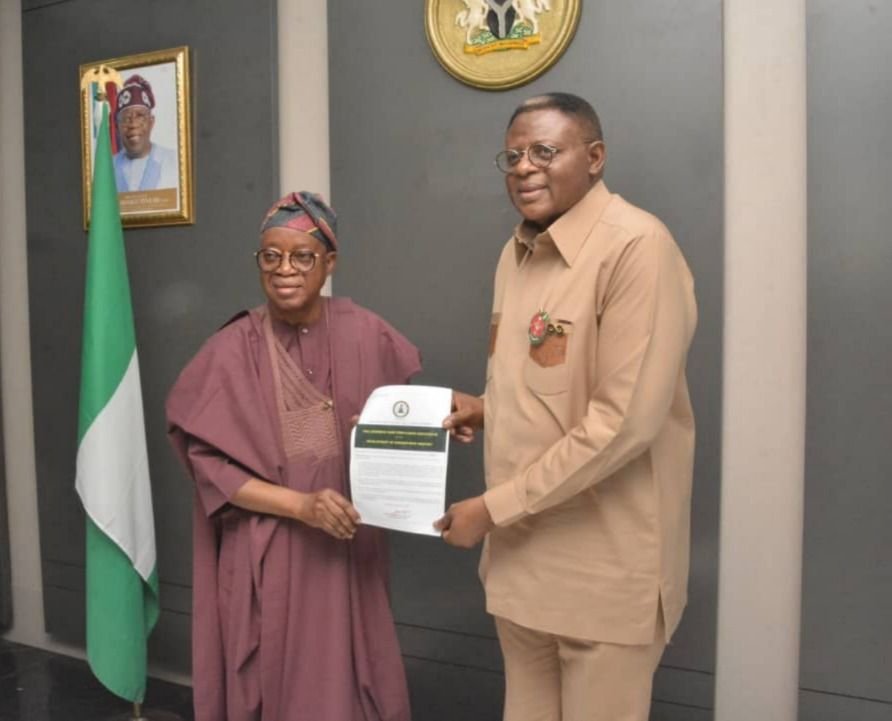
However, with the Federal Government approving certification and compliance processes for the Bakassi Deep Seaport, Governor Bassey Otu may have finally shown Cross River what real continuity in governance looks like. The significance of the project goes beyond maritime trade. It is symbolic.
Although the project was initiated under the administration of former Governor Ben Ayade, Otu has pursued it with seriousness instead of discarding it simply because it did not originate from his government. That is rare in Cross River politics. Ironically, almost every Governor after Donald Duke campaigned on the mantra of continuity, but governance in the state until now was largely disconnected, with each administration trying to create its own identity instead of strengthening existing foundations.
Besides, one of the biggest problems confronting Cross River has always been the absence of a sustainable master plan. Unlike states like Lagos, Akwa Ibom and Rivers where development follows structured blueprints regardless of political disagreements, Cross River has operated without clear direction. Every administration comes with distinct priorities, many of them unrelated to what already existed.
In an article on continuity in 2017, I faulted the past administration for abandoning the civil service complex initiated under Liyel Imoke administration despite materials already being on ground. The same was the case when the administration ignored the Tinapa Business Resort and started creating scattered mini-industrial park along Jonathan bypass instead of consolidating and strengthening existing economic assets.
Every project started by any administration is funded with public resources, so whether or not an incumbent government is pleased with its predecessor, it still owes the public the responsibility of making the best use of such projects to avoid wasting public funds. A good example is what FCT Minister, Nyesom Wike, is doing in Abuja, where most of the projects he is executing are either inherited projects being completed or existing ones being redesigned to meet contemporary needs.
In Cross River, the Otu administration has proven that it is different as the Governor appears more interested in functionality than political showmanship. Rather than creating a “Bassey Otu Industrial Park,” he focused on recovering Tinapa from AMCON. Instead of building another recreational centre to compete with existing ones, he is attempting to revive the Marina Resort. Rather than chasing entirely new airport projects like the one approved by the Obasanjo administration for Akamkpa, he is pushing completion of the Obudu Cargo International Airport approved started by Ayade. Even in road infrastructure, the administration seems more committed to rehabilitating existing roads to improve movement for citizens than launching grand highways that may never materialize.
In agriculture, the administration is not pursuing white elephant ventures for headlines; it appears focused on making the state’s existing rubber and palm plantations productive again while looking for new opportunities with the 7-year strategic plan. This may not produce dramatic media excitement, but it reflects governance driven by need rather than vanity. As I argued in my August 11, 2017 article titled “C’River Under Ayade: Between Need and Want,” many projects pursued in the past were things the state wanted, not necessarily what it needed most urgently.
Perhaps the most important aspect of the Otu administration is the reported move to establish a technical committee to develop a comprehensive master plan and blueprint for the state. If properly done, that document may become one of the greatest legacies of this government. Development becomes faster and more sustainable when administrations inherit direction instead of confusion. States making steady progress today are not necessarily better governed because of superior politicians; they are succeeding because governance follows structure, continuity and long-term planning.
The approval of the Bakassi Deep Seaport therefore represents more than another project. It is proof that Cross River can still dream strategically and grow economically without abandoning itself every four or eight years. It also destroys the lazy narrative that the state is a landlocked and opens fresh opportunities for jobs, commerce, internally generated revenue and youth empowerment.
Governor Otu deserves credit for keeping the vision alive, while former Governor Ayade deserves acknowledgment for conceiving it. In the end, the real winners should be the people of Cross River, if the state finally learns that real development is not just about constantly starting all over, but about building and expanding wisely on what already exists