The President of the General Court-Martial trying 36 Nigerian military personnel over an alleged plot to overthrow the government of President Bola Tinubu has cautioned lawyers representing the accused officers against what he described as “weaponising” the right to protest.
The Court-Martial President, Air Vice Marshal H. I. Alhaji, reportedly made the remarks during proceedings in the ongoing trial, while addressing the conduct and manner of interaction between members of the defence team and the court, SaharaReporters has learnt.
According to sources present during the proceedings, Alhaji said he could not imagine a Senior Advocate of Nigeria (SAN) or a senior military officer taking part in a protest, urging lawyers and other parties involved in the proceedings to exercise restraint and diplomacy in their dealings with the court.
“And I urge you not to weaponize the right to protest. Please. I cannot imagine seeing a senior advocate of Nigeria protesting,” Air Vice Marshal Alhaji was quoted as saying.
“I am sure we all have a very hard experience. So I cannot imagine a general officer protesting. It is not exciting.”
The military officer stressed the need for diplomacy and civility throughout the proceedings, noting that the parties involved are all human beings whose feelings could sometimes be hurt during heated exchanges.
“We should also be a little bit diplomatic in the way we talk. Okay?” he said.
“So we should also find a nice way of talking. We are all human beings. Sometimes our feelings get hurt.
“We should find this middle ground. The way we talk to each other.
The warning came amid heightened attention surrounding the trial of the 36 military personnel accused of being involved in an alleged plot to overthrow the Tinubu administration.
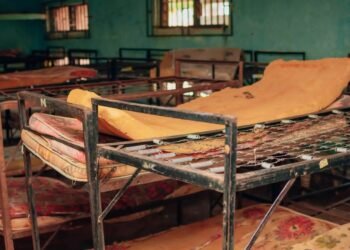
The accused personnel are being tried before the General Court-Martial, with their defence lawyers challenging aspects of their treatment and conditions while in detention.
During the proceedings, a lawyer representing the accused also appealed to the Court-Martial to reconsider the restrictions on the accused military personnel having access to members of their families.
The lawyer acknowledged the seriousness of the charges against the accused but argued that continued denial of access to their loved ones was adding to the psychological burden they were already facing.
“I also appeal to this honourable court to re-address the issue of the family of the accused persons,” the lawyer told the court.
“Yes, I know they are facing serious charges. And also, being denied access to members of their family constitutes another psychological turmoil on them.”
According to the lawyer, while the government had been providing for the accused personnel in detention, allowing them to see their family members would provide important emotional and psychological support during the prolonged proceedings.
“If the court would reconsider granting the family access, at least they are not with their family,” the lawyer said.
“But if there is a period, I know the government has been providing whatever it is, but for them to have access to members of their family, that is just a plea I want to make so that whenever they are going to see their family members in good health and also that they are sympathizing with their situation, their condition, but also to give a great effort also on their spirits for them to be able to continue to stand their hearing from the family from members of their family raises much concern about their welfare.”
The lawyer said regular contact with their relatives could help sustain the accused officers’ morale and enable them to cope with the psychological strain associated with the trial and their detention.
He therefore urged the Court-Martial to reconsider the issue and permit family members to visit the accused personnel.
“So I appeal also to the honourable court to consider the issue of granting the family members access to see their beloved ones,” he said.
“That is the appeal I want to make to the honourable court.”
The exchange highlights two separate concerns raised during the proceedings: the Court-Martial’s insistence that lawyers conduct themselves with restraint and diplomacy, and the defence’s plea for greater consideration of the welfare and family access of the accused military personnel.
The trial is one of the most closely followed military proceedings involving Nigerian officers in recent years, with the accused facing allegations relating to an alleged coup plot attempt.
(SaharaReporters)