
By Frank Ulom and Borda
Mining host communities in Cross River State have renewed calls for greater participation, transparency and benefits from limestone mining operations in Akamkpa and Akpabuyo Local Government Areas, alleging years of environmental degradation, inadequate compensation and exclusion from key decisions affecting their lands.
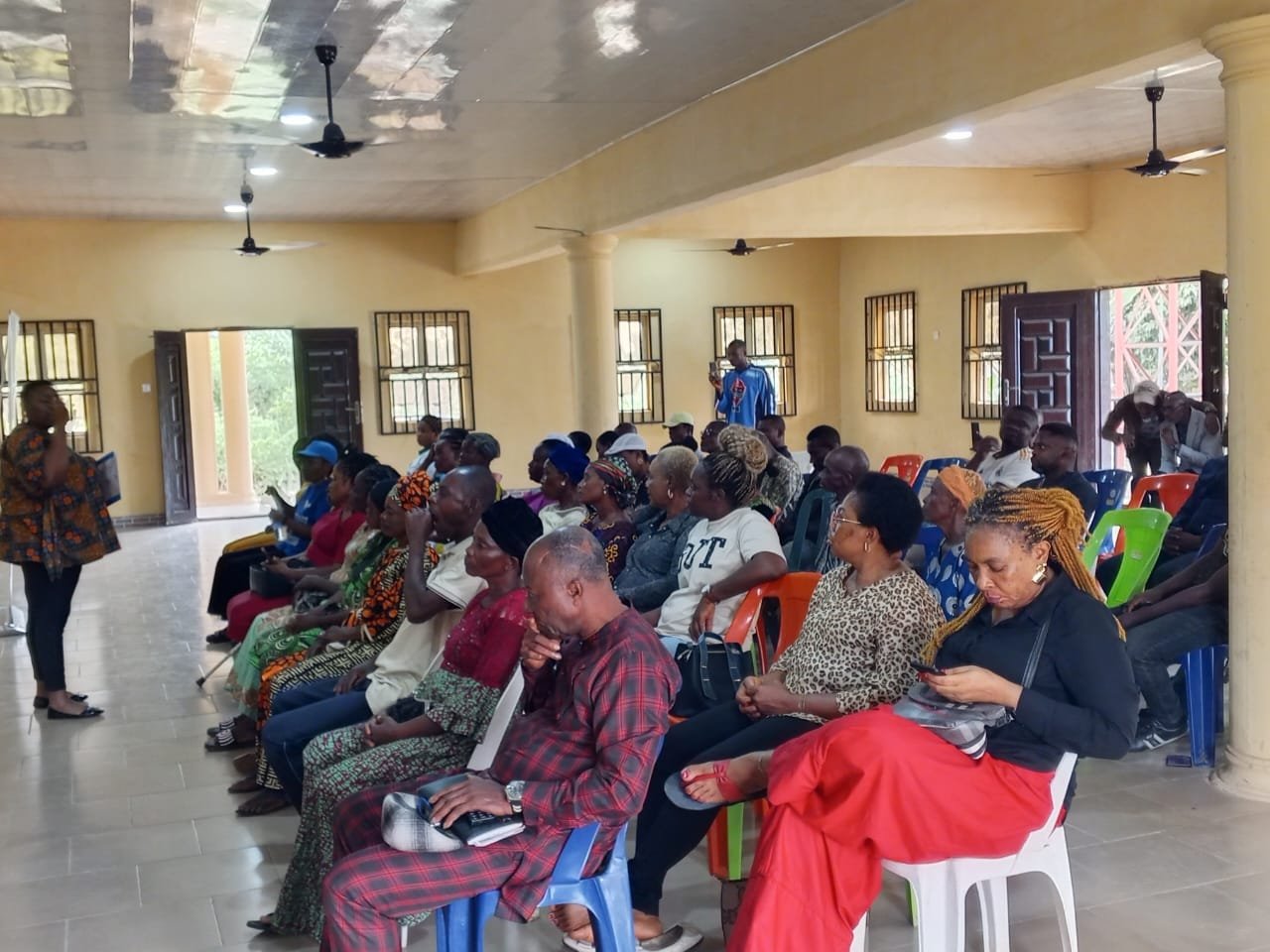
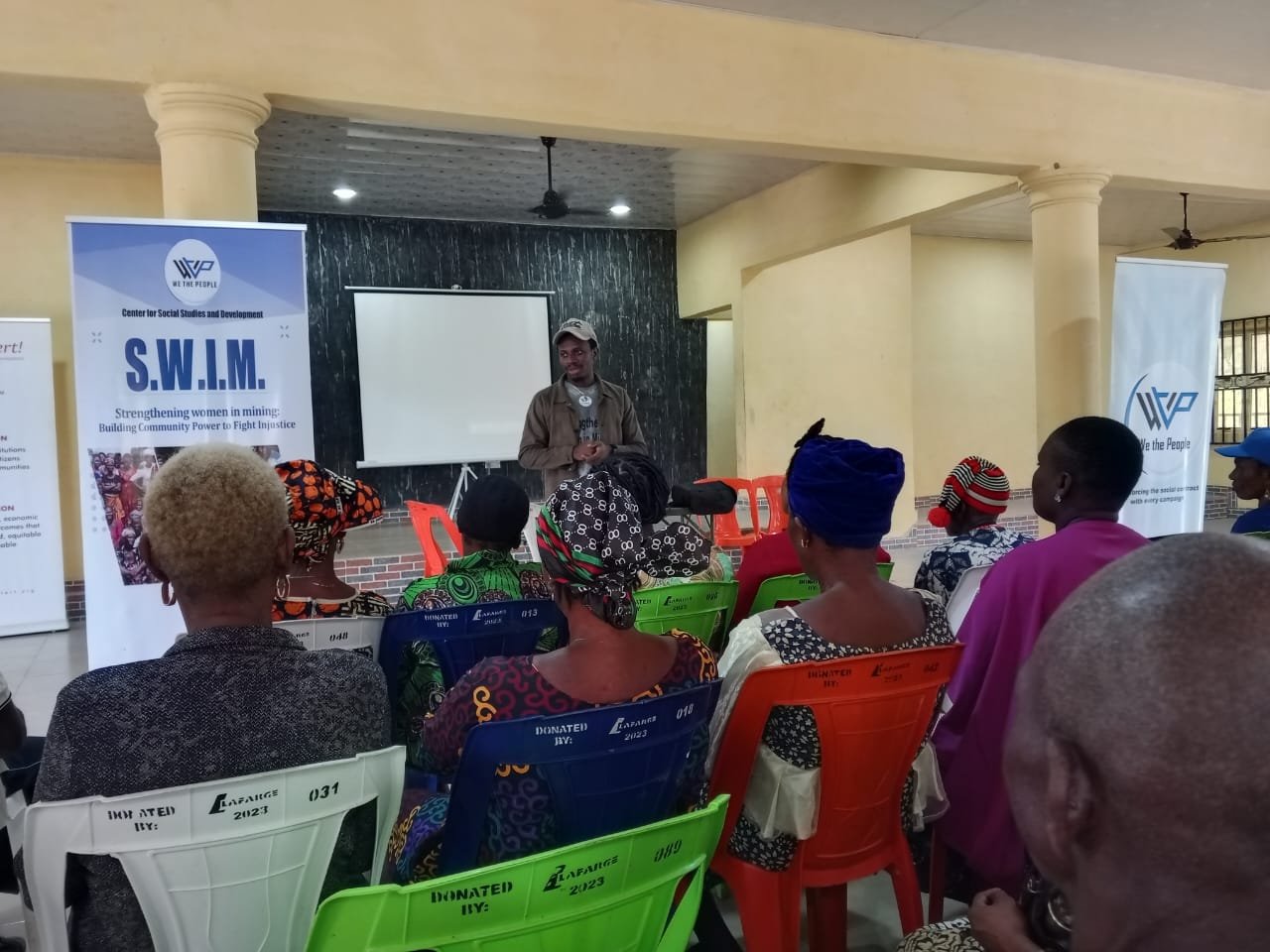
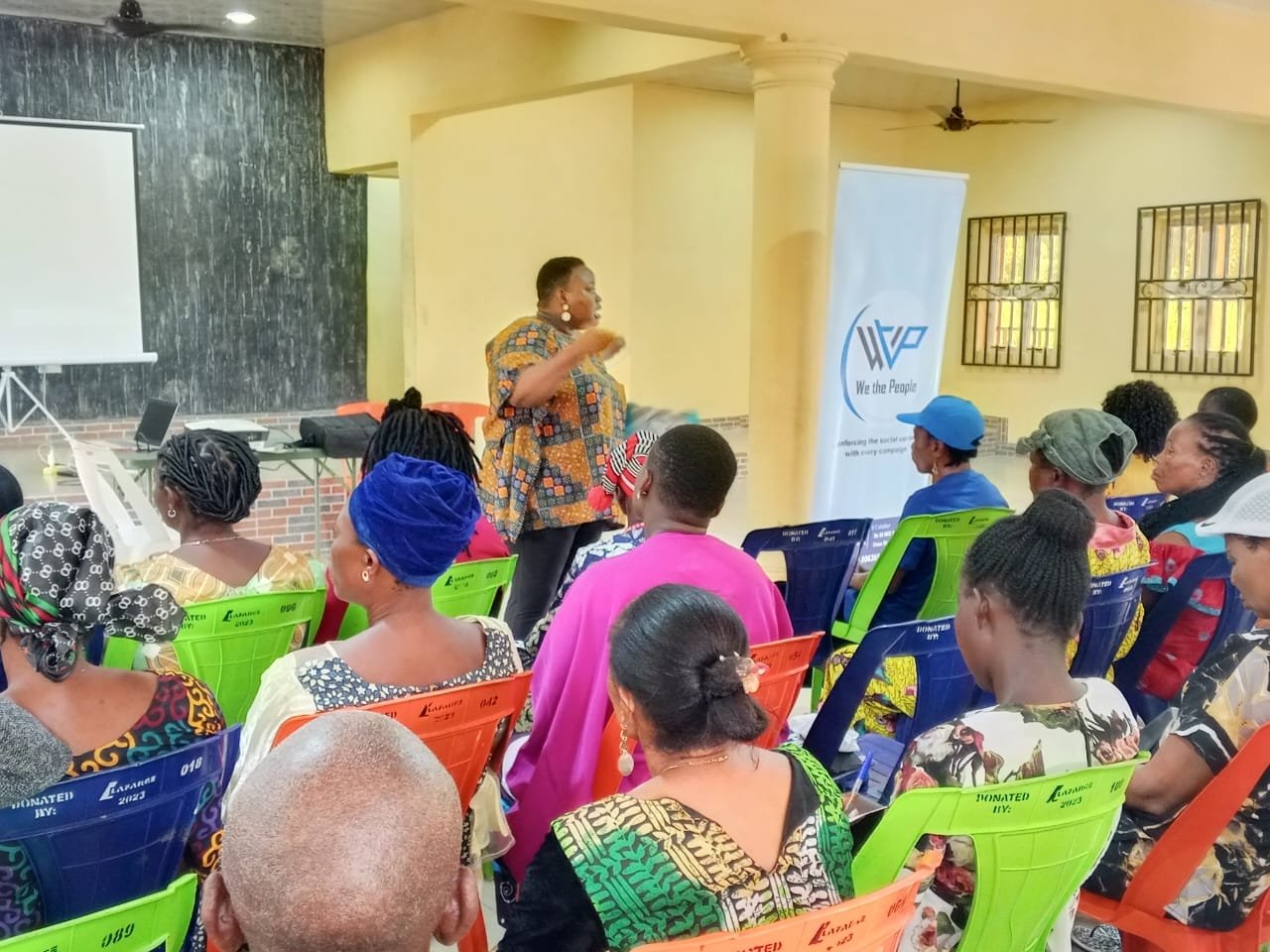
The demands were made during a community dialogue involving residents of Mbobui, Akansoko, Abiati, Mfamosing and Akwa Ikot Efanga communities, held at the Mbobui Town Hall on June 9 under the Strengthening Women in Mining (SWIM) Project.
Speaking at the event, Executive Director of We The People (WTP), Ken Henshaw, described Cross River as a major mining state whose host communities have borne the burden of extraction without commensurate benefits.
Henshaw said findings from preliminary investigations conducted in 2021 revealed what he described as a “long retinue of community abuses and inequalities” associated with mining activities in the area.
According to him, mining communities continue to grapple with health hazards, environmental challenges, livelihood losses, infrastructure damage and weak participation in decision-making processes.
“We continue seeing one company hand over to another company and another company hand over to another company. Communities are just there as very passive participants in this process, contributing absolutely nothing and having absolutely no say in it,” he said.
He argued that benefits provided by mining companies are often treated as goodwill gestures rather than rights owed to host communities.
“Companies from China and elsewhere cannot come here and hold the bigger stake over communities. Communities should hold the larger stake, and communities should decide by themselves if and when extraction happens and what they get from that extraction,” Henshaw added.
The WTP director also alleged that both communities and government were losing out financially from mining operations, claiming available data suggested that royalties and other payments due to the state may not be accurately assessed.
“From the data we analysed from 2021, the state government is being cheated. We think that the government is being fleeced up to 300 per cent of what it deserves to get from the operations happening here,” he said.
Henshaw said strengthening community capacity to monitor mining activities could help improve accountability and provide government with more accurate information on production volumes and revenue obligations.
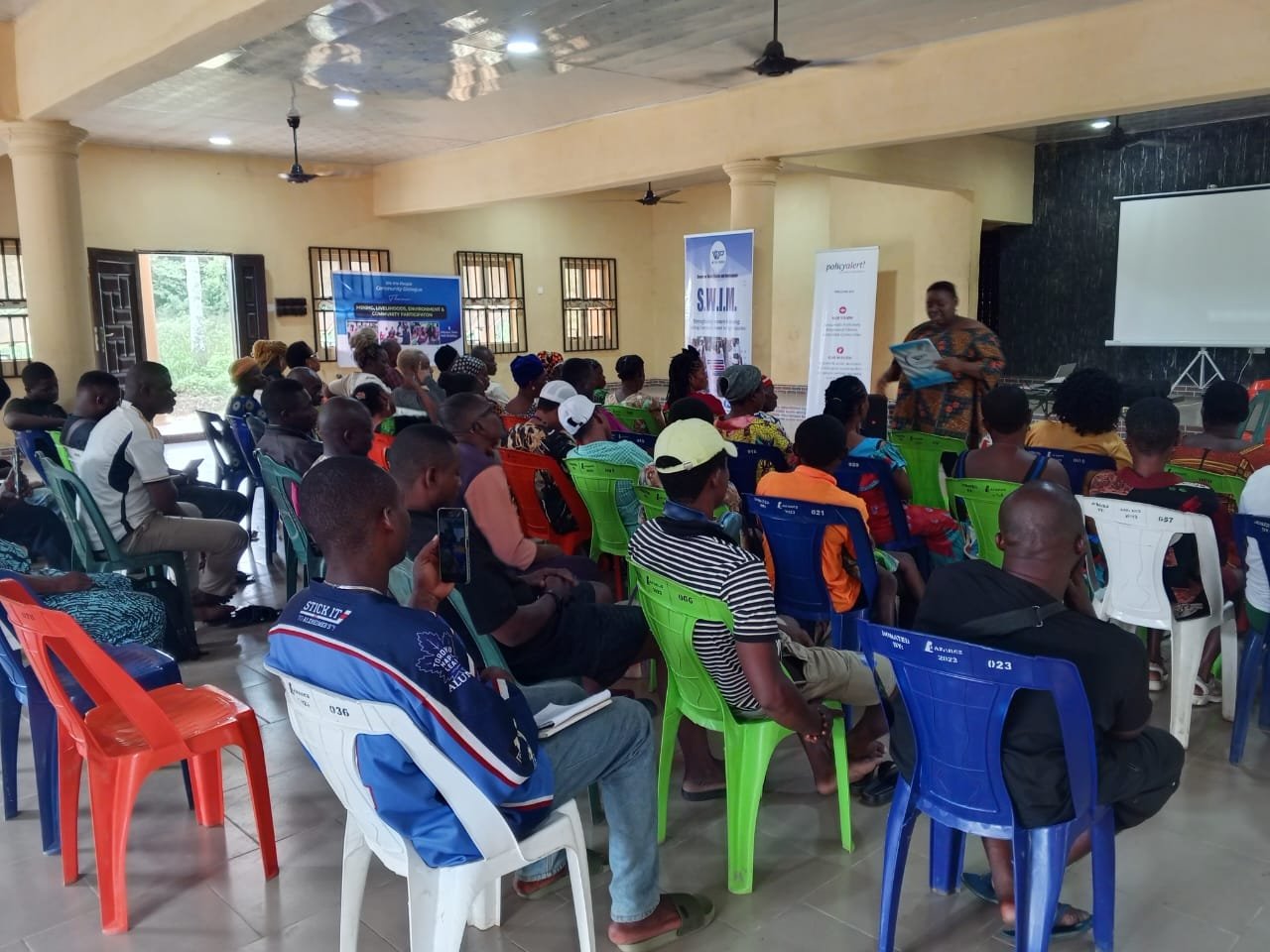
Also speaking, Policy Alert consultant and SWIM Project resource person, Mfon Gabriel, called for the establishment of a comprehensive Community Development Agreement (CDA) ahead of the anticipated renewal of Lafarge’s mining licence in 2027.
Gabriel alleged that a CDA signed in 2003 had been largely unimplemented, leaving host communities without many of the expected development benefits.
“For the past 24 years, the community development agreement that should have guided the development that Lafarge operations ought to have brought for Mfamosing communities is non-existent. Though there was one in 2003, it was largely unimplemented,” he said.
He maintained that any future agreement should be based on the informed consent of host communities and reflect the economic value derived from mining activities.
“We feel that the six communities hosting this asset have been robbed, exploited and shortchanged these past 25 years of operations,” Gabriel stated.
The consultant also called for independent environmental audits of mining operations, citing complaints of pollution, dust emissions, degradation of farmlands and inadequate compensation for damaged economic trees and assets.
He urged the Federal Ministry of Environment and the National Environmental Standards and Regulations Enforcement Agency (NESREA) to conduct on-site assessments to determine compliance with environmental regulations.
Gabriel further advocated greater investment of mineral-derived revenues in mining communities, arguing that areas hosting extraction activities should receive visible development benefits.
“When we came to Mbobui, the road was terribly bad. This doesn’t show that 13 per cent derivation has been received by the Cross River State Government,” he said.
A stakeholder from Abiati community, Raphael Effiong, acknowledged concerns over the distribution of mining benefits but argued that community leaders and contractors also bear responsibility for some of the challenges.
According to him, local contractors sometimes fail to prioritise community members for employment opportunities and, in some cases, execute projects below required standards.
“Lafarge cannot be blamed 100 per cent. Our local content contractors should also have part of the blame,” Effiong said.
He urged contractors awarded community projects to employ local youths and deliver quality work, stressing that communities must hold their representatives accountable.
Effiong noted that the six host communities include Abiati, Akansoko, Mfamosing, Mbobui, Akwa Ikot Efanga and another community that was not represented at the dialogue.
Also contributing, Akwa Ikot Efanga Women Leader, Reverend Rita Archibong, recounted previous efforts by representatives of host communities to organise and negotiate stronger agreements ahead of the reported transfer of mining assets to new investors.
Archibong said attempts to mobilise communities were allegedly resisted by some individuals benefiting from existing arrangements.
“We are looking for the rights of all the six communities who are the owners of the land, so that the mistake we made with Lafarge cannot be repeated this time,” she said.
She called for renewed unity among the host communities as discussions continue over the future of mining operations and licence renewals expected in 2027.
The dialogue formed part of ongoing efforts by civil society organisations to strengthen community participation in mining governance, improve transparency in the extractive sector and ensure that host communities benefit more equitably from natural resource exploitation in Cross River State.