• Ruling party, opposition face off as campaign begins
• We’ll campaign on results, reform delivery – APC
• What we’ll do differently on economy, security, job creation – ADC, NDC, ADP, others
By Omoniyi Salaudeen, with contributions from Romanus Ugwu, Adesuwa Tsan and Okwe Obi
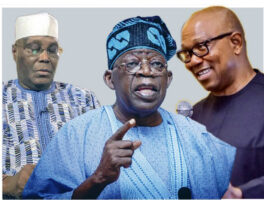
The 2027 general election is shaping up to be a highly competitive contest. As outlined in its schedule of activities, the Independent National Electoral Commission (INEC) officially lifted the ban on political campaigns on Wednesday, August 19, 2026. With the green light given, opposition parties and their candidates now have a six-month window to present alternative policy options capable of resolving the nation’s pressing security and socioeconomic challenges.
President Bola Ahmed Tinubu will be running for a second term, framing continuity and consolidation as the primary APC campaign slogan. But with economic pain still raw, incumbency is a double-edged sword. Ahead of the full commencement of electioneering, opposition parties have vehemently criticised the administration’s reforms, leveraging the inherent hardship as a key tool to fuel public resentment against the continuity agenda.
Though still lacking a clear unified direction, talks of a coalition remain very much alive. In a renewed effort to forge a common front, the G-100 group initiated a “Unity Summit” scheduled for August 31 to fine-tune how opposition forces can collaborate against President Tinubu. Led by Dr. Salihu Lukman, former APC National Vice Chairman (North-West), the group maintains that unity is essential to avoid repeating past missteps.
“As opposition parties, we seem to be fragmented,” Lukman stated, representing a coalition of figures across the PDP, ADC, NDC, APM, PRP, and SDP. “If we continue down this path, we are almost certain to repeat the 2023 scenario, essentially handing victory back to the ruling party and returning to square one,” he state.
Who bells the cat?
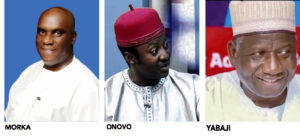
Despite the formal start of the campaign season, no major party has fully unveiled its campaign itinerary, nor does any candidate enjoy an unobstructed path to victory. In Nigerian politics, the opening stretch of a campaign is rarely about granular policy details—it is about strategic signalling. It signals to voters who came prepared, who is panicking, and who truly grasps the core issues of the election. The APC is forced to defend a challenging economic record, the PDP is chasing internal unity, the Labour Party is fighting to maintain its momentum, and groups like the ADC and NDC have yet to provide persuasive answers to the electorate’s hardest questions. The APC, which originally planned early rallies, shelved them to extend stakeholder consultations. APC National Publicity Secretary, Felix Morka, clarified that the delay was strategic.
“The party is coming up with a comprehensive and well-thought-out nationwide campaign schedule after necessary consultation with critical stakeholders and affected candidates. There is no law that says we must start on Wednesday.”
For the ruling party, 2027 will inevitably serve as a referendum on the Tinubu administration. Opposition figures recognise this, filling their speeches with references to food prices, fuel costs, joblessness, and insecurity. They are reading the national room correctly. However, some analysts have asserted that armchair expertise is easy when one does not bear the burden of governance.
APC’s delivery defence versus opposition strategies
As political parties roll out their strategic positioning, the ruling APC disclosed that its campaign would centre heavily on verified results and the delivery of promised reforms. Speaking through his Special Adviser on Media and Communication Strategy, Abimbola Tooki, APC National Chairman, Prof Nentawe Goshwe Yilwatda, addressed inquiries regarding how the party plans to tackle economic hardship, security challenges, inflation, and poverty. Tooki emphasised that the ruling party had recorded landmark achievements across multiple sectors to sustain an issue-based campaign. On economic matters, the APC noted that the next phase focuses on transitioning from macroeconomic stabilisation to household-level impact. The party intends to deepen on-going reforms while placing a sharper focus on translating overall growth into job creation, reduced business overheads, and improved purchasing power for ordinary citizens. The party emphasised that citizens should not merely read economic improvement figures on paper; they must feel the impact directly in their homes and businesses by supporting micro, small, and medium-sized enterprises (MSMEs), expanding productive sectors, and attracting sustainable investment.
Regarding inflation and the cost of living, the APC acknowledged that macro stabilisation remains insufficient while families struggle with daily essentials like food and transport. In response, the party plans to support stronger measures to boost local agricultural production, optimise supply chains, lower logistics expenses, and expand targeted social interventions for vulnerable households. The primary objective is to ease the real-world pressure experienced by families in their everyday lives rather than relying solely on paper metrics.
Addressing poverty reduction and national security, the APC detailed a shift from short-term dependency toward sustainable economic opportunity. While social protection programmes remain intact, they will be tied directly to skills acquisition, affordable financing, agricultural growth, and enterprise development.
On national security, the party outlined an emphasis on intelligence-led operations, enhanced inter-agency coordination, strengthened border management, technology integration, and continuous action against terrorism, banditry, kidnapping, and crude oil theft.
Additionally, the APC leadership highlighted communication and accountability as vital elements of its campaign approach. Recognising that citizens must fully understand policy decisions, the ruling party pledged to explain programmes more transparently, acknowledge existing difficulties honestly, and report progress against clear targets.
The party concluded that its central message to voters is straightforward: structural reforms have been established, and the next phase is focused entirely on tangible delivery and measurable improvements across the country.
Rhetoric and alternative policy blueprints
At this critical juncture, the spotlight naturally falls on leading opposition figures like former Vice President Atiku Abubakar of the ADC and Peter Obi of the NDC. Both men remain formidable figures on the political chessboard, yet their current engagement with the public raises important questions about substance versus opposition posture.Atiku Abubakar continues to present himself as the experienced statesman with the gravitas and structural reach to reset the national economy. His supporters emphasise his background in economic deregulation, public-private partnerships, and fiscal decentralisation. However, much of Atiku’s public commentary in recent months has centred on attacking the Tinubu administration’s implementation of subsidy removal and exchange rate unification. Criticising the administration in a recent interview, he promised to restore fuel subsidy if elected. “I did not oppose the removal of the oil subsidy, but where is the money? Where did it go? It was intended to reduce poverty and help children attend school. Where is the money now? It seems they are just stealing it. If elected, I will bring back the oil subsidy, and whoever stole the money must refund it,” Atiku said.
While these criticisms resonate with the populace feeling the pinch of inflation and fuel subsidy removal, Atiku has yet to roll out an updated, detailed policy paper that explicitly demonstrates how his proposed fiscal framework would curb soaring living costs without reintroducing unsustainable government subsidies. All major presidential candidates backed fuel subsidy removal as the only fix for persistent scarcity. Proposing its restoration now is a stark U-turn—a policy somersault that threatens to plunge the nation back into systemic fraud and rent-seeking.
Critiquing both sides of the political divide, renowned oil expert, Martin Onovo, described Atiku as a desperate politician who cannot be trusted, while simultaneously characterising the current subsidy regime under the Tinubu administration as inherently flawed. Speaking in a telephone interview with Sunday Sun, Onovo argued: “While I think Atiku is desperate and cannot be trusted, I also know that Tinubu’s policy is reckless and technically fraudulent. Ordinarily, subsidy is the difference between the cost of production and the price. It is technically dubious for the administration to use the price in the international market for a local product. Why will anybody tell us to pay international price for a local product? Why should Dangote import what we produce?”
Onovo further pointed to international precedents and historical domestic frameworks to illustrate his point: “The price of petrol in Iran or Venezuela is not the same in the US. But what they are telling us in Nigeria is that we should pay international price. During the Abacha administration, Professor Sam Aluko established the production cost and asked the government to put the surplus into the PTF. That is the right thing to do. That is what I would have done if I was the president. When I ran for Presidency in 2015, I said that I would sell petrol at N45 per litre. So, the first thing is to eliminate the corruption in the sector. With the onset of campaigns, I expect all candidates to speak to security issues. For me, that is the first thing. The second thing is poverty. Poverty has many dimensions—it has dimensions of inflation, lack of access to healthcare delivery, food security and so on,” he said.
Similarly, Peter Obi, whose 2023 run energised a massive demographic of young Nigerians, remains a potent symbol of alternative governance. Obi’s political capital is built on messages of fiscal discipline, production-centred economic growth, and cutting the cost of governance.
Outlining its foundational platform, the Nigeria Democratic Congress (NDC) announced that its campaign will centre on shifting the national economy from consumption to production while aggressively tackling insecurity, inflation, unemployment, and multidimensional poverty. Speaking in an interview with Sunday Sun, the party’s National Publicity Secretary, Osa Director explained that the party intends to distinguish itself through open, sincere engagement with the country’s pressing challenges. Central to the NDC’s economic strategy is a plan by its presidential candidate, Peter Obi, to prioritise industrial revival by reopening moribund factories and establishing a supportive environment for local industries to thrive. The party also plans to address foreign exchange volatility to help stabilise the Naira and allow it to find its true value.
According to the party leadership, boosting domestic production serves as the most effective mechanism to expand supply, lower inflation, and generate widespread employment to lift citizens out of poverty.
On national defence, the NDC pledged to ensure security agencies are properly compensated, well-equipped, and continuously trained. While acknowledging recent military pay adjustments, the party emphasised that eliminating the diversion of security funds into private accounts will remain a strict priority under an NDC-led administration.
Acknowledging that economic recovery requires time, the party spokesman noted that commitment and sound policy execution will gradually pull the nation out of its current doldrums. The NDC confirmed that while its national campaign structure will be formally unveiled shortly, candidates running for National Assembly seats have already been directed to begin outreach at the local level.
Adding to the alternative perspectives emerging across the opposition spectrum, Action Democratic Party (ADP) National Chairman, Yabaji Sani, says the party’s 2027 campaign will focus on insecurity and the economy, arguing both can be fixed with political will.
On security, Sani stated Nigeria had sufficient resources and personnel to tackle insecurity but lacks accountability. He said security chiefs across the police, army, navy and air force must be held responsible for incidents within their jurisdictions. According to him, funding must come with consequences, including sackings, to end “business as usual.” He compared Nigeria to other nations with fewer resources but better security outcomes, attributing their success to accountability.
On the economy, Sani dismissed it as “not rocket science,” saying Nigeria’s comparative advantage lies in oil and gas. He argued the sector must be effectively managed to generate revenue for investment in agriculture and other areas. He accused the current administration of failing to properly manage the sector, alleging crude oil theft is worse and more opaque than before. Sani advocated adopting international best practices, citing the United States’ use of technology to monitor oil production and sales. He said Nigeria sells crude on FOB terms instead of CIF, which limits leverage in bilateral trade. He concluded that an ADP government would prioritise transparency, accountability and proper management of oil and gas proceeds, describing it as the foundation for funding other sectors and driving economic growth ahead of 2027. Yet, in this early phase of the 2027 cycle, Obi’s messaging has predominantly mirrored general public frustration rather than offering structured strategic roadmaps. His widely shared commentary focuses heavily on pointing out administrative lapses, fuel price hikes, and public sector waste.
While identifying these issues keeps his base engaged, the 2027 electorate will require more than diagnostic outrage.
Beyond highlighting what is wrong, Obi must present technical, operational blueprints detailing how an NDC administration would stabilise the Naira, lower energy costs, and overhaul the national security architecture within legal and institutional frameworks. Noise is cheap; actionable ideas are rare and expensive. Beyond rhetoric, the electorate will be looking for candidates who can articulate clear, realistic solutions to the nation’s myriads of problems. If candidates fail to clearly outline these solutions, widespread voter apathy remains a serious risk.
The economics of a six-month campaign
Unlike previous election cycles, this six-month campaign calendar introduces an extraordinary financial and logistical endurance test for political parties. Running a continuous national campaign for half a year in a country as geographically vast and ethnically diverse as Nigeria requires immense financial capital. An extended campaign schedule implies continuous operational costs: maintaining campaign headquarters across 36 states and 774 local government areas, funding media placement, financing nationwide travel, procuring campaign collateral, and deploying thousands of agents to polling units on election day. An edge will naturally belong to political structures capable of sustaining funding from the ward level all the way to the presidential stage. This reality places a heavy burden on opposition parties.
While the ruling APC can leverage incumbent network density and institutional advantages, opposition figures must rely heavily on private donations, party dues, and personal fortunes. In a tight financial environment, maintaining momentum over six continuous months without running out of resources or over-leveraging campaign finances will test the managerial competency of every presidential candidate.
N10bn spending limits and enforcement challenges
This financial reality collides directly with the statutory framework governing election spending. Under Section 92 of the Electoral Act 2026, campaign expenditure ceilings have been significantly revised upward to reflect economic inflation. The statutory spending limit for presidential candidates now stands at ₦10 billion, up from the ₦5 billion limit imposed during the 2022 framework. Furthermore, Section 92 restricts individual contributions to a single candidate to a maximum of ₦500 million, while prescribing penalties—including fines equivalent to one per cent of the permitted threshold, up to 12 months imprisonment, or both—for candidates who knowingly exceed these limits.While the ₦10 billion ceiling offers candidates greater statutory breathing room, political analysts and civil society organisations express deep scepticism regarding compliance and enforcement. In real terms, executing a six-month, nationwide presidential campaign across 176,000 polling units easily eclipses statutory thresholds when accounting for logistics, broadcast advertising, ground operations, and grassroots mobilization. This gap between statutory regulation and operational reality exposes a chronic enforcement deficit.
INEC is tasked with monitoring campaign accounts and auditing party finances, yet the commission faces significant institutional limitations in auditing complex, decentralised campaign expenditures. In practice, off-the-books spending, third-party support groups, and unmonitored cash transactions regularly bypass official accounting channels. Unless INEC, in collaboration with anti-graft agencies, establishes robust real-time financial tracking mechanisms, the ₦10 billion spending limit risks remaining a symbolic statutory benchmark rather than an enforced rule of law.
Voter mobilisation and key deciders
Beyond the airwaves and financial logistics, voter participation remains a critical vulnerability. Electoral data reveals millions of uncollected Permanent Voter Cards (PVCs) alongside new registration windows that political parties have largely overlooked. An election cannot be won with supporters who are unable to vote; the party that pairs campaign energy with aggressive voter registration and PVC collection drives will secure a distinct advantage.
As electioneering intensifies, three key factors will likely define the outcome. First, the economy will play a central role. If food inflation and energy costs remain acutely high into late 2026, the demand for change will become the default voting impulse. Second, public sentiment regarding security will depend heavily on whether local government areas and major transport corridors experience tangible safety improvements. Finally, youth participation will be decisive, as voters under 35 constitute over 40 per cent of registered voters and demand direct digital engagement, clear economic roadmaps, and accountability over traditional political town halls.
As the dust settles on the first week of official campaigning, three realities about the general election have become unmistakable. First, this will be a contest defined less by slogans and more by substance. With President Bola Ahmed Tinubu seeking a second term on a platform of continuity, and the opposition rallying around the language of rescue and fairness, voters are being forced to choose between defending a painful reform agenda and trusting an alternative that is yet to be fully articulated. The economy, therefore, sits at the centre of the campaign. Food inflation, fuel costs, joblessness, and the daily struggle for survival will weigh heavier on the ballot than party logos or regional loyalties. Whichever candidate can credibly explain how to ease these burdens without promising miracles will own the most powerful argument.
Second, structure and stamina will matter more than noise. The six-month campaign window introduced by INEC is an endurance test. It favours parties with deep pockets, strong grassroots networks, and the discipline to sustain visibility from ward to national level. The APC holds the advantage of incumbency and state machinery. But the opposition’s survival depends on whether the G-100’s Unity Summit and similar coalition talks translate into a real electoral alliance, and whether parties like the ADC and NDC can move beyond criticism to present detailed policy blueprints. Nigerians have heard diagnoses before; they will demand prescriptions.
Third, the election will ultimately be decided by mobilisation, not just messaging. Millions of PVCs remain uncollected, youth voters under 35 constitute over 40 per cent of the electorate, and trust in INEC’s processes will be tested daily. The party that pairs its campaign rallies with aggressive voter registration, PVC collection, and digital engagement will convert enthusiasm into votes.
Campaign 2027 has started with signals. In the months ahead, those signals must become solutions. Because when Nigerians go to the polls, they will not just be voting against hardship. They will be voting for hope that feels tangible, leadership that feels competent, and a future that feels possible.
(The Sun)