- New Onshore Crude Oil and Gas Exploration Opens a New Chapter for Cross River State
The inclusion of the Calabar Flank in the Nigerian Upstream Petroleum Regulatory Commission (NUPRC) 2025 Licensing Round, with three petroleum blocks—PPL 2A61, PPL 2A62 and PPL 2A45 constitutes a major institutional and investment validation of Cross River’s petroleum potential.
NUPRC itself describes the Calabar Flank as a historically underexplored geological province with significant potential for future discoveries.
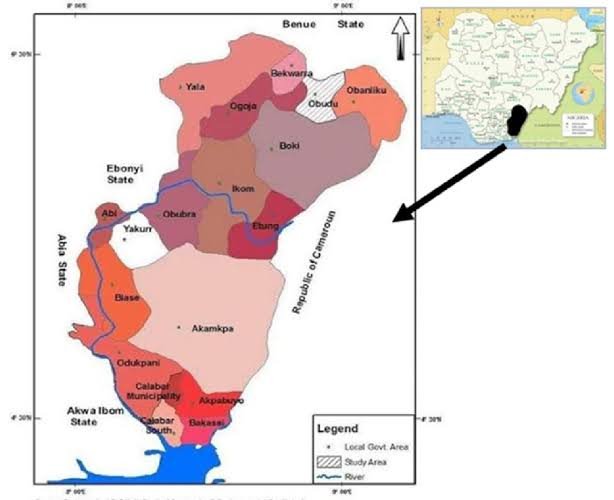
This development is particularly significant around the Ikang, Calabar and Odukpani–Mbiabo petroleum corridors, where historical exploration produced wells including Ikang-1 and the Calabar wells, alongside the long-documented capped and abandoned wells around Mbiabo Ikot Offiong.
The current licensing cycle creates an opportunity to subject these historical petroleum frontiers to modern seismic interpretation, subsurface modelling, exploratory drilling and contemporary oil-and-gas technology.
The commercial dimension is equally important. At the NUPRC commercial bid conference of 21 July 2026, 31 companies emerged winners of 37 oil and gas blocks, including Saratoga for PPL 2A45, Clinton Oil Field for PPL 2A62 and Nikstallis for PPL 2A61.
Final awards has been made and payment of the applicable signature bonuses are ongoing and in accordance with the Petroleum Industry Act is almost concluded and the companies are processing their entry process into Cross River State
This, therefore, represents more than another licensing exercise. It is the transition of Cross River’s petroleum narrative from historical evidence and political agitation toward regulated investment, exploration and potential commercial development.
The presence of new investors in the Calabar Flank demonstrates that the province is now being treated within Nigeria’s upstream architecture as a legitimate frontier for petroleum exploration.
This moment deserves particular recognition for Sen. Prince Bassey Edet Otu, Governor of Cross River State, whose administration has consistently pushed the State’s agitation for recognition of its oil-producing status and greater participation in the petroleum economy.
The Governor’s persistence in placing Cross River’s petroleum question within the national policy and development conversation has helped sustain the momentum toward a conclusion that is now increasingly reflected not only in political recognition but also in regulatory action, licensing and investor participation.
The significance of Governor Otu’s intervention is that the conversation is moving from “Does Cross River have petroleum potential?” to “How do we responsibly develop and convert that petroleum potential into revenue, investment, employment and sustainable development?”
FROM OIL STATUS TO OIL ECONOMY.
The next task is therefore bigger than securing oil-producing-state status.
Cross River must build the institutional and economic architecture to capture the value chain: exploration, drilling, production, gas development, infrastructure, local content, technical skills, host-community development, environmental protection and petroleum-linked industrial investment.
The Ikang–Calabar–Odukpani–Mbiabo corridor can become an important component of this emerging energy economy.
FROM PETITIONS TO REGULATORY VALIDATION
The quest for Cross River State’s oil-producing status did not begin with the current licensing round. It evolved through a sustained series of petitions and representations to the President of the Federal Republic of Nigeria by the Cross River State Government, supported by documentary, geological and technical evidence relating to both onshore and offshore oil wells and derivation interests.
The State’s case has consistently been that its petroleum resources and verified well locations deserve corresponding recognition within Nigeria’s derivation and upstream regulatory architecture.
The validation of the State’s onshore petroleum potential and its emergence within the NUPRC licensing architecture therefore represents an important milestone in that long-running quest. It strengthens the State’s position as it pursues the next stage—full offshore accreditation and recognition.
THE OFFSHORE FRONTIER
The next major frontier is the offshore component of Cross River’s petroleum claim. According to the State’s technical position, more than 119 offshore well coordinates have been verified and are now at the stage of Presidential consideration and approval.
When approved and formally incorporated into the relevant national petroleum and derivation framework, this could substantially strengthen Cross River’s offshore oil-producing status and revenue position.
The strategic significance is considerable: onshore validation provides an important foundation, while offshore accreditation could complete the broader petroleum recognition being pursued by the State.
The State should now consolidate this momentum through a coordinated Cross River Petroleum Investment and Development Strategy, linking petroleum exploration with infrastructure, community development, local enterprise, technical manpower and long-term economic planning.
The wells of yesterday may have been capped, but Cross River’s petroleum future is being reopened.
And this time, the objective must not simply be to produce crude oil and gas. It must be to convert petroleum resources into broad-based economic prosperity for Cross River State and its people.
By Cross River Economic Intelligence Team (CREIT-2026)…