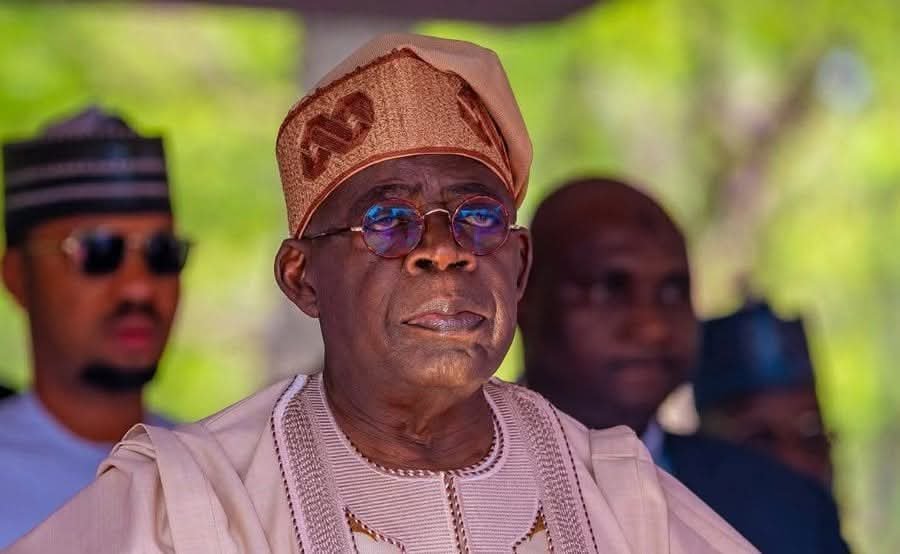
In a recent media report, former governor, Rotimi Amaechi was said to have declared that the Igbo must acknowledge him before he would again identify himself as an Igbo man.
This must rank among the most remarkable political statements by a prominent Nigerian in recent memory – not because it settles any debate about Amaechi’s ethnicity, but because it raises a more profound question: Can another people decide who you are?
If Mr. Amaechi truly believes that his identity depends on whether others acknowledge it, he has transformed ethnicity from an inherited social reality into a political certificate issued by popular approval. That is not how identity works. Identity Is Not a Referendum.
One of the first lessons in sociology, anthropology, and cultural studies is that primordial identities are generally ascriptive rather than elective. You are born into them. You may reject them politically, celebrate them culturally, or even choose never to mention them. But your decision to speak – or remain silent – does not alter the historical fact of your ancestry.
An Igbo father remains an Igbo father whether or not his son acknowledges him. Likewise, if Rotimi Amaechi is ethnically Igbo, no political disagreement can make him less Igbo. And if he is not Igbo, no political acknowledgment or endorsement can make him one. Identity is not conferred by applause.
Amaechi’s bizarre statement advances an extraordinary proposition. It suggests that identity is conditional, that one can suspend one’s ethnicity until political recognition is restored. By that logic, ethnicity becomes less an inherited reality than a political alliance.
Yesterday, Amaechi was Igbo. Today, he is not. Tomorrow, he might become Igbo again – provided enough people applaud. That is not identity. That is political branding. It is an identity crisis, probably induced by a dissociative identity disorder.
Perhaps what Amaechi intended to say is not that he has ceased to be Igbo, but that he no longer feels accepted by many Igbo people. And I must confess that I am one of those Igbo who view Chibuike Rotimi Amaechi as a politically transactional Igbo, just as I view Nyesom Wike.
But acceptance and identity are entirely different propositions. Acceptance is social. Identity is historical. Acceptance may change. Identity typically does not. Confusing the two smacks of intellectual laziness and produces personal and social chaos.
Ironically, Amaechi spent decades presenting himself as one of Nigeria’s leading politicians without publicly questioning his ethnic identity. Only now, amid political realignments and calculations about future electoral alliances, does identity suddenly appear negotiable. That naturally invites skepticism. If identity can be activated or suspended at political whim and convenience, it ceases to be identity altogether. It becomes strategy.
From an identity theory perspective, identity has multiple dimensions. These include civic, professional, religious, political, and national identities. These may evolve throughout life. But primordial identities – family lineage, ancestry, and ethnic origin – operate differently. They are generally inherited rather than negotiated. One may deny them, minimize them, or refuse to celebrate them. But one cannot make them disappear merely because recognition is withheld.
Perhaps the most revealing aspect of Rotimi Amaechi’s statement is not what it says about the Igbo but what it says about him. Confident identities do not wait for public validation before acknowledging themselves. People secure in their identity do not place their ancestry on political probation. If Rotimi Amaechi genuinely believes that another people must first authorize him to identify himself, he has revealed not an Igbo problem but a profound personal uncertainty about identity itself.
Ethnicity is not a campaign office. It is not an appointment. It is not a coalition agreement. And it is certainly not a favor that a people bestow or withdraw according to the electoral calendar. A politician may negotiate alliances. A statesman may negotiate policies. But no serious student of identity would suggest that ancestry itself is negotiable.
Before asking Nigerians to entrust him with the office of Vice President, Rotimi Amaechi may first need to resolve the profound uncertainty he has publicly expressed about his identity. Leadership begins with self-knowledge. A man unsure of who he is cannot easily inspire confidence that he knows what he stands for. Identity is the foundation upon which values, judgment, consistency, and leadership are built.
When a public figure declares that he will identify as Igbo only if the Igbo first acknowledge him, he raises questions that extend far beyond ethnicity. He invites scrutiny of his understanding of identity. Is identity an inherited reality or a political reward? Is ancestry a historical fact or a certificate issued by popular approval? If a seasoned politician at sixty-one still appears to regard such a fundamental aspect of himself as contingent on others’ validation, Nigerians are entitled to wonder what other convictions might also be subject to political negotiation.
The office of Vice President carries immense constitutional responsibility. It demands steadiness, clarity of purpose, and a secure sense of self. A person uncertain about the most basic question – “Who am I?” – risks bringing that uncertainty into the exercise of public office. Someone who confuses identity may also confuse responsibility, loyalty, principle, and purpose. The nation deserves leaders whose convictions are anchored, not leaders whose self-definition appears to fluctuate with the political winds.
Mr. Amaechi owes Nigerians an explanation – not because anyone else has the authority to confer or deny his ethnicity, but because he has chosen to present his identity as conditional. Before seeking the confidence of over two hundred million Nigerians, Amaechi should first demonstrate confidence in who he is. A leader who requires public permission to acknowledge his ancestry may find it difficult to persuade the public that he possesses the clarity and firmness of character required to lead a complex and divided nation.
Mr. Amaechi’s statement also has implications beyond his own political fortunes. It inevitably casts a shadow over the ticket he now seeks to join for national office. For years, political opponents have raised questions – fairly or unfairly – about Atiku Abubakar’s origins and ancestry. Those claims remain matters of public controversy rather than established fact, and it is not my purpose here to adjudicate them. The point is different.
In politics, perception often matters as much as reality. A presidential ticket already burdened by recurring public debates over one candidate’s identity can scarcely afford for the running mate to publicly declare that he will identify as Igbo only if the Igbo first acknowledge him. Whether intended or not, Mr. Amaechi’s remark injects an entirely new and unnecessary identity controversy into a campaign that already faces enough political challenges.
Elections are ultimately contests of public confidence. Voters expect clarity, steadiness, and conviction from those seeking the nation’s highest offices. A ticket whose leading figures become associated – one through longstanding public controversy and the other through his own words – with unresolved questions of identity risks appearing distracted by issues that should never have become issues in the first place. Nigeria needs leaders whose identities are sufficiently settled so the electorate can focus on their ideas, competence, and vision for the country, not on debates over who they are.
By: Vitus Ozoke
(Ripples)