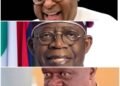
The Presidency has slammed former Vice President Atiku Abubakar over what it described as conflicting positions on petrol subsidy, saying the different explanations coming from him and his aides within one week showed a lack of clarity in his policy proposal.
The Special Adviser to the President on Information and Strategy, Bayo Onanuga, stated this in a statement released on Wednesday titled, ‘Atiku confused on petrol subsidy; third U-turn in one week shows he is simply playing politics.’
Onanuga said Atiku’s position had changed or been explained differently three times within a week, beginning with a statement by his spokesperson, Paul Ibe, that the former Vice President would restore petrol subsidy if elected and later phase it out.
He said another aide, Phrank Shaibu, subsequently described Ibe’s position as an “unauthorised and misleading characterisation” of Atiku’s stance, arguing that the subsidy would instead remain until domestic refining increased, supply stabilised and market competition deepened.
According to Onanuga, Atiku later intervened and reaffirmed that his position had not changed, saying he would restore what he described as a targeted subsidy.
He quoted Atiku as saying, “I will restore targeted subsidy and put purchasing power back in the hands of Nigerians.”
The Presidency questioned the different explanations, asking why an aide would describe the subsidy as temporary and subject to a phase-out while another disowned that position before Atiku himself reaffirmed the original proposal.
Onanuga said, “This is not merely a matter of semantics. It is a serious policy contradiction.”
He also challenged Atiku to explain how his proposed subsidy would work, including its cost, beneficiaries, funding mechanism and conditions for its eventual removal.
“We therefore urge Atiku to stop shifting positions and explain precisely what he means by ‘targeted subsidy’: how much will it cost, who will benefit, how will beneficiaries be identified, how will it be funded and what objective economic conditions will determine its eventual termination?” he asked.
The presidential aide also rejected what he described as an over simplification of the relationship between petrol prices and cost of living, arguing that several other factors, including insecurity, exchange rates, logistics, storage, flooding and agricultural input costs influenced food inflation.
He further questioned the ADC candidate’s proposal to link subsidy to the price of crude oil, noting that refining crude produces several other petroleum products apart from petrol. Onanuga cited diesel, aviation fuel and kerosene among the products derived from crude oil, and asked whether Atiku’s proposed subsidy would extend to those products as well.
“Jet fuel and kerosene make up about nine per cent of the barrel. Kerosene and jet fuel were deregulated in 2009, and subsidies removed in 2016,” Onanuga stated.
On the other petroleum by-products, he added, “About 10 to 15 per cent of the barrel creates base ingredients for synthetic rubber, nylon, polyester, and plastics used in everyday goods like toothbrushes, cups, and packaging.
“Asphalt makes up about two to four per cent of the barrel. Hydrocarbon Gas Liquids, like propane and butane, make up about four per cent.
“Lubricants and waxes constitute about one to two per cent. Petroleum coke and sulfur form the solid residue left from refining.”
He specifically recalled that diesel was deregulated in 2004 under the administration in which Atiku served as Vice-President, while kerosene and aviation fuel were deregulated at different times.
The statement also accused Atiku of focusing excessively on petrol while overlooking other products obtained from crude oil. The Presidency maintained that a comprehensive economic policy should address the wider factors driving inflation and the cost of living rather than focus solely on petrol prices.
Onanuga concluded that the economy was too important to be subjected to what he described as “policy somersaults, incoherence, destructive populism and election gimmicks.”
He questioned the consistency of subsidising only petrol while ignoring other by-products used by equally vulnerable Nigerians.
“Will Atiku subsidise all these by-products of the barrel as well, since kerosene is used by the underprivileged to cook, and many homes and factories use diesel to power generators and delivery trucks?
“And will he allow the refineries to supply discounted crude oil to profit from 55 per cent of the by-products, while focusing subsidy only on petrol, his obsession?”
The Presidency further argued that the former Vice President was “definitely suffering from a lack of basic understanding of his newfound policy prescription.”
(Ripples)