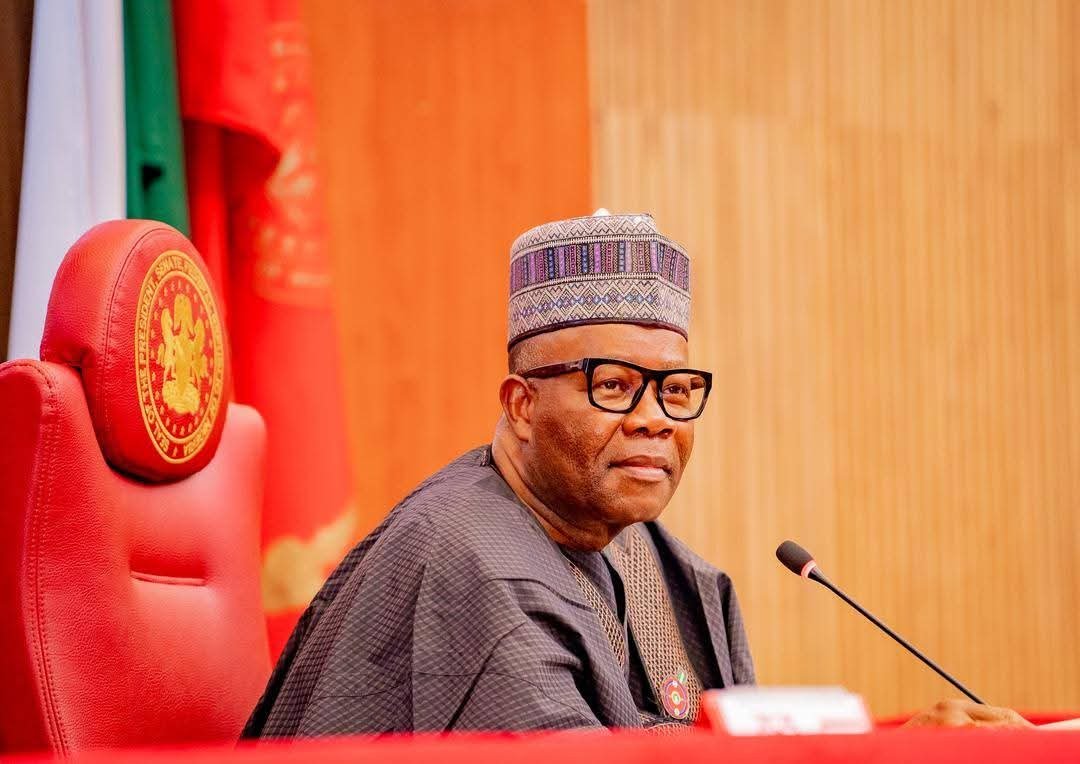
•NAICOM refuses extension as operators scramble for funds, mergers
From Adanna Nnamani, (Abuja) and Henry Uche
The race to recapitalisation in the insurance industry has entered a feverish phase with just days to the July 31 deadline set by the National Insurance Commission (NAICOM).
The pressure has been compounded by the regulator’s insistence that no extension will be granted, despite growing calls from industry operators who argue that many firms are struggling to raise the funds needed to meet the new capital requirements.

Daily Sun learned that only 25 of the country’s 58 licensed insurers have started the capital verification process.
So far, eight insurance companies have approached the capital market to raise fresh funds, while several others are negotiating mergers and acquisitions to avoid losing their operating licences.
Industry estimates show insurers need over N1 trillion in fresh capital to comply with the new rules.
Under the Nigerian Insurance Industry Reform Act (NIIRA) 2025, life insurers must increase their minimum paid-up capital from N2 billion to N10 billion, non-life insurers from N3 billion to N15 billion, composite insurers to N25 billion, while reinsurance firms must raise their capital to N35 billion.
The recapitalisation exercise comes amid high interest rates, foreign exchange volatility and tight liquidity, making it difficult for many firms to attract investors.
Many operators, it was further gathered, are looking outside Nigeria to cement partnerships that will bail them out.
Experts who confided in Daily Sun noted that merger talks are currently on the table across boardrooms with a view to meeting the deadline and ultimately avoiding losing their operational licenses.
The Commissioner for Insurance/Chief Executive Officer of the Commission, Mr. Olusegun Omosehin, at recent investiture of Mr. Akinjide Oluwarotimi-Orimolade, who emerged as the 53rd President/Chairman of Council of the Chartered Insurance Institute of Nigeria (CIIN) in Lagos, reminded the players that those who miss the deadline risk regulatory consequences.
He said the move stems from the need to strengthen the industry’s financial resilience and policyholder protection. While many stakeholders expected the recapitalisation exercise to result in mergers, acquisitions and the exit of several operators, Omosehin remained unwavering on the July 31 deadline, describing the exercise as a critical pillar of the Commission’s ongoing reforms to build a stronger, more resilient and consumer-focused insurance industry.
Amid growing calls from some quarters for an extension and speculation that the regulator might bow to pressure, NAICOM maintained that the interest of the insuring public remains its overriding priority, insisting that any request to shift the deadline is dead on arrival.
To further clarify the rationale behind the exercise, the NAICOM chief said the new minimum capital requirement is aimed at enhancing insurers’ claims-paying capacity, strengthening their balance sheets, increasing domestic risk retention and preparing the industry for the transition to a risk-based capital regime.
Omosehin warned insurance operators that the July 31 recapitalisation deadline is a binding regulatory requirement, not a symbolic target, urging companies yet to meet the new minimum capital threshold to act with urgency.
“With about nine days to the July 31 deadline, we commend operators that have made significant progress in raising capital, engaging investors, strengthening governance and submitting for the Commission’s verification process. However, the deadline is not symbolic; it is regulatory, and the industry must treat it with the urgency it deserves,” he said.
Emphasising accountability, the Commissioner assured stakeholders that the Commission would conduct the exercise in a transparent, fair and firm manner, stressing that every operator must demonstrate financial soundness, regulatory compliance and operational readiness to move the industry forward.
He added that stronger capitalisation must ultimately translate into improved service delivery, prompt settlement of claims, stronger consumer protection and greater public confidence in the insurance industry.
Omosehin further noted that the Nigerian Insurance Industry Reform Act (NIIRA) 2025 has provided a stronger legal framework for a more resilient, better-governed and responsive insurance market.
He added that NAICOM’s reform agenda is focused on improving market conduct, protecting policyholders, strengthening corporate governance, expanding insurance penetration, promoting financial inclusion and driving responsible innovation.
He also highlighted professionalism as the foundation of a trusted insurance market, noting that the industry’s growth depends not only on adequate capital and effective regulation but also on ethics, competence, innovation and public confidence.
“The strength of insurance depends not only on capital and regulation but also on professionalism, ethics, innovation and public confidence. A trusted insurance market cannot be built on capital alone. It requires competent professionals, ethical institutions, credible advice and fair treatment of policyholders,” he explained.
Reacting, the Head of Corporate Communications at Sovereign Trust Insurance Plc, Mr. Mensah Simon Peter, threw weight behind the regulator’s unshaken position, saying that, the recapitalization deadline shows the regulators’ readiness for a new brand industry. “For us at Sovereign Trust Insurance Plc, this deadline is just the beginning of out great journey towards becoming one of Nigeria’s top Insurance firms. Beyond the recapitalization, we have set our target towards over N20b additional capital. This is just a starting point for us, and we are ready for what the future brings. Most firms would meet up the deadline, I believe” he added.
On his part, Mr. Ade Adesokan, an insurance enthusiast and public affairs analyst stressed that NAICOM’s reminder to operators is not simply an act of chasing capital number for its own sake; but it is building system toward a supervisory regime where capital adequacy is matched to each insurer’s actual risk profile, with quantitative impact studies and industry-wide data collection to follow.
NAICOM had vowed to prevent any licensed insurer from collapsing, and with its recent petition to the Inspector-General of Police over alleged asset stripping at Niger Insurance, it is a clear sign of a regulator willing to use enforcement tools, not just deadlines, to protect policyholders through this transition.
“The economic weight of this cannot be overstated given where Nigeria sits right now. A hard deadline, enforced without extension, will likely trigger consolidation, mergers, and in some cases the exit or downgrading of weaker underwriters, which is painful in the short term but potentially healthy for an industry battling public distrust and thin penetration.
“NAICOM’s parallel directive barring relicensing of firms with unsettled claims adds real teeth to the exercise, since capital alone means little if policyholders still cannot get paid”
Adesokan believes the deadline is a credibility test for NAICOM itself as much as for the operators. “How NAICOM handles the firms that fall short after July 31, and how faithfully it follows through on the risk-based supervisory framework it is now building, will determine whether the Nigerian insurance sector is entering a genuine era of strength or simply a bruising culling season” he added.
A policyholder, Chimaobi Nwachukwu, expressed optimism as the insuring public awaits critical changes in market behavior after July 2026. According to him, many policyholders do not understand the true meaning of recapitalization and its essence, he called underwriting firms to make out time to explain the new era to their customers for better understanding and mutual progress.
“We are happy the insurance sector is left behind. The banking sector has always evolve, and people are keying in, so we expect good changes in market behavior. But the people should be well sanitized to understand better what is in there for them. You know people are after daily survival, so they rarely pay attention to these developments. We need Nigerians to believe that the days of scamming customers by insurance companies are over” he encouraged.
(The Sun)