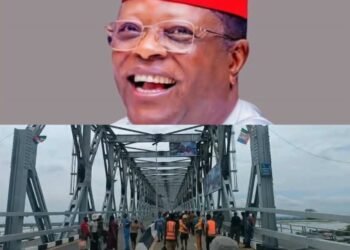
With Brent crude prices declining by 4.44 per cent to $71.92pb on on easing supply concerns over stranded oil tankers at the Strait of Hormuz, Nigeria’s high oil production is cushioning the effects on economy. The oil production surge is linked to sucessful operations by the Tantita Security Services Nigeria Ltd (TSSNL), which for years achived peace and stability in the the Niger Delta region. The regional peace has accerelated oil production helping Nigeria absorb revenue shortfalls from oil prices decline.
In every thriving economy, there is always the urgent need to protect strategic assets.
Doing so comes with so many benefits including building stability and confidence that lead to national prosperity.
Nigeria’s experience with pipeline surveillance operations in the Niger Delta region has followed this trajectory.
For decades, Nigeria’s oil pipelines operated under persistent attack, exposed to sabotage, vandalism, illegal refining and outright theft.
Aside lost revenue, environmental degradation, social instability, and an economy unable to fully benefit from its oil windfalls were the immediate consequences.
That practice persisted until President Bola Ahmed Tinubu appointed Tantita Security Services Nigeria Limited (TSSNL) led by High Chief, Dr. Government Oweizide Ekpemupolo, alias Tompolo, to protect Nigeria’s oil assets in the Niger Delta region.
The appointment was to enable TSSNL, through its security operations, support the national economy in getting the full benefits of oil resources.
The TSSNL works in collaboration with other security outfits to achive its goals of securing oil assets and ensuring peace and stability in the Niger Delta region.
Tantita’s operations had ensured the security of oil pipelines, ensuring the uninterrupted flow of petroleum resources, and ensuring that Nigeria migrated from a position of constant loss management to stability, planning, growth and development.
Impact On Oil Production Output
This impact is already of public knowledge: national crude output climbed significantly. Data released by the Nigerian Upstream Petroleum Regulatory Commission (NUPRC) showed Nigeria’s crude oil production topped its OPEC quota in May, reaching its pinnacle in 15 months and cementing its position as Africa’s leading oil producer.
The report said the country produced an average of 1.53 million barrels of crude oil per day (bpd) during the month.
With a condensate production of 170,446 bpd included, the commission put Nigeria’s average total hydrocarbon output at 1.7 million bpd.
“Nigeria’s oil production witnessed an upswing in May 2026, averaging 1,530,354 barrels of crude oil and 170,446 barrels of condensates per day, bringing the total combined production to 1,700, 800 barrels per day and consolidating Nigeria’s position as Africa’s largest oil producer,” NUPRC said in a statement.
The figure represents 102 per cent of Nigeria’s OPEC production quota of 1.5 million bpd, according to the regulator. The latest performance marks a significant milestone for the country’s oil sector, with total production standing at its peak since last July, when the combined crude oil and condensate output reached 1.71 million bpd.
With the figure for condensates excluded, the 1.53 million bpd in May represents Nigeria’s strongest performance since January 2025, when output touched 1.538 million bpd. The May figure also represents a 15-month high for crude oil production, excluding condensates.
An economist and policy analyst, Dr. Muda Yusuf, explained that while a price drop in crude oil will naturally translate to a reduction in the pump prices of petrol, diesel, Jet A1 and gas, on the flip side, it portends a drop in revenue for the federal government.
Yusuf said, while security interventions have helped improve production levels compared to previous years, Nigeria still faces significant challenges in attracting the scale of investment required to sustain higher output levels.
Other analysts noted that while government reforms under the Petroleum Industry Act (PIA) have improved the fiscal environment for investors, sustainable production growth require more domestic and foreign investment into the sector.
Michael Otu, an oil magmnet based in Abuja, said: “To sell more crude oil requires addional production. The capacity to produce more depends on several factors including fiscal regime, which is much better now than it used to be. The second is investment in the sector”.
Out said that raising crude oil output requires significant capital expenditure and long-term planning by operators, adding that higher oil prices alone do not automatically translate into increased production.
“The PIA policy was to incentivise production. A lot of the amendments made through executive orders were also designed to boost investment and drive output.,” he stated.
The Nigerian Upstream Petroleum Regulatory Commission attributed much of this gain to reduced pipeline vandalism and improved asset protection. This production recovery has direct fiscal implications: each additional 100,000 barrels per day translates to approximately $2.5-3 billion in annual export revenue at current pricing, funds that flow directly into national development budgets.
In a published report, President General, Niger Delta Progressive Alliance, Nse Victor Udoh, said pipeline protection enabled national institutions to progress from reactive crisis management to strategic foresight, from temporary containment to durable systems-building, and from uncertainty-driven decisions to calculated national ambition.
“It is important to clarify the role of pipeline surveillance within the wider energy landscape. Energy security encompasses the full value chain, from exploration and production to refining, distribution, pricing policy, and subsidy frameworks. Pipeline surveillance does not manage these domains,” he said.
He added: “Its mandate is precise: safeguarding critical infrastructure that transports petroleum resources. Yet this single function has proven foundational. Without secure transportation channels, production targets falter, refining plans collapse, exports decline, and fiscal projections become unreliable.”
Continuing, he wrote: “Asset protection, in this context, is not a supporting activity. It is a precondition for economic order. In effect, the pipeline is the hinge on which the entire petroleum value chain turns. When that hinge is weak, every other link in the chain carries strain. When it is secure, the entire system gains coherence.”
The immediate impact has been operational. Sustained monitoring and rapid response systems have sharply reduced pipeline breaches and illegal tapping. Receipt rates have climbed toward full recovery, with national output rising to levels not seen in recent memory.
This redirection has restored Nigeria’s credibility in international oil markets, allowing Nigeria to reclaim market share lost to Angola and Libya.
“Economic stability follows predictability. When crude flows are secure, refineries can plan feedstock intake with assurance. Export commitments can be met without fear of sudden shortfalls. Gas-to-power projects can operate without recurrent shutdown risks”.
“Investors can assess Nigeria’s petroleum sector with clearer risk profiles. Surveillance therefore does more than stop theft. It reintroduces reliability into national energy planning. And reliability is the bedrock upon which sustainable economic growth is built. With predictable flows, national budgeting becomes more credible, infrastructure planning becomes more precise, and long-term contracts become easier to negotiate. Predictability is the silent currency of modern economies, and pipeline surveillance has begun restoring it,” he stated.
Further benefits extend into public finance. Higher accounted-for production translates directly into increased export revenues, improved foreign exchange inflows, and strengthened fiscal capacity. National oil company performance in recent years illustrates this shift toward profitability and efficiency, driven in part by reduced losses and enhanced operational continuity.
As revenues stabilise, government budgeting gains credibility, development planning becomes less speculative, the national economy gains breathing space to invest in infrastructure, social services, and diversification. This breathing space matters. It allows policy makers to think beyond survival and begin shaping structural reforms, industrial expansion, and long-term social investment. It also reduces dependence on emergency borrowing and short-term fiscal patchwork.
Asset protection has also produced environmental and social dividends, particularly in the Niger Delta. Illegal refining and pipeline sabotage once left waterways polluted, farmlands infertile, and communities trapped in cycles of hazard and insecurity. With sustained surveillance operations dismantling illegal sites and preventing repeated breaches, ecological recovery has begun.
Chairman of the House Committee on Host Communities, Dekor Dumnamene Robinson had said the contributions of Tantita and its leadership to national security deserve appreciation.
Also, in one of the strongest endorsements yet of the firm’s operations, lawmakers under the Joint Committee of the House of Representatives on Host Communities and Public Petitions and other stakeholders also commended Tantita for what they described as effective and patriotic service in safeguarding Nigeria’s critical oil infrastructure.
“Tantita Security Services Nigeria Limited, in partnership with NNPCL, has rendered demonstrably effective service in the protection of crude oil pipelines and the recovery of national crude oil production,” they stated.
The Joint Committee subsequently passed a unanimous vote of confidence on the company and called on the Federal Government and NNPCL to approve a long-term renewal of the surveillance contract to consolidate gains already achieved in the fight against crude oil theft and illegal bunkering.
“Tompolo and his team have served this country at great personal risk. They have kept the economic lifeline of the nation running and restored peace to communities that had not experienced peace in decades,” he said.
The National Chairman of Host Communities of Nigeria Producing Oil and Gas (HOSTCOM), His Highness Benjamin Style Tamaranebi JP
had further commended President Bola Ahmed Tinubu for the confidence he has reposed in Tantita as a critical part of the security apparatus for protecting oil assets in the Niger Delta.
Global Oil Market Condition
Oil prices dropped signficantly as markets became confident that Strait of Hormuz disruptions will reduce. This has led to 10 per cent drop on Brent prices and Middle East crude benchmarks slipping into contango.
Whilst ship transits through the Strait of Hormuz remain a fraction of their previous norm (130-140 transits per day), plunging crude oil prices suggest the commodity markets anticipate that flows would start to recover sooner than later.
The two Middle Eastern crude benchmarks, Dubai and Murban, have flipped into contango, as a temporary period of oversupply is sending ripples across the Asian markets. Logging a hefty 10 per cent weekly loss, ICE Brent will close the week around $72 per barrel, the same level that it was before the US attack on Iran on February 28.
Crude transits through the Strait of Hormuz rose to the highest weekly tally since the onset of the US-Iran conflict this week, with more than 16 million barrels passing through the waterway last week Wednesday-Thursday, raising hopes of a full gradual reopening.
However, there is raising fears that Hormuz transit could be choked off again, Iran’s IRG fired several drones at the Taiwan-owned Ever Lovely cargo ship, attempting to cross the Hormuz through ‘unauthorized routes”, damaging the vessel’s bridge some 7 miles off the Omani coast.
According to report, the main reason for the price drop was more good news about the agreement between the United States and Iran. The deal aims to end the recent fighting and let normal oil shipping start again through the Strait of Hormuz.
Findings from reports during the week said the two sides were working out final details on how and when the important shipping route would reopen. They were also talking about letting Iran sell more of its oil again under a special waiver from U.S. sanctions.
Traders saw these steps as clear signs that hundreds of thousands of barrels of Iranian crude could return to the global market sooner than expected.
(The Whistler)