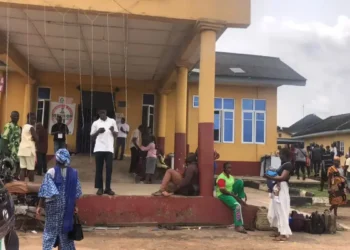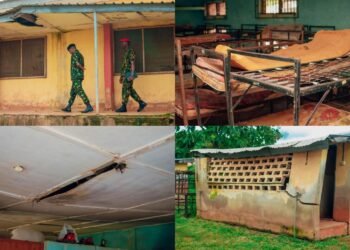

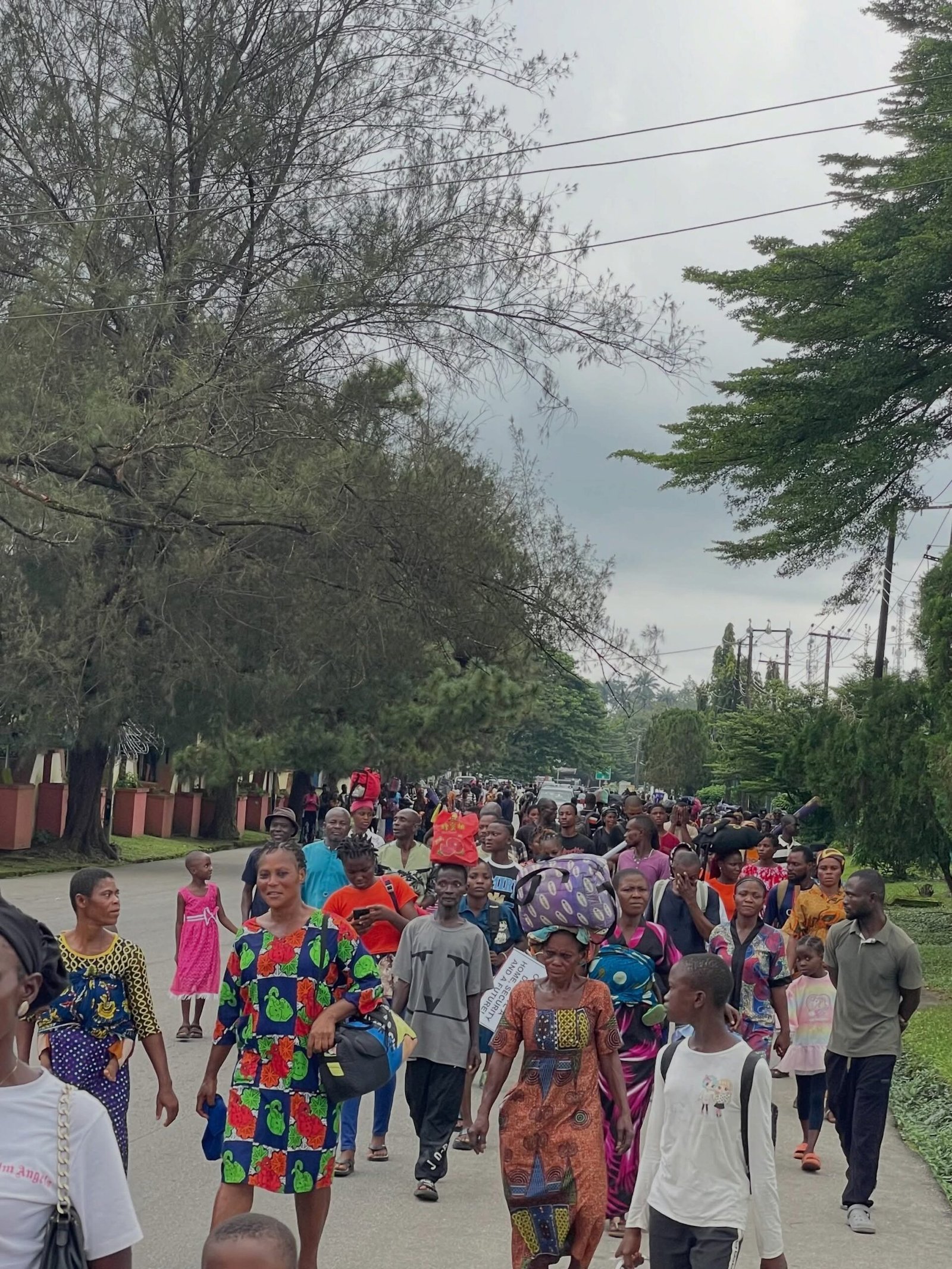
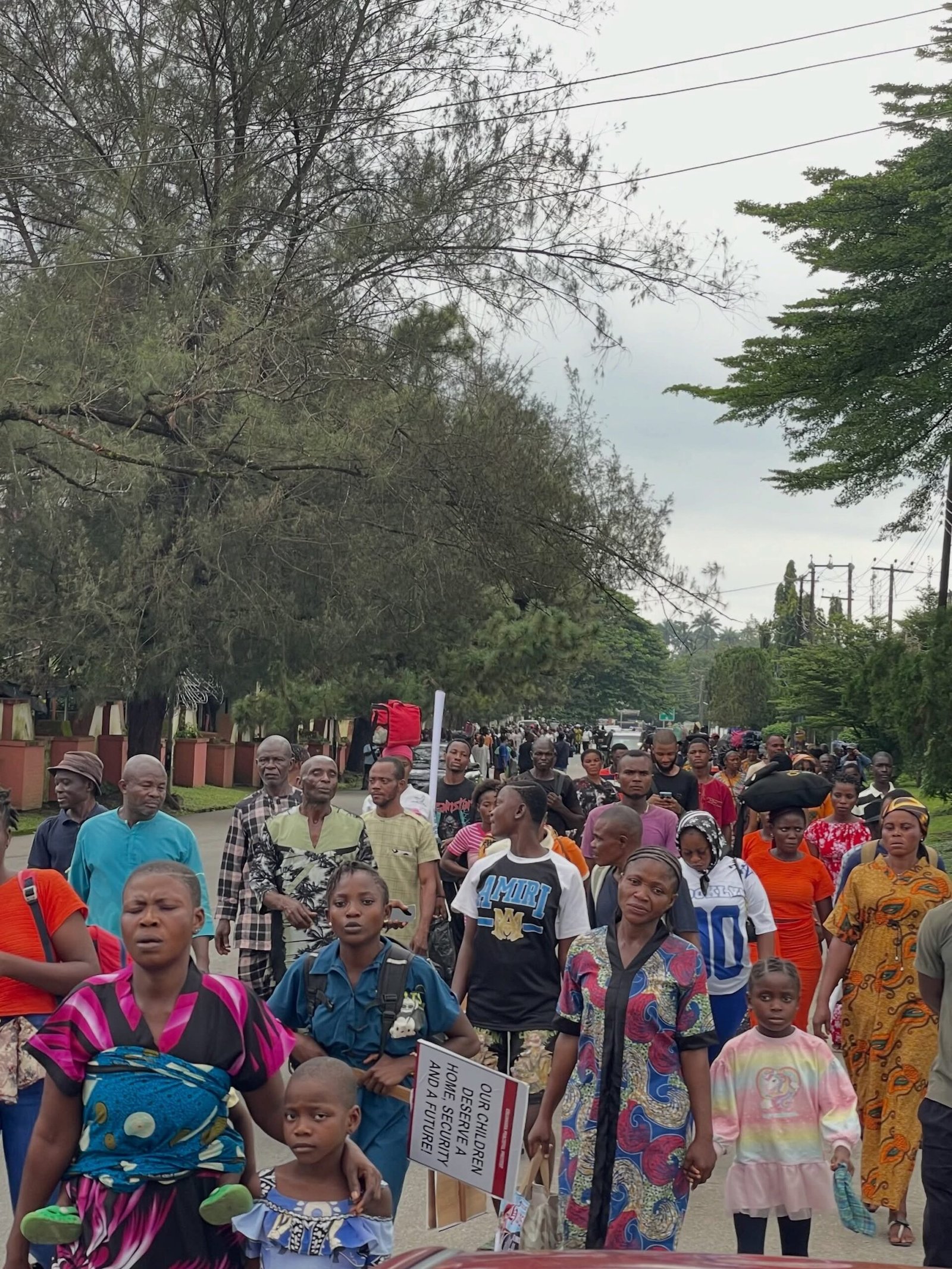
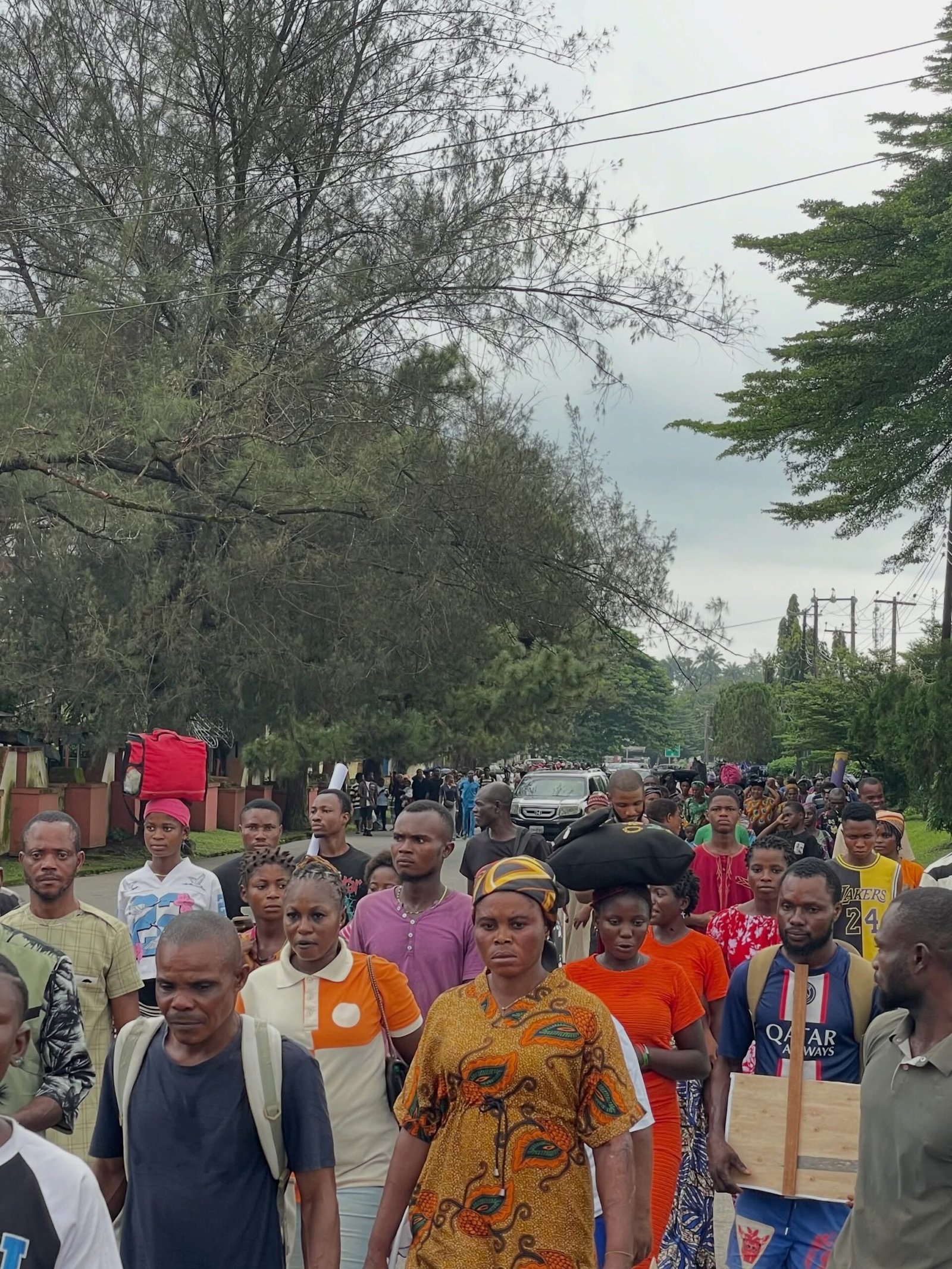
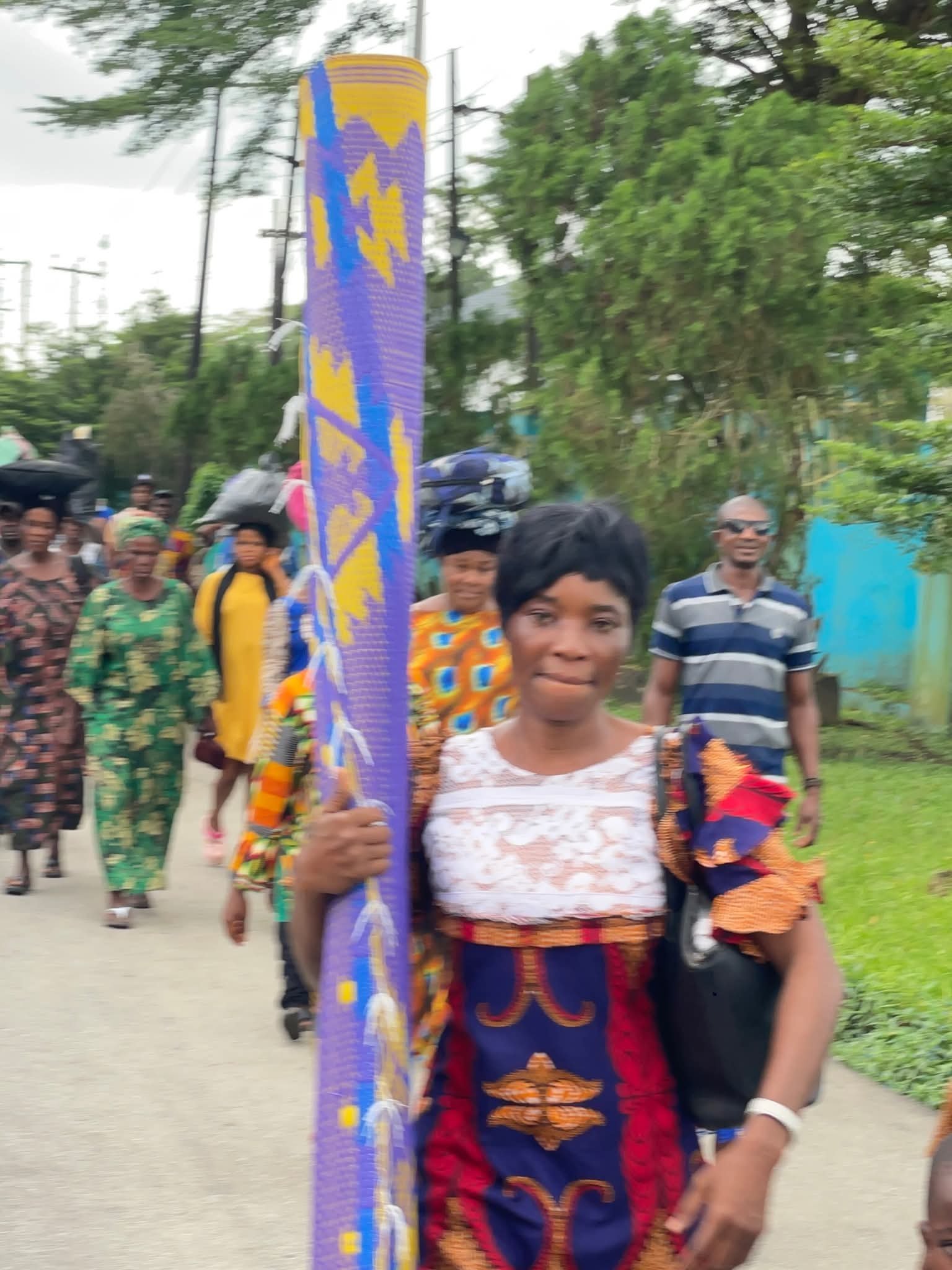
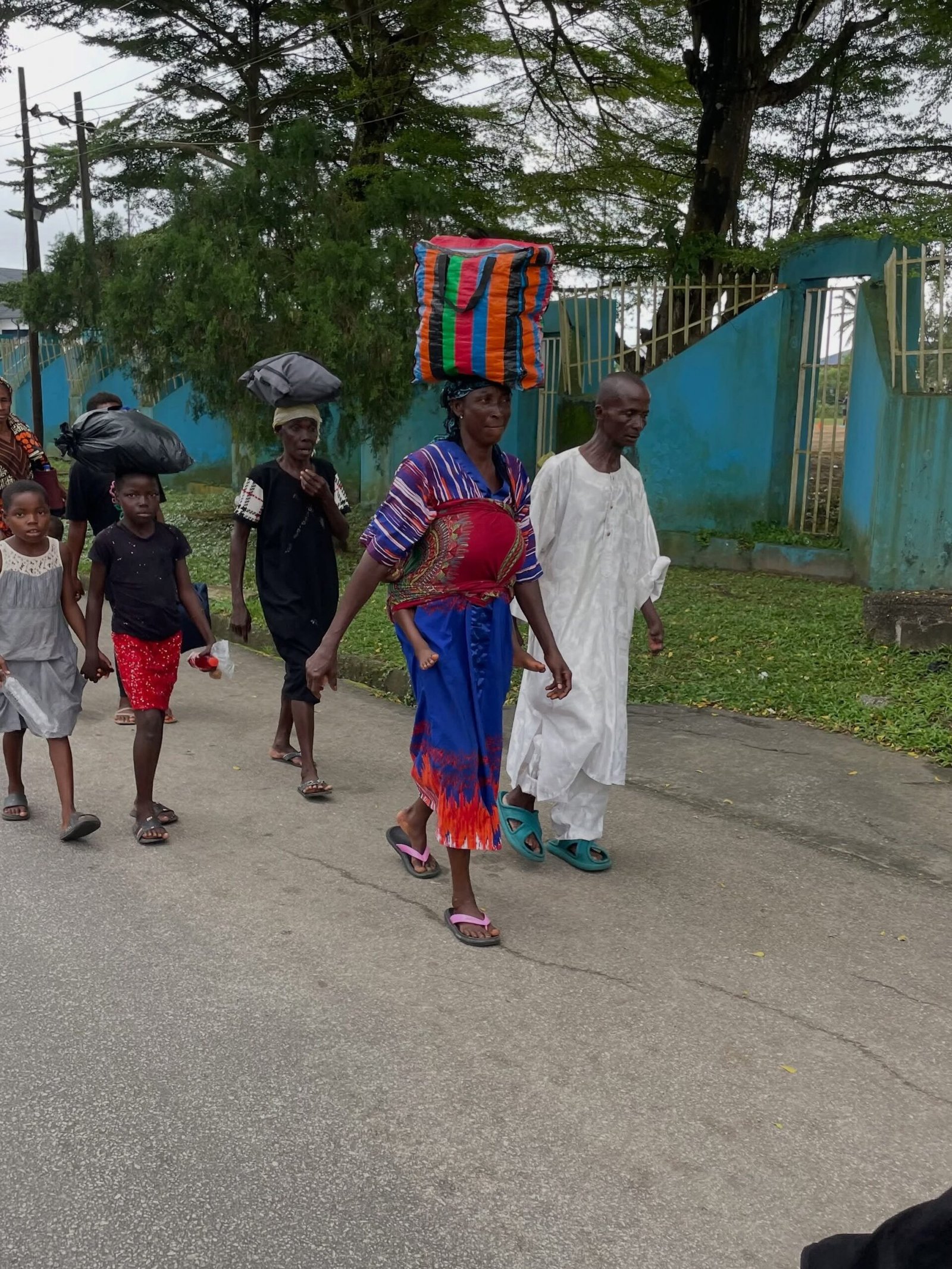
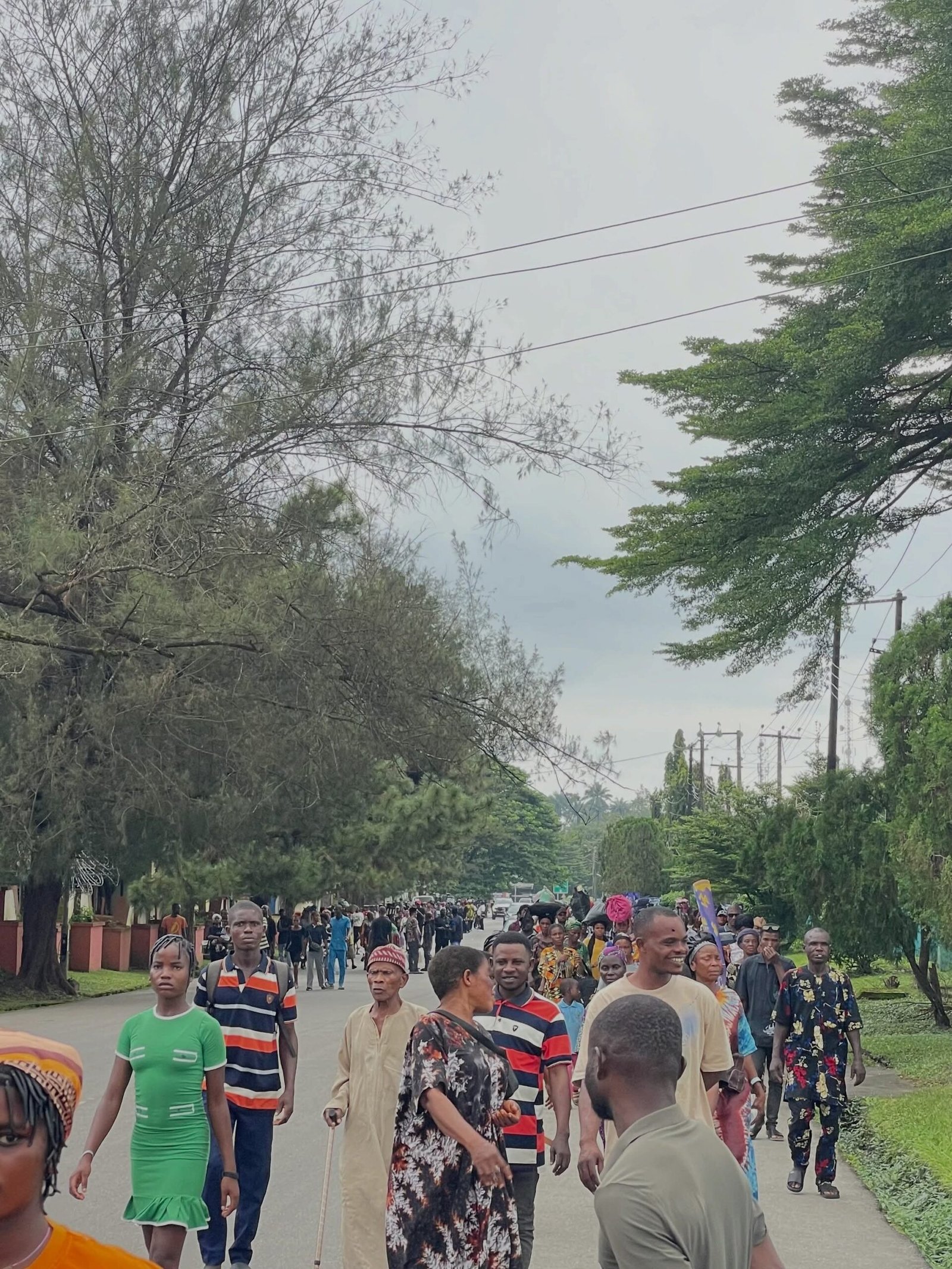
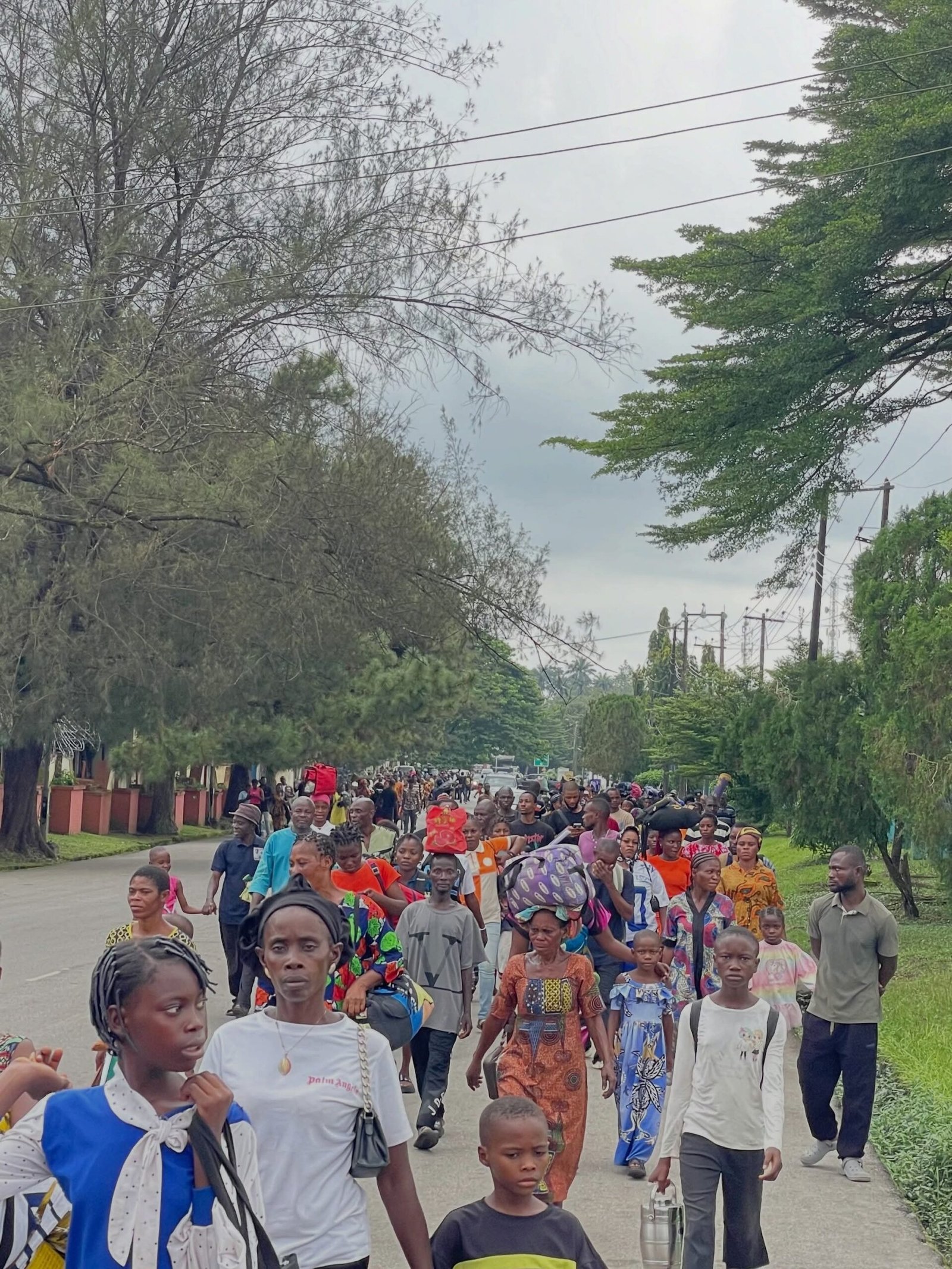
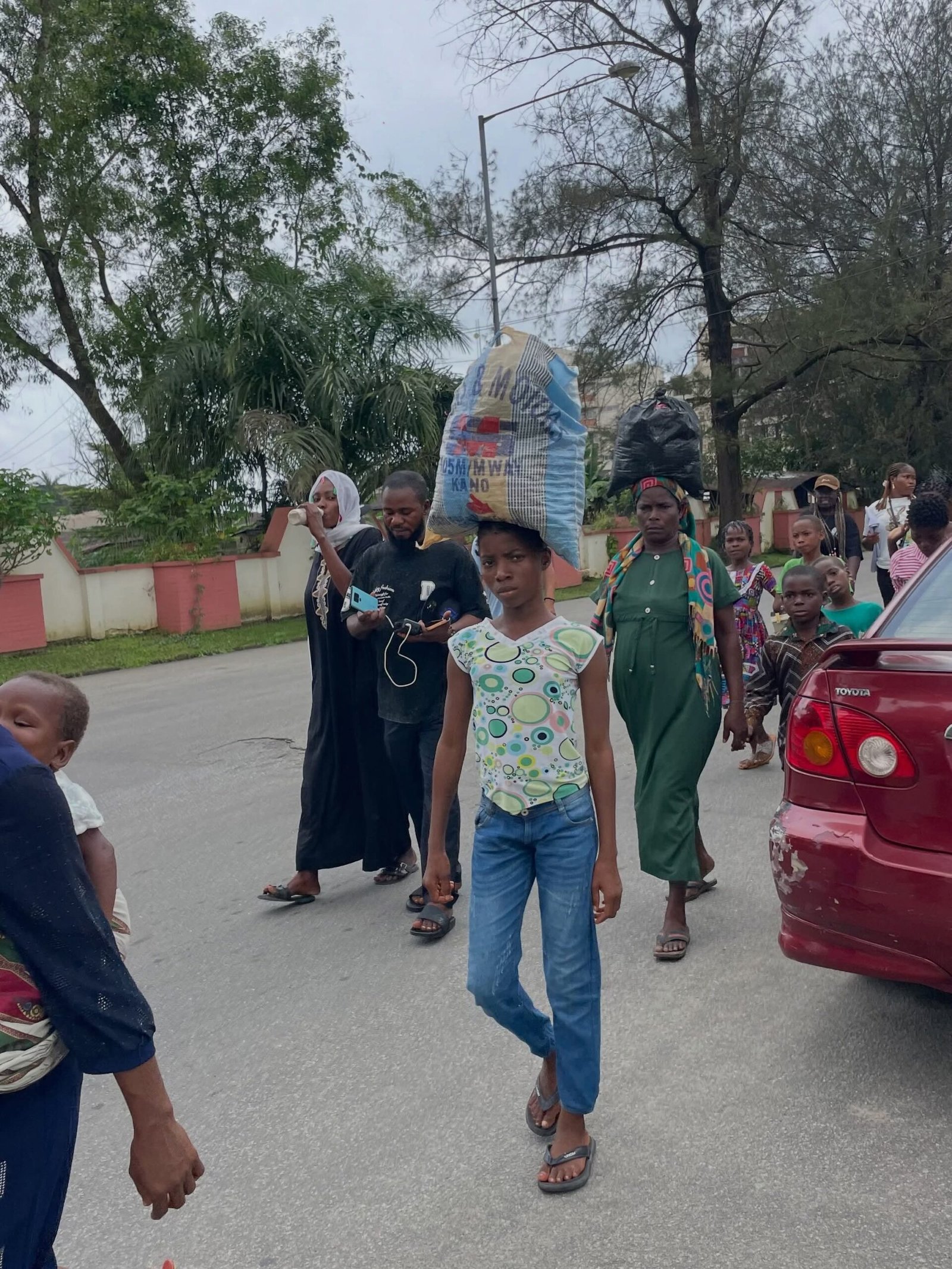
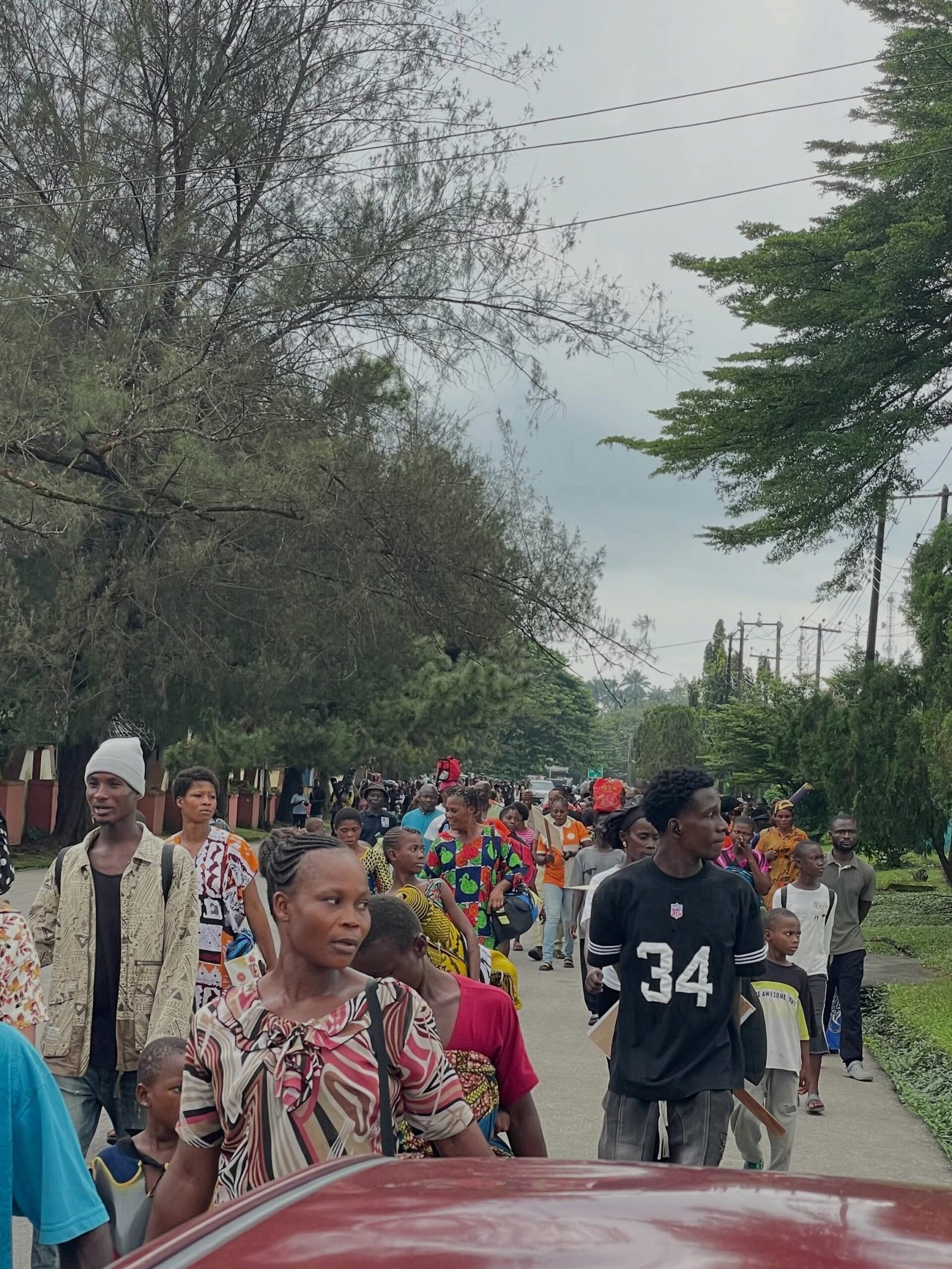
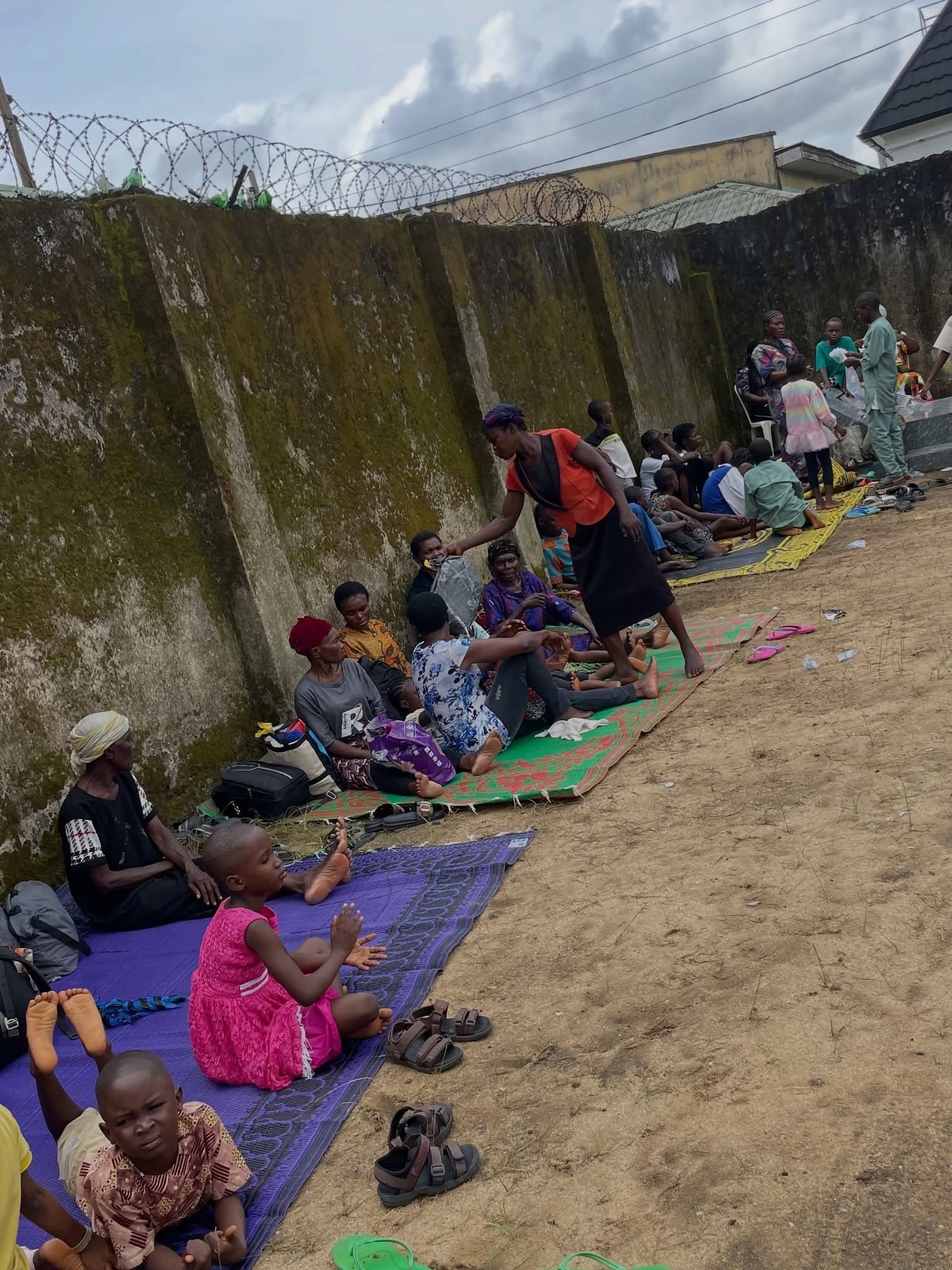
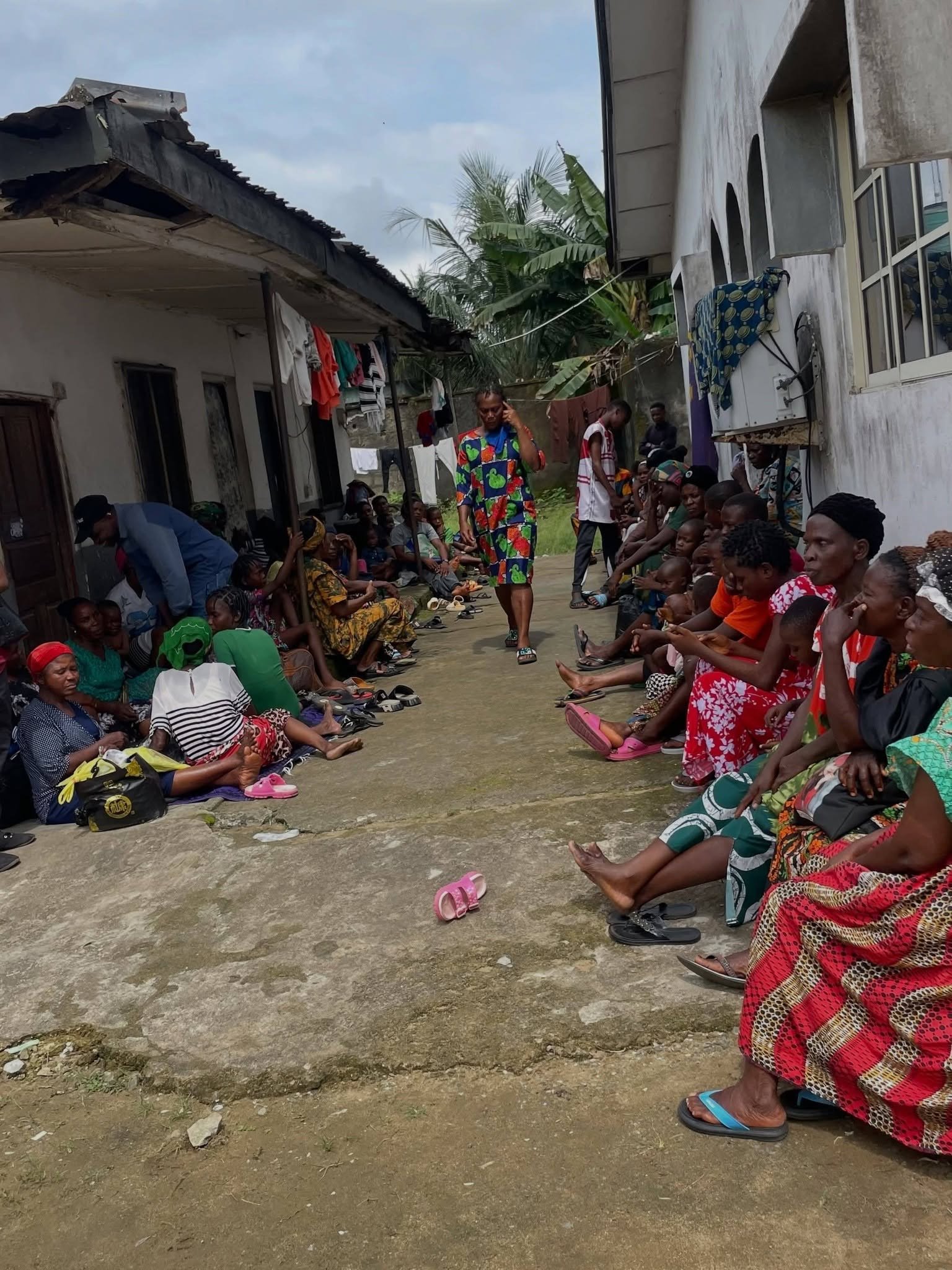
The displaced people of Ebijakara Community in Abi Local Government Area of Cross River State have staged a peaceful protest in Calabar, the state capital, demanding urgent government intervention to enable them to return to their ancestral home after spending at least 20 years in displacement.
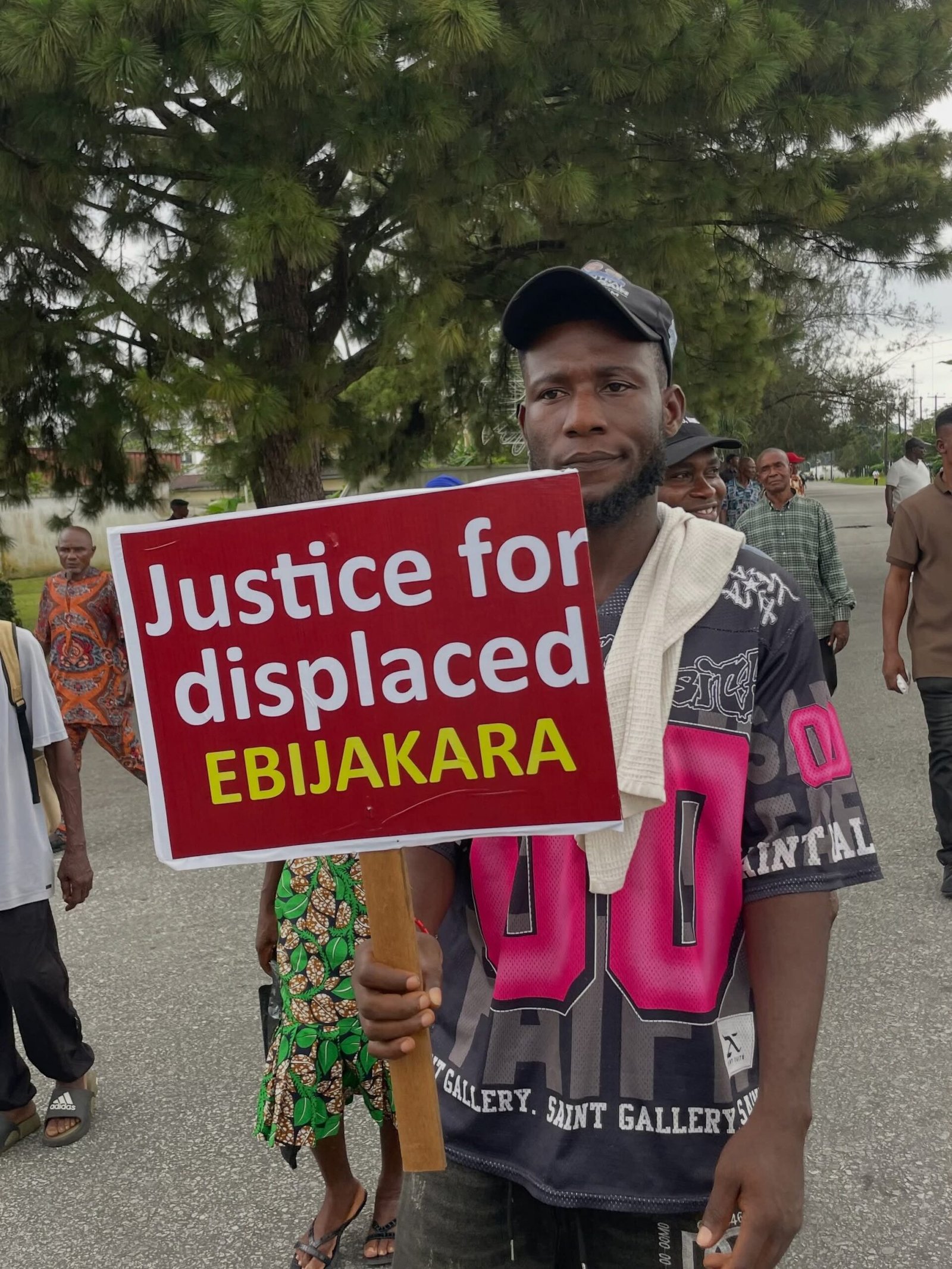
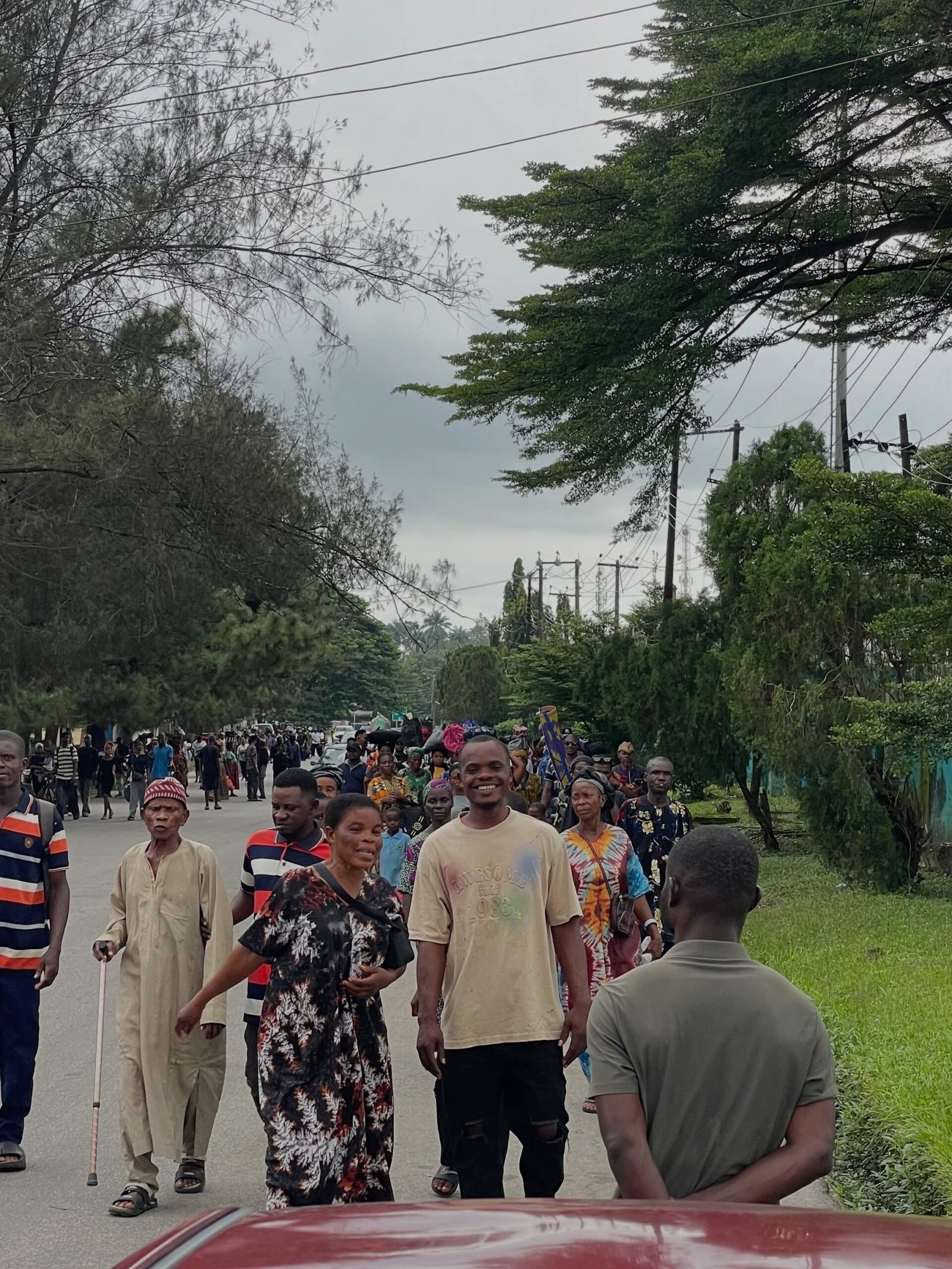
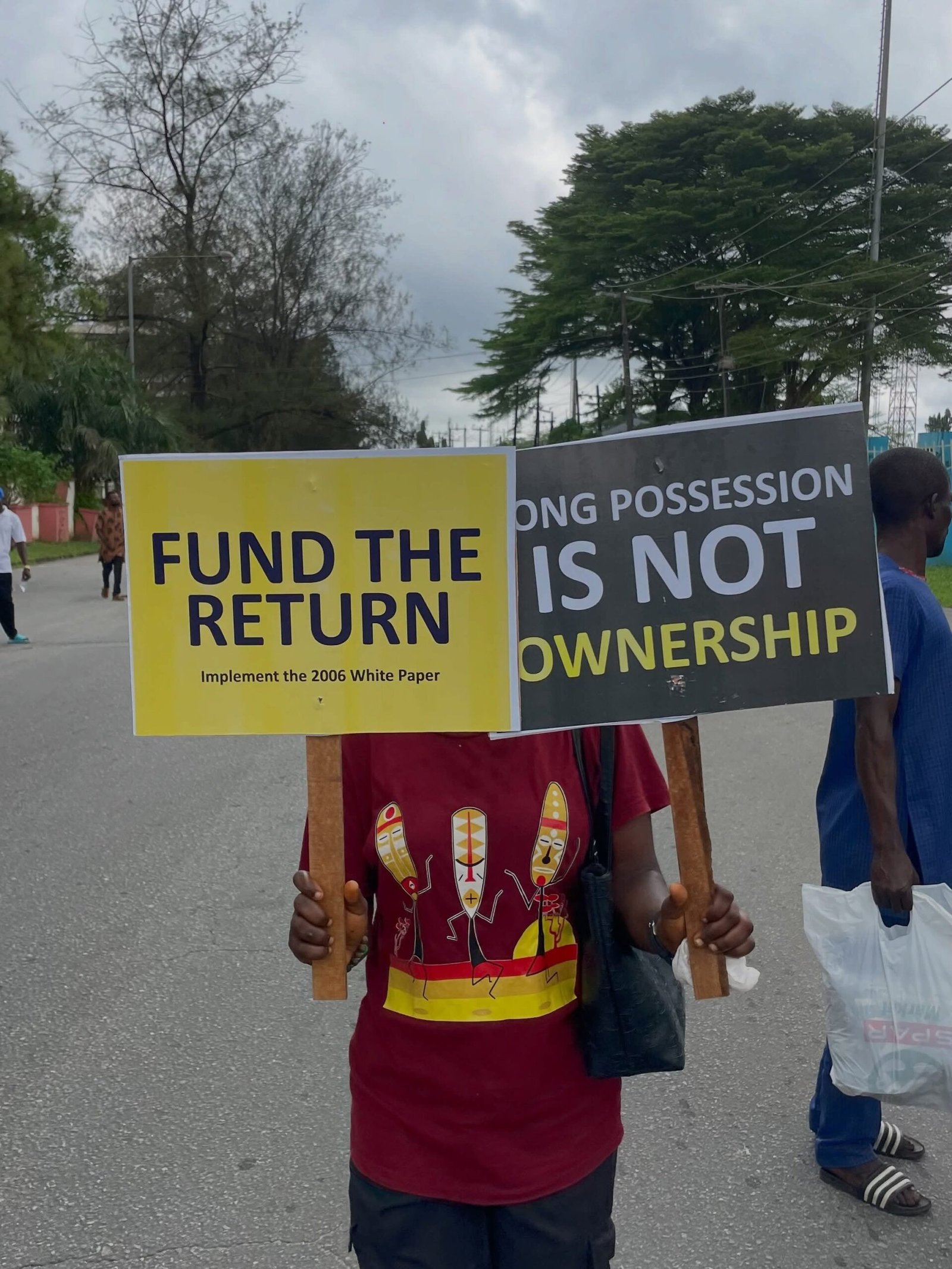
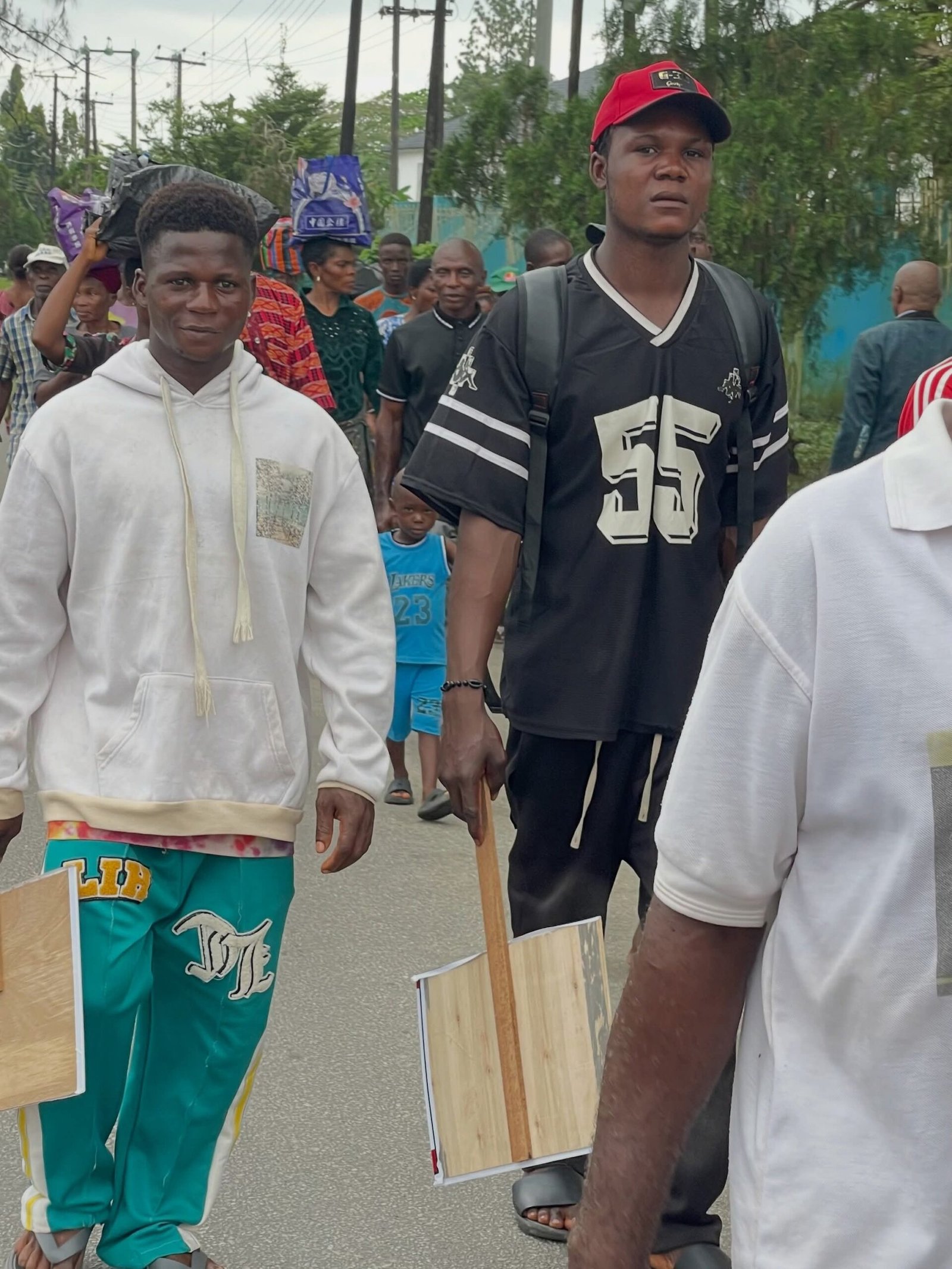
The protesters, comprising youths, women and children, took to the streets of Calabar on Monday, October 19, 2026, carrying placards with various inscriptions appealing to the Cross River State Government to address their plight and facilitate their safe and peaceful return to Ebijakara.
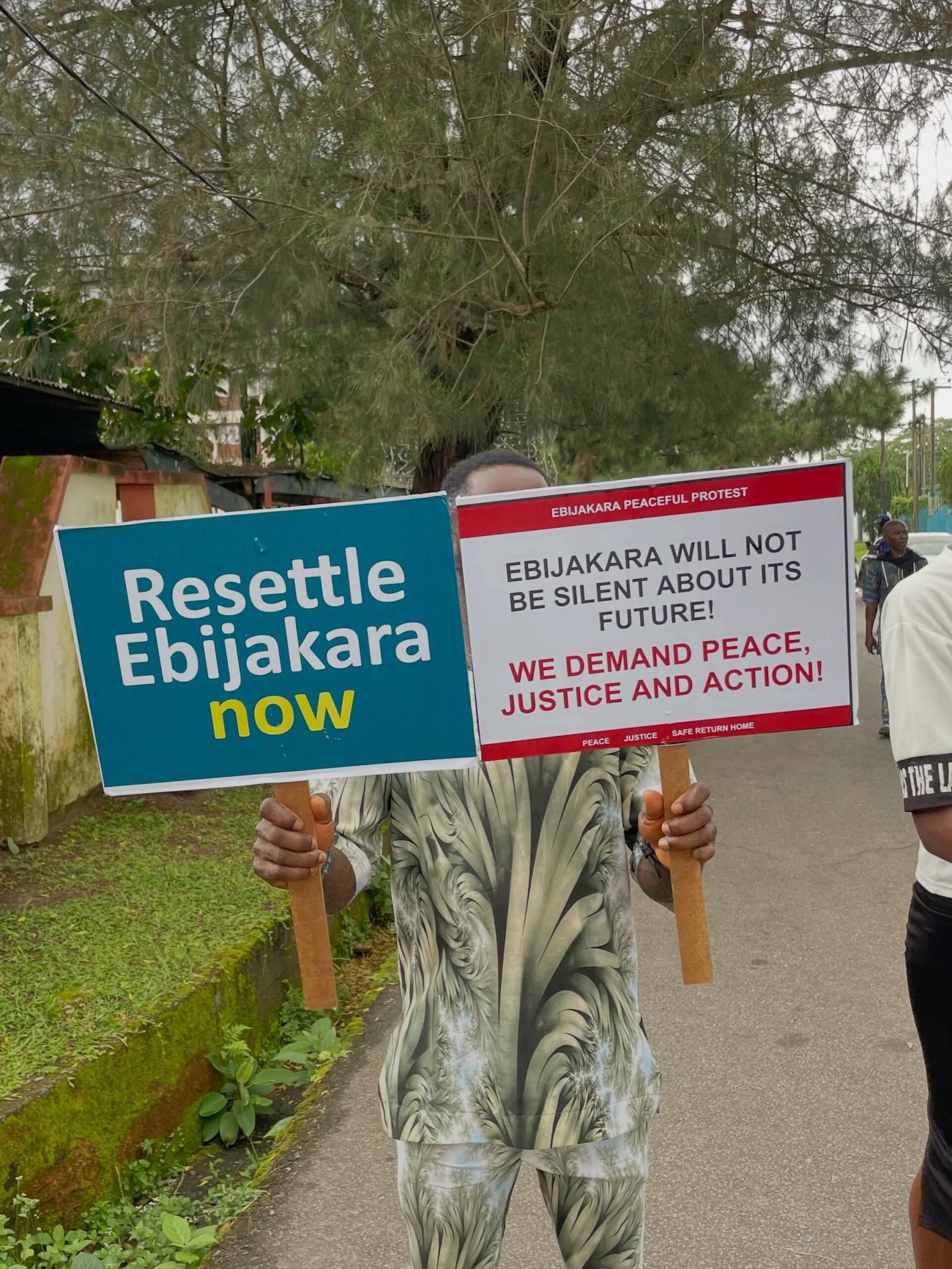
The placards bearing various messages, include, “Resettle Ebijakara Now,” “Ebijakara Will Not Be Silent About Its Future! We Demand Peace, Justice, And Action,” “Our Land Is Not For Sale,” “Ebijakara’s Future Cannot Wait Any Longer,” “Our River, Our Farms, Our Future,” and “Let Us Go Home.”
Other inscriptions include “Rebuild Our Schools, Churches And Homes,” “Our Home, Our Roots, Our Right To Return!” “20 Years Away From Home, Our Children Deserve A Home, Security And A Future,” “20 Years Is Too Long,” “Ebijakara Demands Peace, Justice And A Safe Return Home,” “We Demand Government Intervention,” and “20 Years Away From Home! How Much Longer Must We Wait?”
The community members said they were forced to flee their ancestral land more than 20 years ago following a communal clash involving a neighbouring community which, according to them, invaded their land.
They said the prolonged displacement has left generations of Ebijakara people without stable homes, schools and other basic infrastructure, while families have been scattered across different locations.
The protesters called on Governor Bassey Otu to urgently intervene in the dispute and provide a lasting solution that would allow them to return home safely.
Speaking in a video interview during the protest, the last son of the late King of Ebijakara said the prolonged displacement had caused deep pain for the community.
He noted that both his father, the King, and his mother, the Queen, died and were buried outside their ancestral homeland.
He appealed to the state government to intervene and ensure that the people of Ebijakara could return to their ancestral land peacefully.
The protesters said every son and daughter of Ebijakara deserved to live “in peace, dignity, and with the assurance of belonging to their ancestral roots.”
They said they were tired of living as displaced people after 20 years away from their homes and urged the government to restore justice, hope and security to the community.
The woman leader of the community, while speaking during the protest, broke down while recounting the impact of the displacement on women, children and families.
“Our eyes, we cannot see fine because of tears. So those things, we are not happy,” she said.
She explained that the crisis has scattered the community’s children across different parts of the country and made it difficult for parents to encourage them to return home.
“All those things that happened to Ebijakara, especially to us women, we feel so bad because our children have scattered across the whole world,” she said.
According to her, mothers often struggle to convince their children to return because the community no longer has adequate homes or facilities to accommodate them.
“Sometimes, they will call us. You ask your child that, try come home. I say, ah, me, why no bedroom? What thing I will come to? If I come there, one room, how are we going to manage?” she said.
She further lamented the effect of the displacement on education, saying some children who ought to be in school had been unable to continue their education.
“So even the ones that are supposed to go to school, they are not in school,” she said, adding that some women had also become widows as a result of the conflict.
“And some of us, we are widows. Our husband has died in the war, because of war,” she added.
The community members said their demand was not for revenge but for justice, peace, security, and the opportunity to rebuild their lives on their ancestral land.
They urged the Cross River State Government to engage all parties involved in the dispute and establish a credible process for their safe return, reconstruction of destroyed or abandoned community facilities and restoration of normal life.
The protesters also called for the rebuilding of schools, churches, homes and other infrastructure they said had been lost or neglected during their prolonged absence.
The Ebijakara displacement is rooted in a long-running communal land dispute in Abi Local Government Area involving Ebijakara and neighbouring Ebom communities.
Reports and historical accounts trace the major outbreak of violence to January 2006, when a land dispute escalated into full-scale hostilities, resulting in killings, destruction of homes and the displacement of Ebijakara residents from their ancestral land.
The crisis was part of wider communal conflicts involving communities within the Bahumono Nation of Abi Local Government Area, including Ebijakara, Ebom, Usumutong and Ediba.
The violence, which persisted for years, caused significant loss of life and property and disrupted economic and social activities in the affected communities.
By 2018, reports indicated that Ebijakara people had already spent about 13 years outside their ancestral home, with many taking refuge in neighbouring Usumutong.
At the time, community leaders and state authorities were already calling for the resettlement of the displaced population and a permanent resolution of the conflict.
In December 2019, reports said that Ebijakara people had been forced out of their ancestral home since 2005 and were living as internally displaced persons.
The reports came amid another violent confrontation involving Ebom and Usumutong communities, underscoring how the unresolved displacement of Ebijakara remained intertwined with the wider communal tensions in the area.
The Nigerian House of Representatives also formally acknowledged the crisis in July 2021, noting that land disputes among Ebom, Ebijakara and Usumutong had escalated into full-scale hostilities in January 2006, resulting in the destruction of houses, killings and the displacement of residents.
The House noted the difficult conditions faced by internally displaced persons from the affected communities and called for intervention.
Although the wider Bahumono communities eventually reached a peace agreement on June 20, 2020, bringing an end to years of major hostilities, the peace did not automatically resolve the Ebijakara people’s demand to return home.
In 2025, community leaders were still publicly calling for the resettlement of displaced Ebijakara people, with one representative saying they had remained scattered since 2006. Reports said many were still living in places including Usumutong, Adim and Ugep.
Thus, while the wider communal war has largely given way to a peace process, the question of Ebijakara’s return to its ancestral land remains unresolved nearly two decades after the community was displaced.
For the displaced Ebijakara residents, the protest marked another public appeal for an end to what they described as two decades of uncertainty.
They said their children have grown up away from their ancestral home and that another generation should not be condemned to the same fate.
The community, therefore, appealed to Governor Otu and relevant government authorities to act urgently, stressing that 20 years away from home was already too long and that Ebijakara deserved a safe and dignified return.



Culled from SaharaReporters. Photos by Calabargist