By Joe Udo
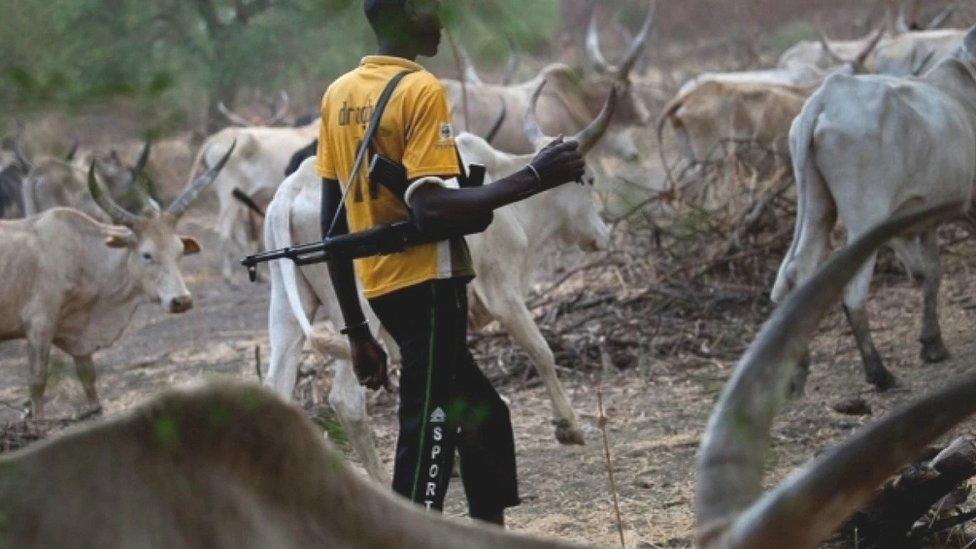
The United States Commission on International Religious Freedom (USCIRF) has revealed that an estimated 30,000 armed Fulani militants are currently operating across Nigeria in groups ranging from 10 to 1,000 members, warning that the armed actors have become some of the deadliest non-state perpetrators of religious freedom violations in the country.
The disclosure was contained in the commission’s May 2026 report titled “Nonstate Violators of Religious Freedom in Nigeria: Fulani Militants.”
According to the report, attacks by armed actors of Fulani ethnic background have intensified insecurity across Nigeria’s Middle Belt and Southern regions, resulting in thousands of deaths, widespread displacement and growing tensions among religious communities.
“Violence by Fulani militants caused the highest number of deaths among all religious communities in Nigeria over the last year as compared to attacks by organised insurgent groups and criminal gangs,” the report stated.
USCIRF said many of the attacks targeted Christian communities, although Muslim communities had also suffered raids, killings and kidnappings.
The commission noted that the militant groups do not operate under a unified command structure but often collaborate with criminal gangs and extremist organisations.
“These actors operate in a variety of contexts and with a multiplicity of likely aims and motivations,” the report explained.
“While many Fulani militant groups wage independent attacks, others periodically coordinate with a wide range of other actors, from conventional bandit gangs seeking financial enrichment to recognised terrorist organisations that espouse a violent interpretation of Islam.”
According to the report, militants frequently attack isolated rural communities at night, using motorcycles, automatic weapons and machetes to spread fear and force residents to flee.
“They often wield machetes and descend on vulnerable communities during the night, eliciting terror as a way to force victims to quickly leave and to achieve greater control of desired land,” USCIRF stated.
The commission disclosed that attacks by Fulani militants and other armed groups had displaced at least 1.3 million people across the Middle Belt, many of whom now reside in overcrowded camps lacking adequate sanitation and security.
USCIRF highlighted several deadly incidents recorded in 2025 and early 2026, including attacks in Benue and Plateau states.
“One attack in Benue in June 2025 killed at least 200 people, including internally displaced persons living in a Catholic mission,” the report stated.
The report also referenced the massacre in Yelwata, Benue State, where more than 200 Christians, mostly women and children, were reportedly killed and over 3,000 persons displaced.
According to USCIRF, some attacks were deliberately timed to coincide with Christian religious celebrations.
“Militant actors have often carried out operations during Christian holidays such as Christmas or Easter to further maximise the psychological impact,” the commission said.
The report added that in February 2026, suspected Fulani militants allegedly killed at least 32 people in Niger State and attacked Holy Trinity Parish in the Kafanchan Diocese of Kaduna State, killing three persons and abducting 11 others, including the parish priest, Father Nathaniel Asuwaye.
USCIRF further documented kidnappings involving both Christian and Muslim worship centres.
“In February 2026, armed men kidnapped an imam and seven worshippers from a mosque in Plateau,” the report noted, adding that the kidnappers demanded a ransom of N16m.
The commission stated that Palm Sunday and Easter attacks in April 2026 left dozens dead across Plateau, Kaduna and Benue states.
“On Easter Sunday, Fulani militants reportedly killed five worshippers at two churches in Kaduna State while abducting 31 others,” the report added.
USCIRF acknowledged that conflicting interpretations of the violence had complicated efforts to identify the exact motivations behind the attacks.
“Some observers have argued that environmental and economic factors are the driving force behind Fulani militants’ acts of violence, while others have suggested that these actors are engaged in a concerted campaign of outright genocide against non-Muslims, especially Christians,” the report stated.
“In fact, multiple and overlapping factors, including religion in many cases, likely spur Fulani militants to attack communities or individuals.”
The report criticised federal and state authorities for what it described as inadequate responses to the violence.
“Victims have long reported that security forces are consistently slow to respond to attacks on their communities,” USCIRF stated.
The commission also noted allegations by some Christian advocacy groups accusing security agencies of favouring Muslim communities during investigations and security operations.
USCIRF disclosed that governors from 11 states launched an initiative in June 2025 to establish ranch lands for herders as part of efforts to reduce clashes over grazing routes and farmland.
The report linked renewed Federal Government actions to the October 2025 decision by President Donald Trump to designate Nigeria as a Country of Particular Concern over religious freedom violations.
Following the designation, Bola Tinubu reportedly classified kidnappers and violent armed groups, including Fulani militants, as terrorists in December 2025.
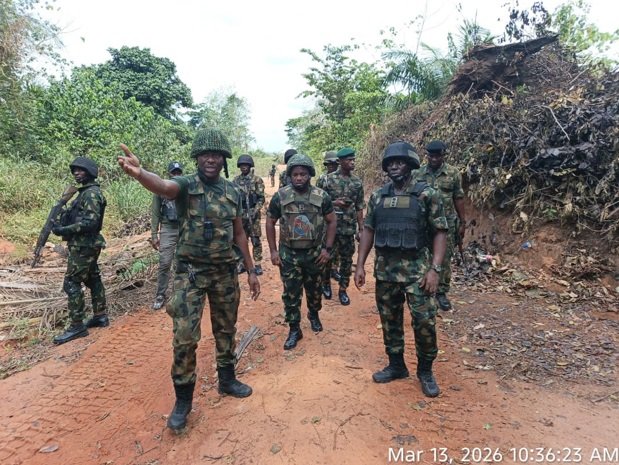
USCIRF further stated that security operatives rescued 309 hostages in January 2026 during operations in Kogi and Kwara states, while 129 suspected Fulani militants were arrested and 55 others killed.
The report also highlighted increasing scrutiny of the Miyetti Allah Cattle Breeders Association of Nigeria over allegations that it failed to stop militant violence and land invasions.
However, the association denied supporting criminality.
“We do not support, condone, harbour, finance, or protect any form of criminality, extremism or violence,” MACBAN said, according to the report.
USCIRF disclosed that the US Congress introduced the Nigeria Religious Freedom and Accountability Act of 2026 in February, proposing sanctions against MACBAN over allegations of involvement in severe religious freedom violations.
Despite recent security operations and peace-building initiatives, the commission warned that insecurity remained widespread across central Nigeria.
“As a result, central Nigeria remains entrenched in an intense, daily, and seemingly perpetual crisis of insecurity,” the report concluded.
The commission added that the violence was likely to persist “until the federal and several state governments create broader underlying conditions that are more conducive to the safe practice of religious freedom.”