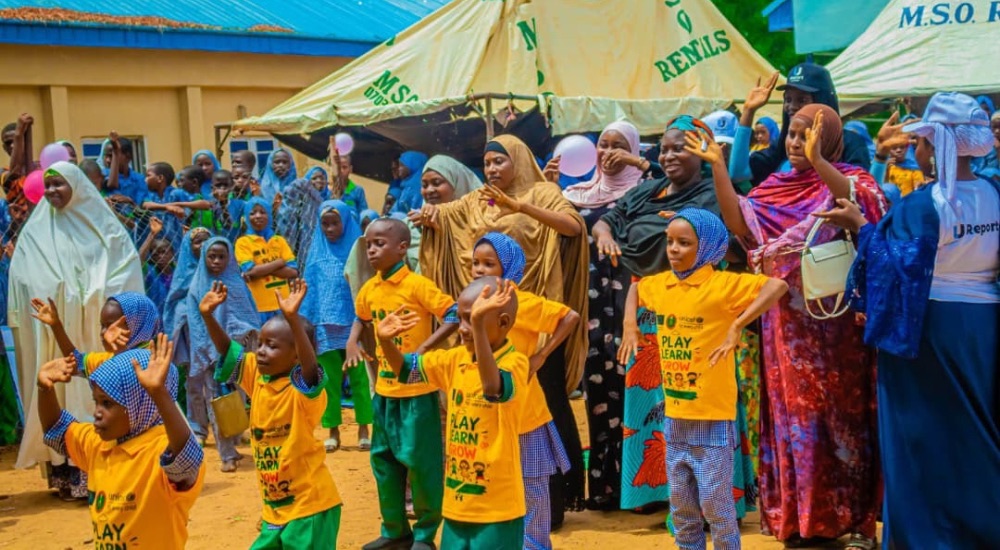
Under the bright morning sun, a group of excited pupils gathered on the dusty playground of Yahaya Abdulkareem Primary School in Sokoto.
Some hopped enthusiastically in a sack race, struggling to keep their balance as classmates cheered them on. Nearby, another group formed a circle, clapping and singing while others competed in reading games that tested their vocabulary and comprehension skills.
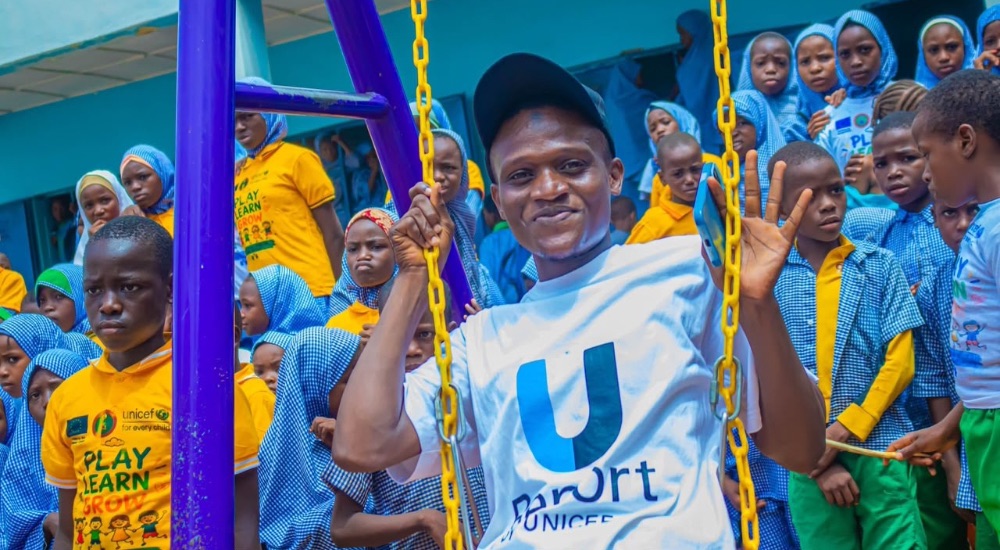
Laughter echoed across the school compound as children ran, jumped, and celebrated small victories with infectious excitement.
For the children, it was a day of fun and friendship. For teachers and education experts watching closely, it was something much deeper.
It is a practical demonstration of how play helps shape young minds, build confidence, and prepare children for lifelong learning.
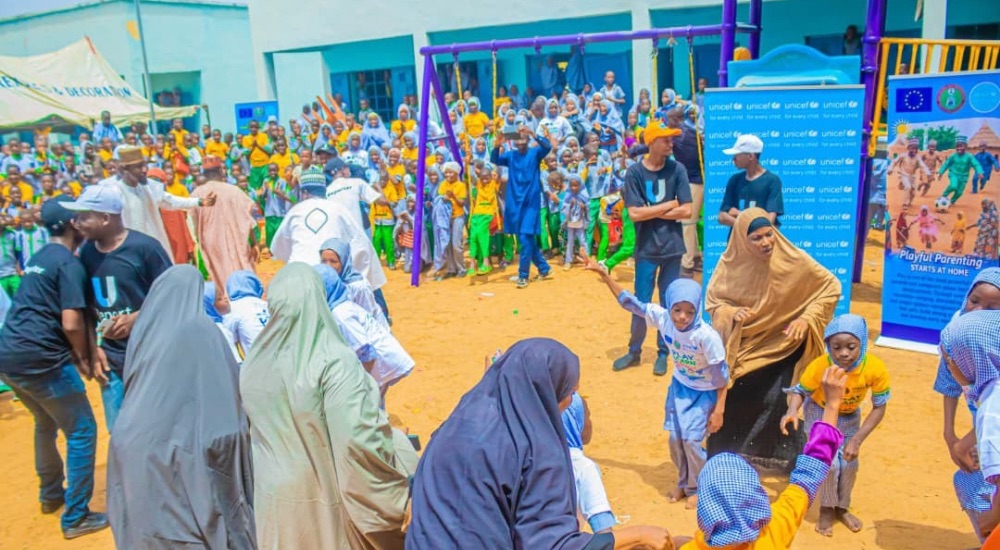
To many onlookers, it appeared to be a day of simple fun. But Blessing Okechukwu, an education expert, said what happened during the International Day of Play celebration organized with support from the European Union (EU) was far more significant.
She said that behind every game, every dance step, and every reading exercise was a powerful lesson about how children learn, develop, and prepare for the future.
As governments and development partners such as the EU intensify efforts to improve educational outcomes in Northern Nigeria, play is increasingly being recognized as one of the most effective tools for nurturing children’s cognitive, emotional, and social development.
According to Aliyu Isa, a Physical and Health Education teacher at the school, for years, play was often viewed as a distraction from learning. Today, however, educators and child development specialists regard it as one of the most important ingredients of quality education, particularly during a child’s formative years.
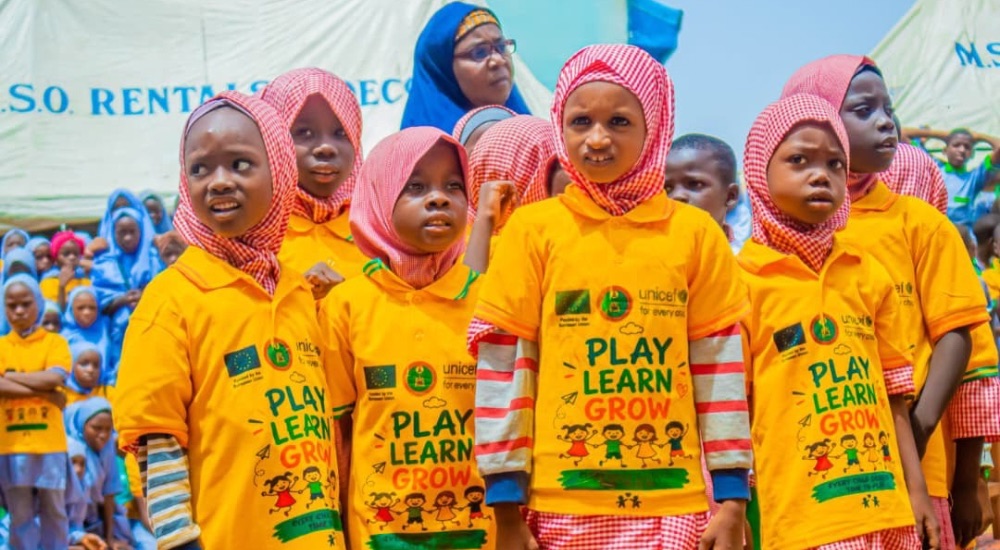
According to him, play stimulates brain development, strengthens memory, improves concentration, enhances creativity, and helps children develop critical problem-solving skills.
“It also encourages teamwork, communication, and emotional intelligence, a skill that is increasingly important in the modern world”
“Children learn best when they are actively engaged. Play creates an environment where children become curious, confident, and eager to learn” he added
The significance of play-based learning is gaining renewed attention at a time when Sokoto State is grappling with one of the highest rates of out-of-school children in Nigeria.
Earlier this year, the United Nations Children’s Fund (UNICEF), in partnership with the Sokoto State Universal Basic Education Board (SUBEB), convened a high-level advocacy and media dialogue on strengthening Early Childhood Care and Education (ECCE) and improving access to quality education in Sokoto, Kebbi and Zamfara states.
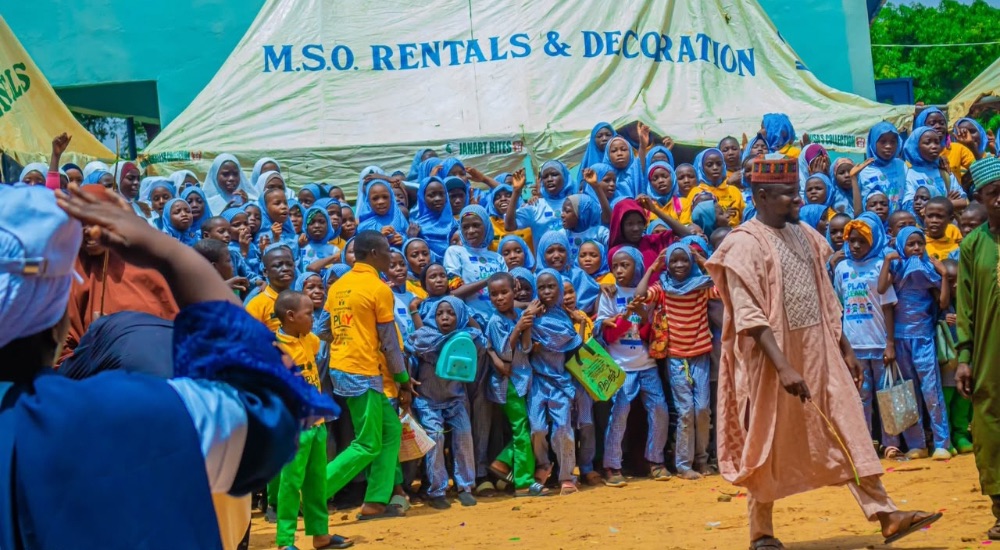
The initiative, supported by the European Union, emphasized the need for greater investment in early childhood education as a foundation for lifelong learning and development.
Speaking during the dialogue, the Chief of UNICEF’s Sokoto Field Office, Dr. Michael Juma, stressed the importance of ensuring that every child, regardless of background, has access to quality early childhood education.
He noted that strengthening ECCE is essential to improving learning outcomes and creating equal opportunities for children across the region.
Beatrice Sababa, Education officer with UNICEF explained that play-based learning sits at the heart of Early Childhood Care and Education because it helps children acquire literacy, numeracy, communication, and social skills in a natural and enjoyable way.
According to her, research has shown that the period from birth to eight years is critical for brain development.
“During these years, children form the cognitive and emotional foundations that influence their educational performance, health outcomes and productivity throughout life,” she said.
Education stakeholders in Sokoto have described ECCE as the “great equaliser” capable of transforming the future of vulnerable children.
THE CHALLENGE IS PARTICULARLY URGENT IN SOKOTO STATE.
According to the Chairman of SUBEB, Alhaji Umar Nagwari Tambuwal, about 66.4 per cent of school-aged children in the state are currently out of school.
He revealed that the state government, with support from UNICEF, has identified and documented a significant proportion of these children for targeted interventions aimed at bringing them back into learning.
“To address the crisis, the state government plans to significantly expand Early Childhood Care and Education centres across the state, while UNICEF has committed support for additional centres,” he said.
He added that the government has also launched initiatives aimed at equipping Almajiri children and out-of-school girls with digital skills and learning opportunities.
For child psychologist Aisha Abdullahi, however, expanding access to education alone is not enough. The quality of learning experiences matters just as much.
She said schools that integrate play into teaching methods often record better participation, improved attendance, stronger literacy outcomes and greater emotional well-being among pupils.
Through games, storytelling, music and interactive activities, children are encouraged to think independently, collaborate with others and develop confidence in their abilities, she added.
“Play also serves another critical function of protecting children’s mental health. In communities facing poverty, displacement, insecurity and other social challenges, opportunities to play can help children manage stress, build resilience and maintain a sense of normalcy,” she explained.
Child-friendly learning spaces that combine education with recreation have become an important component of educational interventions supported by UNICEF and its partners, particularly for vulnerable children affected by conflict and displacement.
Abdullahi also stressed that parents and caregivers have an important role to play in promoting children’s development through play.
“It does not necessarily require expensive toys or sophisticated equipment. Simple games, storytelling, songs and everyday interactions can provide valuable learning opportunities for children”
As Sokoto State continues efforts to tackle the out-of-school crisis and improve educational outcomes, stakeholders believe that investing in play-based learning could be one of the most effective strategies for ensuring children remain engaged in school and develop the skills needed to succeed in life.
“What may appear to be simple childhood fun on a playground today could, in reality, be laying the foundation for a brighter and more prosperous future tomorrow” said Abdullahi.
(The Whistler)