Converseer
No Result
View All Result
  • Home
  • Politics
  • Jobs
  • Metro
  • Sports
  • Tech
  • Health
  • News
    • Business
    • Education
    • Entertainment
    • Lifestyle
    • Science & Nature
    • Tourism
  • Trends
PRICING
SUBSCRIBE
  • Home
  • Politics
  • Jobs
  • Metro
  • Sports
  • Tech
  • Health
  • News
    • Business
    • Education
    • Entertainment
    • Lifestyle
    • Science & Nature
    • Tourism
  • Trends
No Result
View All Result
Converseer
No Result
View All Result
  • Home
  • Politics
  • Jobs
  • Metro
  • Sports
  • Tech
  • Health
  • News
  • Trends

Home » Business » Germany Imports More LNG Through North Sea Terminals Than Baltic Sea

Germany Imports More LNG Through North Sea Terminals Than Baltic Sea

February 7, 2025
in Business
Reading Time: 1 min read

RELATED NEWS

HBM Nigeria commissions high-capacity CNG station in Cross River State

IPMAN Eastern Zone Backs Obi, Rejects Parallel Leadership in C’River

Nigerian Banks Remain Strong and Secure as Global Cyber Campaign Sweeps Across Sectors and Continents Nigerian

Cross River concessions Obudu Ranch Resort for 25 years

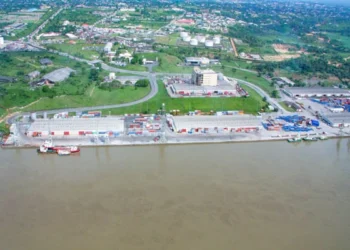
BERLIN – Germany’s liquefied natural gas (LNG) import terminals on the North Sea operated at about 65% capacity in 2024, according to the state-owned Deutsche Energy Terminal.

The floating terminals are located in the northern German cities of Wilhelmshaven and Brunsbüttel.Meanwhile, private operator Deutsche ReGas, responsible for two floating terminals on the Baltic Sea, has not disclosed its capacity utilization figures.

However, data from Brussels-based gas infrastructure operator GIE indicates lower capacity use at the Baltic Sea terminals compared to those on the North Sea.

GIE statistics show that the terminals in Wilhelmshaven and Brunsbüttel collectively fed some 59.1 terawatt hours of gas into the grid in 2024.

According to the data, the two other floating terminals on the Baltic Sea contributed about 8.5 terawatt hours last year.

The Federal Network Agency, Germany’s main infrastructure authority, reported a slight decrease in natural gas imports via the LNG terminals, totalling 68 terawatt hours last year, down from 69.7 terawatt hours in the previous year, a decline of about 2.4%

According to the agency, LNG’s share of total gas imports remains low, accounting for some 8% last year, a modest increase of about one percentage point from the year before.

Following Russia’s invasion of Ukraine in 2022, the German government pushed for the construction of LNG terminals to reduce dependence on Russian gas supplies, which were severely limited and eventually ceased.

The terminals have sparked controversy due to their cost and environmental impact.

(dpa)

Tags: Germany
Next Post

Kris Jenner Lists 'Keeping Up With the Kardashians' Mansion for $13.5 Million

b59cb357 7268 4a34 8895 359ca98ebd13 OpenAI to Open First German Office in Munich

OpenAI to Open First German Office in Munich

Topics

  • Latest News
  • Nigeria
  • Africa
  • Europe
  • Asia
  • Americas
  • United States

Social Media

  • WhatsApp
  • Facebook
  • X (Twitter)
  • YouTube
  • LinkedIn

Special Topics

  • Column
  • Bassey Otu
  • Bola Tinubu
  • Special Reports
  • Profile & Biography
  • Opinion
  • Latest News
  • About
  • Advertise
  • Contact
  • Daily Newsletter
  • Privacy Policy
  • Terms Of Use
  • Write For Us

© 2026 Converseer.

No Result
View All Result
  • About
  • Advertise
  • Contact
  • Daily Newsletter
  • Privacy Policy
  • Terms Of Use
  • Write For Us

© 2026 Converseer.