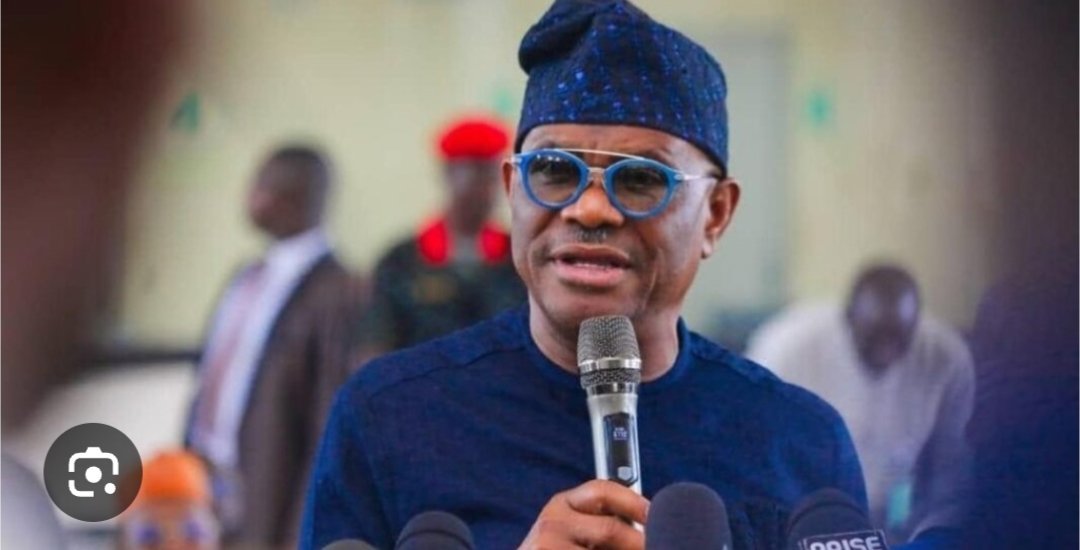
The founder of All People’s Congress, Dr. Hassan Ayariga believes that “If the Supreme Court’s ruling is implemented and ultimately takes effect in that form, it would represent a major change to our country’s internal party democracy”.
According to the politician, “The effects would be both positive and negative, and much would depend on how the ruling is implemented”.
In a lengthy post sighted by GH Page, the politician said;
- Advantages
A. Greater participation by ordinary party members
The biggest advantage is that every eligible party member in good standing would have a direct voice in choosing presidential and parliamentary candidates, rather than having that choice concentrated in the hands of delegates.
This would make party politics more participatory and give ordinary members a stronger sense of ownership.
B. Reduction in delegate-based influence
Under the delegate system, a relatively small number of people can determine who becomes a party’s candidate. Moving to a wider membership vote could reduce the power of individual delegates and party insiders.
It may also make it harder for candidates to focus exclusively on winning over a limited number of delegates.
C. Potential reduction in “delegate buying”
The argument that a smaller electorate is more vulnerable to financial inducements has some logic. If thousands or hundreds of thousands of members vote, it becomes more difficult, though certainly not impossible to influence the entire electorate financially.
However, this does not automatically eliminate money politics. It may simply change the way money is spent, shifting from influencing delegates to large-scale campaign mobilisation, advertising, transportation, communication and grassroots outreach.
D. Increased accountability of party leadership
Party executives would have to listen more carefully to the wider membership. A candidate who is unpopular among ordinary members could no longer rely primarily on support from a relatively small group of delegates.
This could strengthen internal accountability.
E. Greater legitimacy for candidates
A candidate selected directly by a large membership base may have a stronger democratic mandate within the party.
For example, a presidential candidate chosen by 500,000 registered party members could arguably claim a broader internal mandate than one selected by 1,000 delegates.
F. Potential benefit to smaller and emerging political parties
This could create opportunities for political movements that want to build a more open and grassroots-oriented internal structure.
For parties such as the All People’s Congress (APC), the broader principle of direct participation could provide an opportunity to differentiate themselves through transparent internal democratic processes.
- Disadvantages
A. The cost of organising primaries could increase dramatically
A nationwide primary involving all eligible members would require:
- More polling centres
- More EC election officials
- More ballot papers or electronic voting infrastructure
- Stronger voter verification
- Greater security
- More transportation and logistics
- More extensive voter education
For the two major parties like NDC and NPP, the financial cost would be enormous.
B. Risk of voter manipulation at a much larger scale
Although direct primaries may reduce the influence of individual delegates, they could introduce new forms of manipulation.
For example, candidates might attempt to:
- Mobilise supporters who are not genuine party members
- Influence membership registration
- Engage in large-scale inducements
- Transport voters
- Exploit weaknesses in membership databases
So, the Supreme Court’s ruling will change the nature of political corruption without necessarily eliminating it.
C. Internal party divisions could become more intense
A nationwide primary can produce very competitive campaigns. Candidates may appeal directly to different ethnic, regional, religious, or interest groups within the party.
If the losing side refuses to accept the outcome, the party could become deeply divided.
D. Risk of populism
A candidate may become popular with the wider membership by making promises that are attractive but difficult to implement.
A delegate system sometimes gives party structures a greater role in assessing experience, competence and long-term party strategy. Direct elections may place greater emphasis on popularity and campaign messaging.
E. Potential weakening of party structures
Party Delegates, constituency executives and other party officials often perform important organisational functions.
If their role in candidate selection is significantly reduced, parties may need to rethink how these structures operate and how they are incentivised to remain active.
- Major challenges
A. Defining “member in good standing”
This would become one of the biggest issues.
Who qualifies to vote?
Would it be someone who:
- Has paid party dues?
- Has been a member for six months?
- Has been registered for one year?
- Is registered in a particular constituency?
- Has a valid party membership card?
The rules must be clear to prevent manipulation.
B. Creating credible party membership registers
A direct primary requires an accurate and reliable database.
Political parties would need to know exactly:
- Who their members are
- Where they live
- Which constituency they belong to
- Whether they are eligible to vote
- Whether someone is registered in more than one location
This will require significant investment in technology and verification.
C. Financing
The Electoral Commission, political parties and possibly Parliament would need to determine who bears the financial and administrative burden. This matter has always been our discussion on various political platforms.
If every party is required to organise large-scale direct primaries, smaller parties could face disproportionate financial pressure.
D. Electoral security
A larger electorate creates a larger logistical operation.
The system would need safeguards against:
- Multiple voting
- Vote buying
- Intimidation
- Ballot stuffing
- Identity fraud
- Disruption at polling stations
E. Legal uncertainty
If the Supreme Court’s ruling fundamentally changes how political parties select candidates, there will be further constitutional questions about the exact scope of the Court’s authority and the role of the Electoral Commission.
There could also be appeals, applications for clarification, legislative responses or further litigation.
- Possible consequences for our Ghanaian politics
Short-term consequences
In the immediate term, political parties would likely have to review their constitutions and internal electoral rules.
The NDC and NPP Parties that have already invested heavily in delegate structures will face significant disruption.
There would also be uncertainty about upcoming primaries and whether existing electoral timetables would have to change.
Medium-term consequences
The power balance within political parties could shift.
Party executives and delegates may lose some influence, while ordinary members gain influence.
Candidates would have to spend more time building relationships across the entire membership rather than concentrating their efforts on a relatively small number of delegates.
Long-term consequences
If implemented effectively, the Supreme Court ruling could contribute to a political culture in which party members not only party elites have greater control over candidate selection.
It could also encourage political parties to develop stronger membership structures and more sophisticated internal databases.
However, if poorly implemented, it could lead to more expensive primaries, increased internal conflict, voter manipulation and greater pressure on smaller parties.
- The most important question: will this ruling actually reduce money politics?
This is, in my view, the central issue.
The delegate system may create a small target for financial influence, but a direct primary creates a much larger target.
Therefore, the solution is not simply to move from delegates to mass voting. Our nation would also need strong rules on:
- Campaign financing
- Spending limits
- Disclosure of donations
- Membership verification
- Vote buying
- Use of state resources
- Transparency in party finances
Otherwise, money politics may simply evolve from “buying smaller delegates” to “buying mass mobilisation.”
- My overall assessment
The principle behind the ruling is potentially very positive for internal democracy. Giving ordinary party members a direct say can make political parties more representative and accountable.
However, direct primaries are not automatically democratic simply because more people vote. The process must also be transparent, affordable, secure and free from manipulation.
The ideal system should achieve four things simultaneously:
Broad participation + credible membership registers + transparent financing + strong electoral safeguards.
If these four elements are established, the ruling could significantly deepen democracy within Ghana’s political parties.
If they are not, our country could simply replace delegate politics with mass-scale money politics and internal electoral manipulation.
For someone with experience in Ghanaian party politics, including the history of internal party electoral disputes that have affected parties such as my APC, this ruling could be particularly significant. It potentially changes the fundamental question from “Who are the delegates and how were they chosen?” to “Who are the genuine members of the party, and how can every eligible member participate fairly?” That is a profound shift in the architecture of political parties in Ghana.
(GhPage)