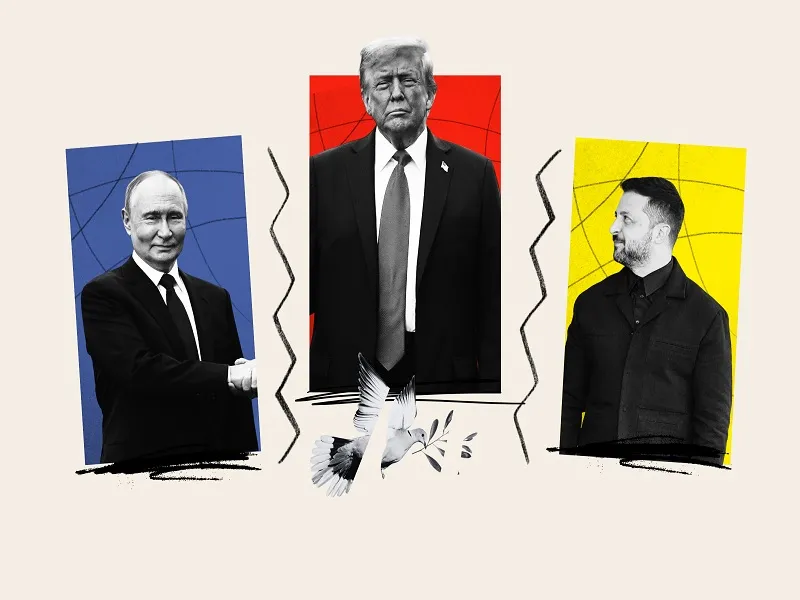
- It’s possible that Putin’s spokesman was signaling that one, some, or all of the major terms stipulated in spring 2022’s peace deal are no longer relevant in terms of the endgame that Russia has in mind.
By Andrew Korybko
SAN FRANCISCO (CONVERSEER) – Kremlin spokesman Dmitry Peskov recently said that “The reality has changed altogether” when asked about Russia’s commitment to the Istanbul Accords that were initialed in spring 2022 but ultimately derailed by the UK and Poland. Ukraine would have restored its constitutional neutrality and the Russian language’s legal status, accepted far-reaching limits to its armed forces, and recognized Russian influence in Crimea in exchange for the UNSC guaranteeing its security.
In exchange, Donbass’ status would be resolved via talks between their leaders, with the innuendo being that it might be reincorporated into Ukraine per the Minsk Accords, while it was implied that Russia would have withdrawn from the rest of Ukraine’s pre-2022 borders. Up till now, Russia has called for returning to these terms as the basis for sustainably ending the Ukrainian Conflict, ergo why Peskov’s announcement was so significant since it shows that Russia now has a different endgame in mind.
Officials already confirmed long beforehand, however, that their country’s armed forces won’t withdraw from any part of the disputed regions whose people voted to join Russia during September 2022’s referenda so it never truly intended to implement all of the Istanbul Accords’ terms since then. Nevertheless, the three points mentioned in the first paragraph regarding constitutional changes, demilitarization, and UNSC security guarantees remained the basis of Russia’s envisaged settlement.
It’s therefore possible that Peskov is signaling that one, some, or all of these terms as stipulated in the Istanbul Accords are no longer relevant with regard to the endgame that Russia has in mind. In the order that they were mentioned, the constitutional changes are extremely important from Russia’s viewpoint, especially restoring the Russian language’s legal status. Neutrality in name only would be meaningless, however, so Russia might hypothetically compromise on this as part of a grand deal to end the conflict.
The same goes for the limits on its armed forces that Ukraine earlier agreed to. Russia can’t continue using force to demilitarize Ukraine because it keeps being pumped full of new arms after its current ones are destroyed. That’s the formula for a forever war that Russia doesn’t want to fight. As such, instead of such limits, Russia might request that Ukraine agree not to deploy certain arms within some distance of their border if Russia does the same. Russia might also build its own “drone wall” like Ukraine is doing.
And finally, with regard to UNSC security guarantees for Ukraine, this proposal has arguably been irrelevant since Ukraine reached a series of bilateral security guarantees with several NATO members in 2024 that were reviewed here. In exchange for no official deployment of foreign forces in Ukraine, Russia might thus agree to these security guarantees in place of UNSC ones. It’s also possible that it might assent to NATO’s reported three-tier ceasefire enforcement plan too in an extreme scenario.
Any major compromises on Russia’s part would require equally major ones from its adversaries, but if they don’t agree, then finally clinching the resource-centric strategic partnership with the US that Putin’s envoy Kirill Dmitriev has been negotiating might suffice. To be clear, there’s no confirmation that any of Russia’s demands have changed, just that Peskov’s statement prompts plausible speculation about this. Whatever Putin decides, however, will be in Russia’s best interests as he understands them to be.