By Frank Ulom
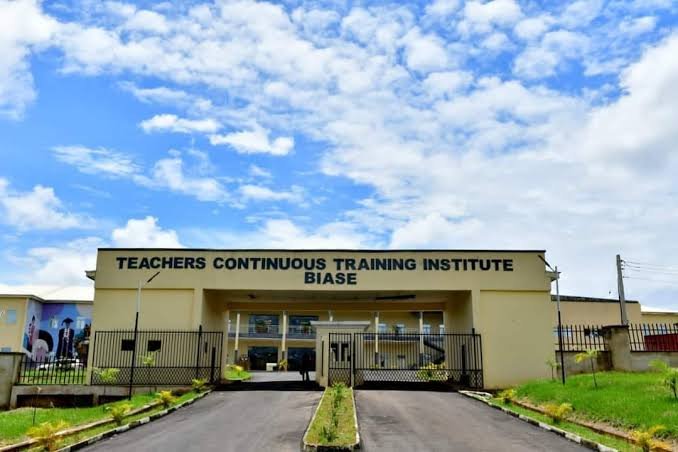
The Cross River State Executive Council has approved the immediate relocation of the Cross River State College of Education (COE), Akamkpa, to the site of the Teachers Continuous Training Institute (TCTI) in Biase Local Government Area.
Recall that COE Akamkpa is now the University of Education and Entrepreneurship (UEE).
The decision followed months of deliberations and is aimed at restoring an institution in the state offering the Nigerian Certificate in Education (NCE) programme alongside degree-awarding programmes.
The development is also expected to transform the TCTI facility into a full-fledged College of Education while retaining its original responsibility of retraining primary and secondary school teachers.
Following the approval, the Commissioner for Education, Dr Stephen Odey, directed the managements of the College of Education and TCTI to develop modalities for implementing the conversion.
The proposed College of Education, Biase, is expected to operate under a tripartite mandate, combining teacher education and degree programmes with the continuous training and retraining of teachers.
As part of the transition, the law establishing the TCTI is expected to be repealed by the Cross River State House of Assembly to provide the legal framework for the new College of Education.
The planned conversion has, however, raised questions about the future of the existing TCTI workforce and the preservation of the institute’s operational standards.
Key concerns include whether existing TCTI staff will be absorbed into the new College, redeployed to other government institutions or agencies, or disengaged where their roles no longer correspond with the mandate of the institution.
Possible areas for redeployment could include the Office of the Head of Civil Service, Cross River State Secondary Education Board, State Universal Basic Education Board, Local Government Service Commission and other government agencies.
There are also concerns about whether the new College will maintain the standard of infrastructure, discipline and productivity associated with the TCTI.
A staff member who spoke on the development recalled the contributions of the immediate past Director-General of the institute, arguing that the tenure should have continued because of the innovations and transformational leadership introduced during the period.
According to the staff member, productivity, academic standards and punctuality were maintained during the former director-general’s tenure, while attendance and productivity had declined and discipline weakened following his departure.
The concerns have heightened calls for the state government to ensure that the institutional culture developed at TCTI is not lost during the transition.
Stakeholders from Biase have welcomed the planned establishment of the College of Education, particularly because of its potential to expand employment opportunities for young people and promote development in the area.
For residents of the Ibogo community in Akpet, the TCTI represents a significant government presence in the community, having been established under the administration of former Governor Ben Ayade and sustained under the administration of Governor Bassey Otu.
The planned conversion is therefore being viewed as an opportunity to build on the existing investment rather than weaken it.
Education stakeholders have also acknowledged the contributions of the immediate past leadership of the institute and the Commissioner for Education, whose efforts they said contributed to the development of the institution.
They have urged the government to ensure that the transition does not result in administrative laxity or a dilution of the standards established by the TCTI.
Attention is now turning to the Cross River State House of Assembly, led by Rt Hon Elvert Ayambem, to provide the legislative framework required for the new institution.
Stakeholders are calling for the speedy passage of the necessary legislation to facilitate the smooth take-off of the proposed College of Education, Akpet Central.
The proposed institution is expected to create additional employment opportunities, expand access to teacher education and strengthen the presence of higher education in Biase.
However, stakeholders have stressed that the success of the transition will depend not only on the establishment of the College but also on the government’s ability to preserve the discipline, productivity, infrastructure and operational standards developed under the TCTI.