
By Christian Njoku
Cross River Governor, Bassey Otu, says the state is strategically positioned to lead Nigeria’s coffee revolution and emerge as a major coffee-producing hub in West Africa.
Otu stated this on Saturday while declaring open the second Coffee Festival International Nigeria, holding in Calabar from October 30 to November 1 with the theme: “Sustainability: Building the Future of Coffee in Nigeria.”
The festival which first held in Jos in 2025, brought together coffee experts from Ethiopia, Ghana, Uganda, Rwanda, Namibia, Tanzania, South Africa, Brazil among others.
Represented by Mr Johnson Ebokpo, Cross River’s Commissioner for Agriculture and Irrigation Development, the governor said the state’s four agroecological zones, favourable rainfall pattern and arable land offered enormous opportunities for coffee cultivation.
According to him, “About 90 per cent of the arable land is lowland, suitable for Robusta, while the highlands provide favourable conditions for Arabica cultivation,” he said.
He said his administration had developed a 2025–2032 Coffee development roadmap and launched the Coffee Revolution Programme in July 2025.
He disclosed that the state had distributed more than 800,000 subsidised Arabica and Robusta seedlings and trained over 700 farmers and extension workers
Otu said the government targeted distributing 30 million seedlings, establishing 10,000 hectares of plantations and producing 15,000 metric tonnes of coffee annually.
He also announced a partnership with other stakeholders to develop 6,000 hectares of coffee plantations across Odukpani, Akamkpa and Akpabuyo Local Government Areas.
“The state has introduced agricultural traceability systems and strengthened its regulatory framework and sent a delegation to Uganda to understudy its coffee industry, with plans to train young Cross River residents in barista services and downstream operations,” he added.
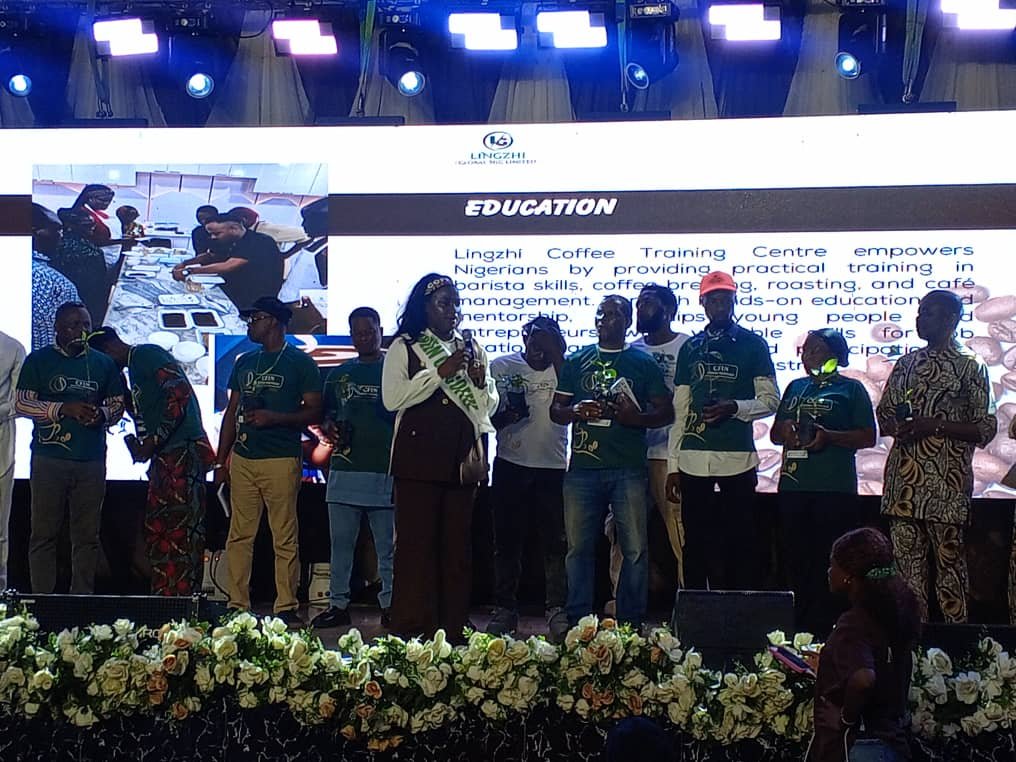
Earlier, Mrs Blessing Tangtur, Chief Executive Officer of Lingzhi Global, called for stronger government-private sector partnerships to promote coffee cultivation, consumption and investment in Nigeria.
Tangtur, the originator of the coffee festival said the maiden edition of the festival in 2025 stimulated renewed interest in coffee production, attracting support from international development partners, including the United Nations and International Trade Centre.
“Nigeria’s coffee consumption had increased from about two million to 12 million, attributing the growth to increased awareness, stakeholder engagement and promotional activities.
“This festival connects farmers with processors, exporters, buyers and other players across the coffee value chain, ensuring producers have access to markets beyond cultivation,” she said.
Tangtur disclosed that more than five million coffee seedlings had been distributed to Cross River farmers, expressing optimism that the initiative would strengthen production and create employment opportunities.
On his part, Dr Hassan Kakara, President, National Coffee and Tea Association of Nigeria (NACOFTAN), called for stronger industry coordination and effective leadership to prevent another decline.
Kakara attributed Nigeria’s dwindling coffee production to poor leadership, weak cooperative structures and inadequate market opportunities, recalling that the country was once a major coffee producer.
He urged stakeholders to embrace climate-smart agriculture, improve access to finance, research and quality seedlings, strengthen cooperatives, empower women and youths, and invest in processing and value addition.