With the steady erosion of democratic legitimacy in Africa and the strong wind of undemocratic change of governments that is blowing across the continent, from Burkina Faso to Mali, and from Niger to Gabon, the conversation on the future of democracy on the African continent continues. The latest intervention in this conversation has come from Olusegun Obasanjo, a former military Head of State of Nigeria who was later democratically elected its civilian President. An African statesman whose image looms large on the world stage as a champion of freedom, democratic good governance, anti-corruption and unity of the African people, Obasanjo’s experience as a major player in epoch-making events in Nigeria and Africa for more than half a century places him on a legitimate high ground to speak on the burning issues of democracy and good governance in Africa.
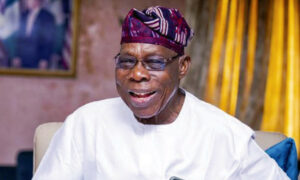
Speaking at the high-level consultation on Rethinking Western Liberal Democracy in Africa, held at the Olusegun Obasanjo Presidential Library in Abeokuta, Ogun State, Obasanjo posited that western democracy as being practiced in Nigeria and other African countries should be re-examined or moderated. According to Nigeria’s former President, his position has become imperative because western liberal democracy has not delivered on good governance and progressive development for the continent. While describing western liberal democracy as not homegrown enough and it never took into account of Africa’s history and multi-cultural peculiarities, hence, excluding the views of the majority, Obasanjo suggested its replacement with what he termed ‘Afro Democracy’ as, according to him, “The essence of any system of government is the welfare and well-being of the people, all the people.” At a recent event in Bauchi State, hosted by the Goodluck Jonathan Foundation, Obasanjo once again restated his stand on the need to replace Western-style liberal democracy with Afro Democracy.
This latest intervention from Obasanjo has elicited mixed reactions, with many agreeing or disagreeing, depending on the prism through which his views are being viewed. But as divided as opinions are on the opinion expressed by former President Olusegun Obasanjo, all is not well with Nigeria’s democracy and many Nigerians share his frustrations about the state of affairs in Africa’s largest democracy. And such is the frustration that, 27 years after unbroken democratic rule since the transition from military to civil democratic rule in 1999, the much anticipated dividends of democracy, in the form of welfare and security for the Nigerian people, remains elusive, leaving many Nigerians hopeless, helpless and questioning the relevance of democracy in the socio-economic development of their beloved Nigeria.
Democracy has so lost its hitherto iron-clad legitimacy, which was underscored by the popular dictum, “the worst democratic government is better than the best military regime” that Nigerians are now looking back with nostalgia to the days of military rule and drawing comparisons, which suggests their lot was better then than now. That after 27 years of democracy, Nigeria is currently ranked one of the most corrupt, terrorized, pauperized, impoverished and traumatized country’s in the world means democracy no longer makes sense to many Nigerians and they are, like Obasanjo, seeking sundry alternatives in place of the current liberal democracy, as long as such an alternative delivers on welfare and security.
However, while Obasanjo is right about the state of affairs in Nigeria, it is important to point out clearly that Nigeria’s problems are not caused by liberal democratic practices. Nigeria is only a liberal democracy in name but not in reality. A simple definition of liberal democracy as “a democratic system of government in which individual rights and freedoms are officially recognized and protected, and the exercise of power are limited by the rule of law,” clearly shows that a country such as Nigeria, where individual freedoms are limited by tribe, religion and region of origin and where impunity rather than rule of law reigns supreme, hardly qualifies as a liberal democracy. On the contrary, Obasanjo’s Afro Democracy; an illiberal superimposition of African traditional rulership along tribal lines on representative democracy is Nigeria’s current democratic reality.
This sort of superimposition in a country whose federating units are structured along tribal lines has combined to birth the worse form of ethnic and religious identity politics, which has rendered Nigeria’s democracy neither liberal nor democratic, as the core element of democratic citizenship required to drive democratic processes is lacking. It is the pervasive culture of politics of tribal identity, which is at variance with liberal democracy, that is the problem of Nigeria’s governance structure. And to correct the defects in Nigeria’s democracy, it will have to overcome the challenge of identity politics arising from the preponderance of identity dissonance in the current polity.
While liberal democracy involves broad-based political coalition of peoples of diverse backgrounds around common economic, security and social interests, Afro Democracy is mostly a narrow political movement along tribal lines to project sectional interests. And whereas the reward for political participation in a liberal democracy is good governance for all, that of identity-driven Afro Democracy is a patronage system for a privileged few sectional champions in government.
That Nigeria is currently suffering from corruption-induced socio-economic and security challenges is because corrupt practices such as nepotism, cronyism, favouritism, sectionalism and all elements of prebendallism are legitimate cultural tools used by the representatives of the various tribal sections of the country to get a slice of the national cake. It is this identity politics, motivated corruption, that has made the scourge cancerous, endemic and intractable, rendering Nigeria’s democracy prostrate and unable to yield dividends in the form of improved security and welfare for the people.
Elsewhere in Africa, identity politics Afro Democracy has reduced many countries to sorrow, tears and blood. It was Afro Democracy that enthroned Huti power over Rwanda, which eventually led the country into a civil war and eventual genocide against its Tutsi people. And from Gabon to Togo, Sudan to South Sudan, from Chad to Equitorial Guinea, Afro Democracy has enthroned ethnocentric, corrupt and inept political dictatorships that have left these African countries unable to provide welfare and security for their people.
Democracy, by its nature, is liberal and remains the best form of government developed by man. And Nigeria’s aspiration should be a progression towards true liberal democracy, along with all its essential elements of democratic citizenship, rule of law and administration, with the principles of equity, fairness and justice to all without prejudice to race, ethnicity and creed.
President Obasanjo, a pan-Nigerian nationalist with a reputation for excellent diversity management, has vast political capital to kickstart a movement for democratic rebirth of Nigeria from Afro Democracy to liberal democracy.
To this end, President Obasanjo should lead a deliberate political process that begins to galvanize and mobilize Nigerians to realign their democratic choices with their individual and collective socio-economic and security interests, away from their ethnicity or religion, in order to cure the cancer of identity politics in Nigeria.
(The Sun)