By Frank Ulom
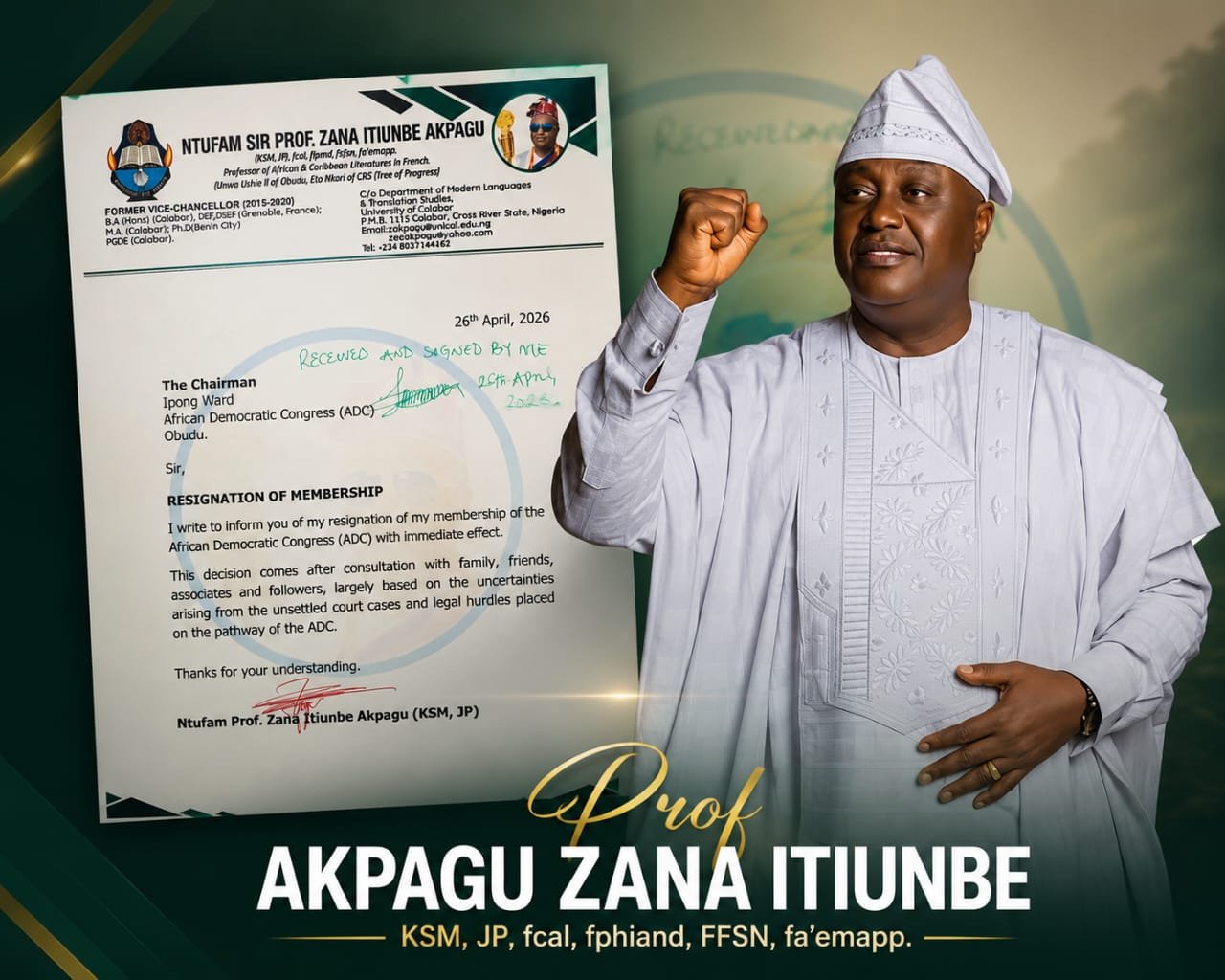
The former Vice-Chancellor of the University of Calabar, UNICAL, Prof. Zana Akpagu, has formally resigned his membership of the African Democratic Congress (ADC), citing uncertainties arising from unresolved court cases and legal challenges surrounding the party.
In a resignation letter dated April 26, 2026, and addressed to Pastor Emmanuel Ugar Ugwakong, ADC Chairman of Ipong Ward in Obudu Local Government Area of Cross River State, Prof. Akpagu announced that his resignation takes immediate effect.
The renowned academic and former university administrator stated that the decision was reached after extensive consultations with family members, friends, associates and political followers.
The letter read in part: “I write to inform you of the resignation of my membership of the African Democratic Congress (ADC) with immediate effect.
“This decision comes after consultation with family, friends, associates and followers, largely based on the uncertainties arising from the unsettled court cases and legal hurdles placed on the pathway of the ADC.”
Prof. Akpagu expressed appreciation for the understanding and support he enjoyed during his time in the party.
The resignation letter, which was acknowledged and signed by the ward leadership on April 29, 2026, has since generated political conversations within Obudu and across Cross River State, particularly given Prof. Akpagu’s influence in academia, public service, and grassroots politics.
A respected scholar of African and Caribbean Literatures in French, Prof. Akpagu served as Vice-Chancellor of the University of Calabar from 2015 to 2020 and remains a notable voice in intellectual and socio-political discourse in the state.
Political observers believe his exit may further deepen concerns over the internal stability of the ADC amid ongoing legal disputes affecting the party’s structure and operations in parts of the country.
While Prof. Akpagu did not disclose his next political destination, analysts say his decision could trigger fresh realignments within the state’s political landscape ahead of future electoral activities.