John Oxley is a consultant, writer, and broadcaster. His SubStack is Joxley Writes.
They say that the first rule of politics is knowing how to count.
Normally, it is invoked as a concession to the realities of democratic politics. It doesn’t matter how good your ideas are if you don’t have the votes to make them happen. But within policymaking itself, the strong incentives to understand the numbers are often forgotten. The current prison crisis is a perfect example of this.
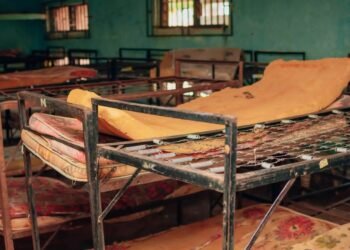
The capacity problem is decades in the making. Across different governments, we have fallen into the same trap. The average custodial sentence has increased 45 per cent over the last 25 years. The average minimum term for serious offences like murder has approximately doubled in that time. Judges are also more likely to impose immediate custody, rather than suspended sentences. While it is rarely discussed in the press, more people are going to jail, and they tend to go for longer. Even a basic grasp of arithmetic tells you that these increased flows will rapidly lead to a much higher stock of prisoners.
This is what has happened over the last 30 years. There are nearly twice as many people in prison as there were in the early 1990s – yet our prison capacity has not increased to catch up. While governments have been happy to push up sentencing, they have found building the capacity to meet it a much harder task. Part of this is politics. Expanding prisons hits two deeply unpopular bits of the state: few people want more spending on criminals, and not many will accept a prison being built near them.
Failing to engage with this, however, is a broader problem of government thinking. This is partly a systems problem, and one of the clearest challenges of developing joined up thinking in Whitehall. Even within a single department, ratcheting sentencing gets detached from expanding capacity to cope with it. Policies develop in silos, forecasts get sidelined, and a lack of ownership over the whole pipeline means that ideas and implementation fail to move in lockstep.
Politicians rarely engage with this. The problem is that increasing sentences and building prisons operate on different timelines. Announcing new tough measures is today’s win. It is popular; it comes into effect quickly; and is rarely impeded by bureaucracy. Building more prisons is the opposite. It takes years to get one to completion, requires lots of funding, sustained through multiple budgets. The pain is concentrated and comes up front; the rewards for dealing with it are nebulous and a long way off. There is every political incentive not to address the cumulative aspects of the problem.
The result is, naturally, crises. The prison population problem has run for nearly two years now. The lack of preparation narrows options for both politicians and the public. A rapid prison expansion programme would be far more expensive than a more thought-out one. It would struggle to deliver on any effective timescale and would worsen conditions for prisoners and staff. The decline in standards would also likely result in worse rates of violence and substance abuse in prisons, and of reoffending outside of them. The alternative is the row the government is now embroiled in, about which prisoners get released early, decisions which are both unpopular and run their own risks to the public.
We can judge the current government for how it handles this crisis, but it is not to blame for the problem emerging. Our prisons being full is the result of decades of decisions being made in isolation and without regard for the realities of long-term trends. The problem was always foreseeable, but never properly addressed. Politicians didn’t do the required thinking or counting to see where the numbers were heading. A crisis recognisable from a decade or more ago has been allowed to fester.
The current prisons predicament is the most visible aspect of this, but across our policymaking there are frequent failures to reckon with the future. Long-term demographic changes are a major part of this. We know, roughly, the shape of our population for decades to come – the graduates of 2046 and the retirees of the 2080s have already been born. Much of our politics fails to anticipate this, however. There is little talk of the school and university places we’ll no longer need, with fewer young people, or the scale of the pressure an ageing population will put on social care, as well as the nation’s finances.
Indeed, much of our political culture seems stuck in the past, rather than the future. Andy Burnham came to power still dwelling on the political events of the 1980s. On the right, we are often too keen to invoke them too – as though reiterating a half-imagined version of what worked then might work again now. Politics grows comfortable with looking backwards rather than forwards, because it is legible and knowable. It is a safer place to debate than an unwritten future. But it is exactly that future where we are expected to govern.
Many of the challenges of the next parliament are already set. The underlying conditions of government are largely in place. So too is much of Labour’s policy, and we should be able to predict the consequences over the next five to ten years. The “known unknowns” are also legible. The long-term challenge of security within Europe and further afield; the impact of climate change; the quickening pace and adoption of green technologies; and the increasing prominence and influence of AI.
Many of the problems of the next decade will have their roots in the sidelined issues of today. We also need to work towards better anticipating the trade-offs of our own actions, and how they flow into the future. The real challenge of current politics is both governing well and convincing the public you are doing so. The legacy of 2010-24 for the Conservatives puts them on the back foot on this. The answer, perhaps, lies in anticipating the challenges that other parties are looking away from, and acting on them before they become critical.
The prisons crisis shows what happens when the simple arithmetic of problems gets ignored. While we can, and will, criticise Labour for how they handled it, we should not delude ourselves. If, somehow, we had won the 2024 election, a Conservative-led government would be staring at the same problem and the same unpalatable solutions. Arithmetic doesn’t care which party is in office. Politicians who cannot bring themselves to run the numbers forward, on prisons or anything else, will keep meeting their future as a crisis, whoever happens to be standing there when it arrives. Breaking that cycle will provide electoral advantages, but also policy ones.
(UKR)